
What this guidance document is for
The principal guidance document on design in the Royal Borough of Windsor and Maidenhead is the Supplementary Planning Document “Borough Wide Design Guide (DG)” (published in draft in March 2019).Paragraph 130 of the Government’s National Planning Policy Framework (NPPF) states that planning permission should be refused for development of poor design. The DG intends that every development in the Borough will be of high quality design and will draw on the opportunities presented by the immediate local context to create a sense of place and will also reflect the broad overarching themes of Royalty, River and Green (page 15).
The purpose of this document is to provide additional assistance to those contemplating a development project within the area of the Windsor Neighbourhood Plan. The aim is to encourage new development which is attractive and appropriate in itself but which also blends in comfortably with the wider streetscape and neighbourhood area in which it is situated. The document sets out with examples what local people consider are the important components of good design in our area.
In considering what might be appropriate guidance for the design of new developments in our neighbourhood plan area we have had regard to the following principles. All new development should:
The following table of examples illustrates what local people consider represents acceptable design for this area. The table is based on public consultation exercises, including a specific design consultation undertaken in January 2016. It also draws from RBWM published Townscape and Conservation Area assessments backed up by our own WNP local area character assessments. We have also benefited from the advice of a local architect. The examples chosen in the following pages are not necessarily the most exceptional or most interesting; they are common to the area. All the examples pictured are from the Neighbourhood Plan area.
COMMON LOCAL BUILDING TYPES
| 20th Century Buildings | Older Buildings | Positive Recent Developments | |
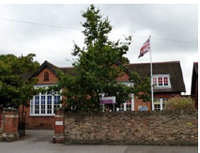
Early 20th Century School 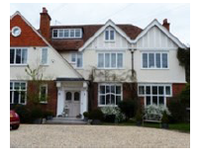
Edwardian Villa 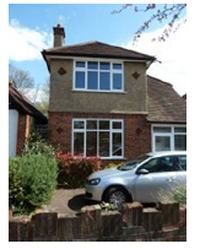
1930s “Semi” 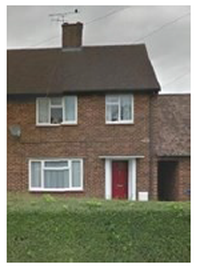
Mid-century Terrace |
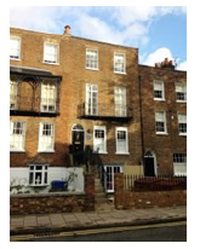
Georgian Terrace 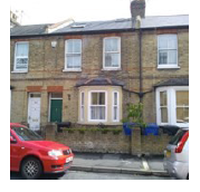
Victorian Cottages 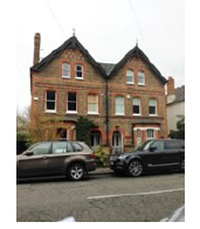
Victorian Villas |
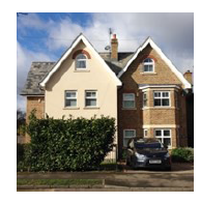
Front facing gables, articulated façade, and bay windows 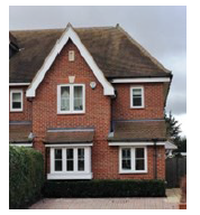
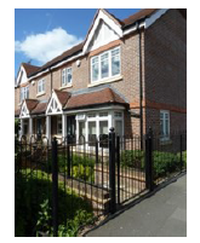
|
Building types vary from Georgian townhouses in the centre, Victorian and Edwardian terraces and villas in the inner suburbs to a range of mid-20th century and later buildings further from the centre. The Windsor part of the RBWM Townscape Assessment gives a very detailed analysis of building types in the area. Steep gables, pitched roofs, bay windows, articulated front elevations of varying depths, and well-proportioned windows are all common. Good design will take references from nearby buildings which contribute positively to the surrounding area, not just from the Georgian and Victorian styles found in the inner areas. |
| Admired features in older buildings (roughly pre-1970) | Positive features in modern developments | |
| a. Walls | ||
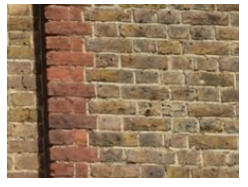
Brick buildings predominate in the NP area. Stone is rarely used except for churches, and decorative features such as window and door surrounds. |
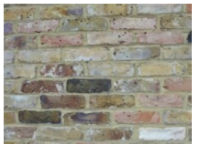
Reclaimed bricks |
Using reclaimed old bricks will often be the most appropriate solution for an extension to an existing property. |
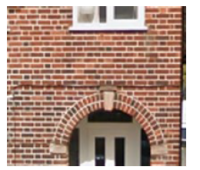
London yellow stock bricks (as above) and red clay facing bricks are the most common. |
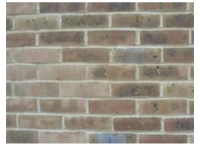
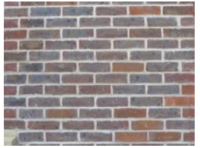
Two examples of modern factory made bricks designed to look like hand made bricks. |
An alternative especially for new infill developments may be good quality modern bricks designed to have the varied appearance and different colours of handmade bricks. Whatever bricks are chosen, the golden rule is to think carefully about what will blend in with the surrounding properties. This will be especially true where the whole area is built of the same materials when an infill of contrasting materials could be an eyesore. In areas where there is a variety of wall treatments then the choice for new buildings will be wider. |
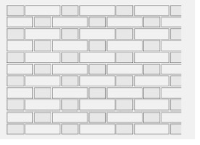
Typical old style brick bonding. |
Replicating the older brick bonds designed for solid brick walls with headers and stretchers can be difficult to achieve with modern building methods but will give the most appropriate results for extensions to older buildings and can be used effectively for garden walls. |
|
| Admired features in older buildings (roughly pre-1970) | Positive features in modern developments | |
| b. Decorative Wall Treatments | ||
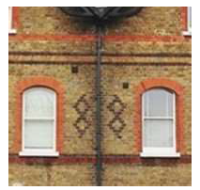
String courses and decorative brick panels. |
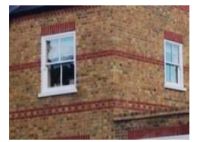
Adding interest and detail with contrast brickwork. |
The composition of building elevations can frequently be enlivened by the introduction of plinths, cornices, string courses and decorative brickwork panels, all very common in Windsor. |
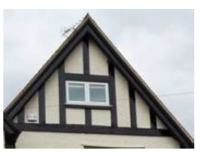
Mock Tudor timberwork. |
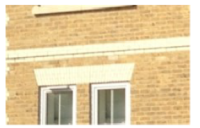
Attractive stone detailing. |
Stonework is often used for window surrounds and adds interest. |
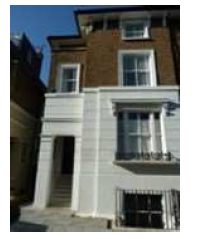
Stucco. |
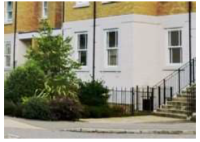
Modern stucco echoing the form of nearby buildings. |
Stucco is a common finish in inner Windsor. |
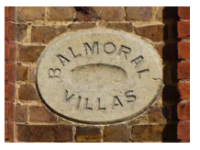
Plaques and other decorative details. 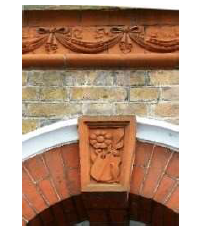
Terracotta is common in inner areas. |
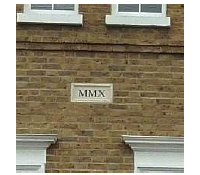
Even this small plaque adds interest and shows that the developer is proud of the building. |
Carefully thought out plaques and small decorative details can add interest and variety and do not necessarily have to copy those nearby but could add a contemporary twist or a play on nearby details. If decorative features on a building to be developed cannot be kept in situ, consider reusing them elsewhere. |
| Admired features in older buildings (roughly pre-1970) | Positive features in modern developments | |
| c. Roofscapes | ||
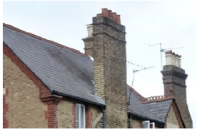
Victorian slate roof with chimneys and decorative ridge tiles. |
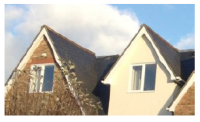
Steeply pitched roofs with curved barge boards. |
Roof lines are almost universally pitched, often steeply so, and features such as decorative ridge tiles, finials, chimneys and gables frequently create a varied roofline. New buildings should create interesting roofscapes which carry echoes of features such as gables, steeply pitched roofs and decorative tiles. |
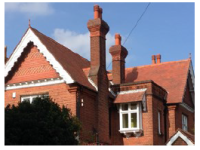
Edwardian red clay tiled roof with roof finial and prominent chimneys. |
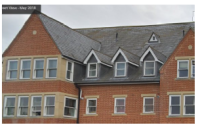
Block of flats with sympathetic roof lines. |
If there are no fireplaces then there are no chimneys and thought needs to be given to ways of creating interesting roofscapes in the absence of chimneys. |
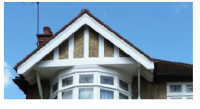
1930s house with prominent projecting front facing gable. |
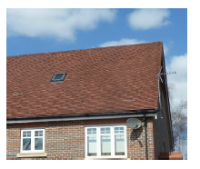
Tiled roof on infill property with similar pitch to surrounding buildings. |
New developments could also reference mid-20th century buildings where appropriate. |
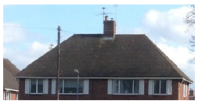
Mid-20th century 1950–1960 with hipped roof and central single chimney. |
||
| Admired features in older buildings (roughly pre-1970) | Positive features in modern developments | |
| d. Roofing materials and decorative details | ||
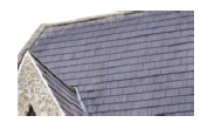
Slates |
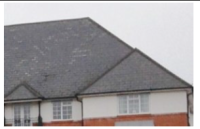
Modern slate roof |
Traditional roof finishes are natural slate and orange-red-brown plain clay tiles. Flashing details should ideally be in lead for good looks and long life. Natural materials should be used wherever possible and are key to creating a positive character in the area. Other roofing materials such as replica slate tiles may be acceptable in new developments outside the inner area. |
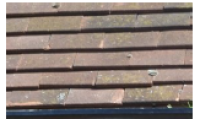
Clay tiles |
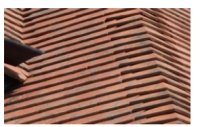
Modern clay tiles |
|
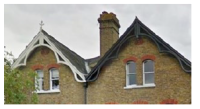
Decorative barge boards on Victorian houses. |
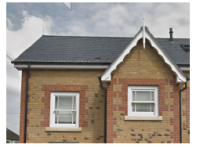
A modern house with barge boards and finial. |
Decorative barge boards are common in inner areas and do not have to be white. Decorative details work best in good quality natural materials which will last. |
| Admired features in older buildings (roughly pre-1970) | Positive features in modern developments | |
| e. Entrances | ||
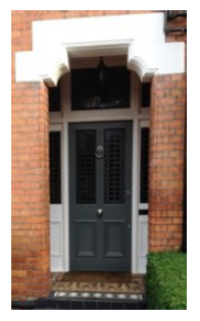
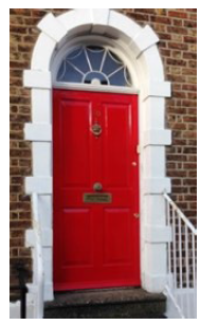
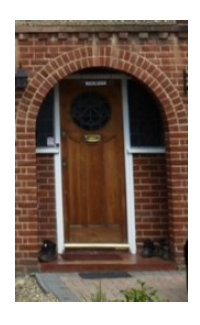
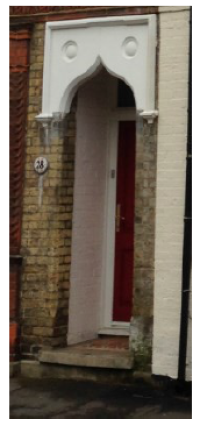
Some examples of the many attractive entrances to be found in the NP area. |
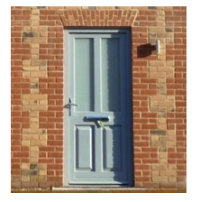
Decorative brickwork creates interest 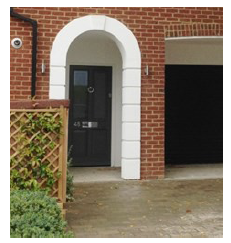
Recessed door and stuccoed arch give this entrance dignity and presence. |
The NP area has a great many attractive building entrances in a variety of styles, which make a great contribution to its varied and interesting architecture and the sense of place. In the inner parts of the town in particular, wooden doors in traditional style are to be preferred. Entrances which are set into the façade add interest and variety. Well detailed entrance treatments would be particularly welcomed in new developments. |
| Porches | ||
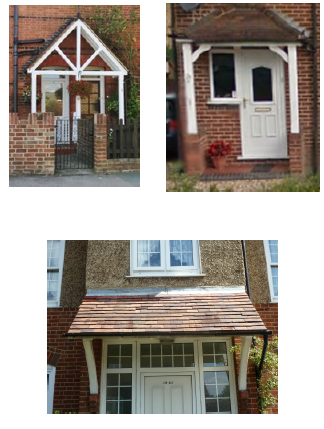
Porch examples from around the area. |
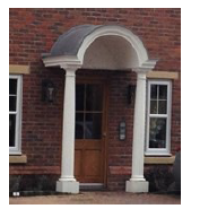
Flat development with portico style porch. 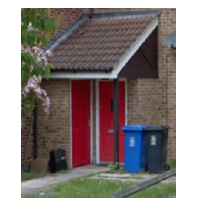
Modern porch, simple but effective. |
In appropriate situations porches can add an element of interest and variety, especially to a uniform streetscape. |
| Admired features in older buildings (roughly pre-1970) | Positive features in modern developments | |
| f. Windows | ||
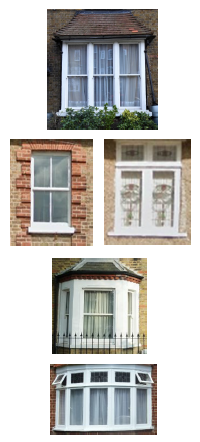
Different styles of windows from around the area. |
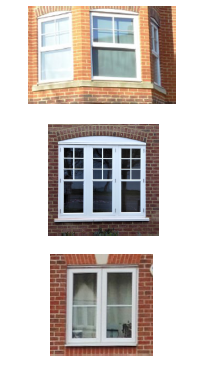
Modern windows with acceptable proportions; some would be better if further inset into the façade. |
Wooden sash windows predominate on street frontages in inner areas. Wooden casements were installed in most early to mid-20th century buildings, although many have since been replaced with modern UPVC windows. Proportions are important, and new buildings should generally have windows that match the proportions of neighbouring properties. This is especially important for infill developments in uniform streets. Where uniformity is not the case, more variation will be acceptable. Infill in inner areas should preferably have wooden windows. Taller windows to the ground floor help to maintain balance and harmony. Bay windows—square, angled, or round—are common and create an attractive feature. Windows inset into the façade or protruding from it add depth and interest. Even a small inset or projection can have an enlivening effect. |
| Admired features in older buildings (roughly pre-1970) | Positive features in modern developments | |
| Dormer Windows | ||
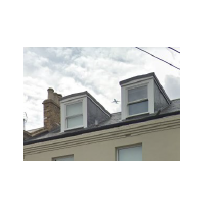
Dormer on a Victorian house, possibly a later addition. |
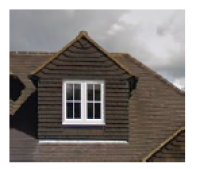
Modern dormer on a bungalow in sympathetic materials. 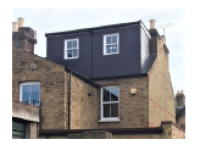
Rear dormer on a Victorian cottage. |
Dormer windows to the front elevation are not a common feature of the NP area and will rarely be appropriate additions to existing buildings, apart from bungalows. They occasionally occur on Victorian and Edwardian villas. Nearly all those on the Victorian terraces are later additions. Most early dormers are subservient features which do not dominate the roofscape. Many new developments have used dormers to achieve a third living floor, and often these are over dominant and discordant. The Borough DG provides guidance on the acceptable design of front dormers (page 104). Rear dormers are common and will rarely require planning permission. In terraced houses they usually span almost the whole of the house. |
|
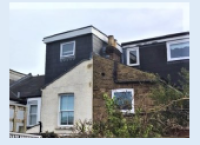
L-shaped dormer covering most of the rear projection of a Victorian cottage. |
|
L-shaped dormers have become increasingly common at the back of terraced cottages with rear projections and, depending on the size and whether the house has already been extended, may not need planning permission. They can cause issues of overlooking and overbearing and, if visible from the public realm, are likely to have a discordant effect on the street scene and an adverse impact on character. They should normally not cover more than half of the rear projection of the property. |
| Admired features in older buildings (roughly pre-1970) | Positive features in modern developments | |
| g. Paths and paving | ||
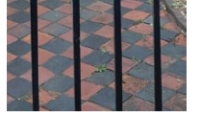
Traditional Victorian tiled entrance path 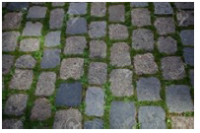
Stone sets 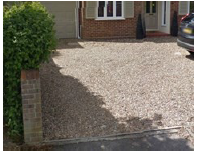
Gravel A variety of surface treatments, all attractive and appropriate. |
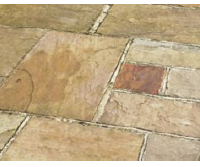
Stone paving from an inner development in a conservation area. 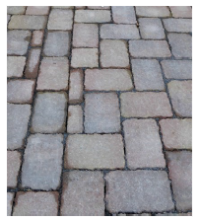
Concrete paving in muted colours which lets water percolate through. |
Paths and paving should be appropriate to their setting. In the more formal urban setting, tiles, setts or stone paving are appropriate but should still be relieved by areas of planting. Large uniform areas of hard landscaping should always be avoided. Areas of hard surface are greatly improved by being broken up with planting or by gravel or pebbles where planting is not appropriate. In outer areas, especially in the Clewer Corridor, where the aim is to retain a rural feel to the corridor, gravel is an appropriate surface treatment where grass is not suitable. It can be an attractive and environmentally friendly solution either on its own or in conjunction with limited hard standing or vehicle tracks. |
| h. Parking Areas (see also Part C — The Design of Parking Areas) | ||
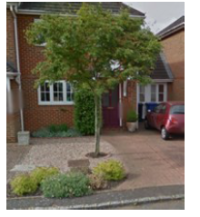
|
Parking areas, especially those fronting the street, should be designed to minimise impact and landscaped to soften the areas of hard surfacing. They should comply with the Borough Design Guide. |
|
|
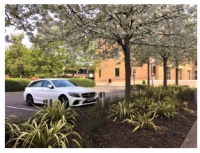 Recent developments with landscaped parking. |
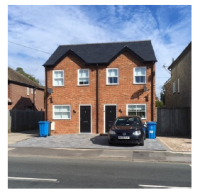 Recent development with no landscaping or bin stores. Recent development with no landscaping or bin stores. |
| Admired features in older buildings (roughly pre-1970) | Positive features in modern developments | |
| i. Boundaries | ||
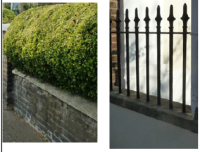
Typical inner area boundaries |
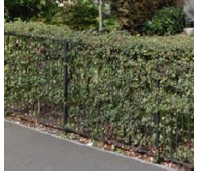
Modern railings with planting behind |
Common boundary treatments are stone or brick walls, iron railings and hedges. In some parts of the outer suburbs, gardens are open with lawns providing the transition from private to public space. New developments should retain, replace or create attractive boundary features in keeping with these examples. |
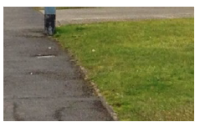
Housing estate with open boundaries |
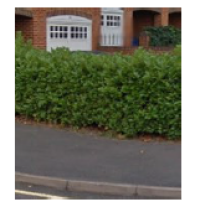
New hedge |
The importance of green gardens and boundaries cannot be overstated, and every effort should be made to retain or create some greenery, especially at the junction with the street. |
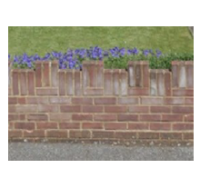
Typical wall from mid-20th century development |
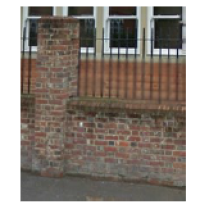
New wall built with reclaimed brick. Some shrubs would improve it further. |
Landscaping should consider future maintenance and plant for the longer term. Hedges and shrubs need space to grow, and planting should leave adequate room for plants to mature. Guidance on suitable species is in the Townscape Assessment. |
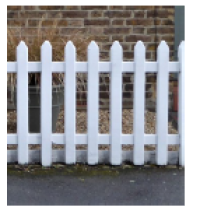
Picket fence |
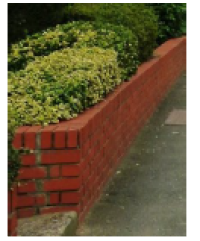
New wall with low maintenance planting |
Low walls, railings or picket fences can be backed with planting to create a green backdrop. |
| Admired features in older buildings (roughly pre-1970) | Positive features in modern developments | |
| j. Flat Developments | ||
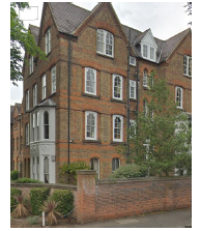
Sensitive conversion of old college residence 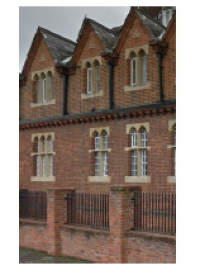
And of religious buildings |
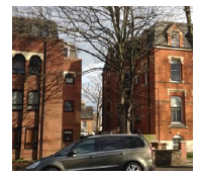
Old on the right, new on the left – similar mass and impact and good separation. 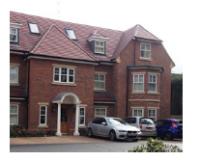
New flats designed to look like a large house. 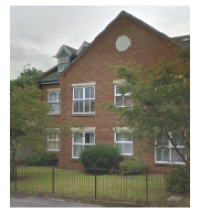
Using different levels, setbacks and heights, and landscaping to reduce bulk. |
Most of Windsor’s flat developments are infill and can look massive beside neighbouring properties. New flat developments (or other large developments in residential areas such as hotels or clinics, etc.) should be sensitive to the size and plot patterns of surrounding houses. Particular care should be taken to leave space between buildings and for trees and other mature green landscaping, and to use design features to reduce perceived scale. |
| k. Front gardens | |
|
The Royal Horticultural Society, as part of their “Greening Grey Britain” campaign, has produced a “Front Garden Guide” in order to encourage the re-greening of these often neglected spaces. We recommend this guide to all developers. Keeping or introducing greenery is vital for the health and wellbeing of our population. Where possible, front garden landscaping in new developments should include. At a Front Garden Summit in 2018, Greg Clark MP, then Secretary of State for Communities and Local Government, said he would ask officials to review planning rules for impermeable surfaces and would encourage more use of Neighbourhood Plans which allow communities to decide what greening best suits new developments. 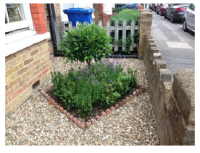
A tiny front garden which still provides interest and greenery with attractive multicoloured gravel, rope-edged tiles and low-maintenance planting. The copyright of photographs in this guide belongs either to members of the Windsor Neighbourhood Plan Forum or to Google Inc. Google Images are reproduced according to general permissions granted by Google for non-commercial sharing of images. |
Small front gardens often have to accommodate cars and refuse bins, and so imagination and creativity are needed to ensure that the overall effect is green and pleasant to look at. Refuse bins should be in purpose-built spaces, preferably to the side or rear. Where this is not possible, bin storage at the front of properties should be robustly constructed of materials to match the development and well screened. Front garden planting should be in the ground and should be designed for ease of maintenance and in such a way as to discourage removal. Completely paved front gardens seriously damage the character and appearance of an area and should be avoided. The illustration shows that even the smallest front garden can make a positive contribution to the street. |
Introduction
The following seven area design guides have been compiled by members of the WNP Forum in response to the area character assessments carried out by WNP. The areas chosen are ones which were suggested in consultations and forum meetings. They are not meant to be taken as the only sensitive areas in our territory but as examples of an approach to considering design on a neighbourhood basis which we hope will help developers arrive at building designs which are sensitive to the neighbourhood in which they are to be situated.
The Areas are:
Location of Design Guide Areas
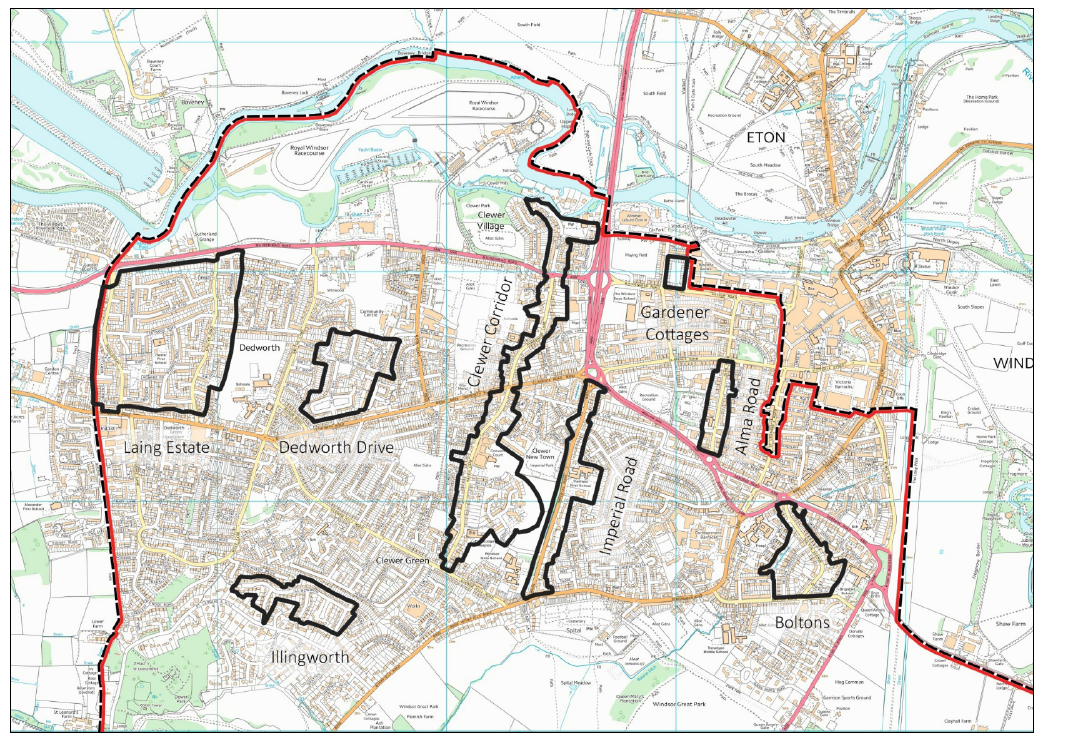
Note: Imperial Road design guide was not in fact developed
(from Clarence Road to Goslar Way)
Neighbourhood Area – outlined in black
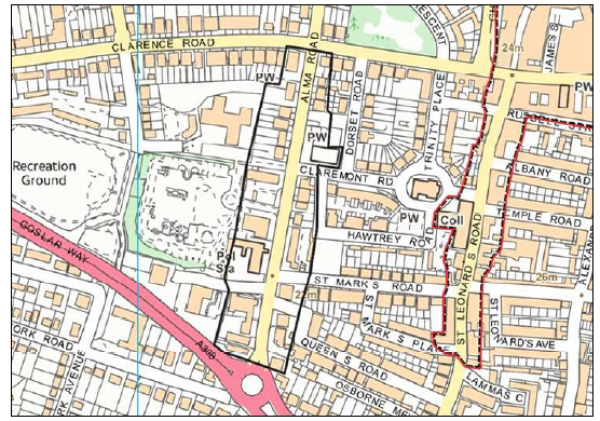
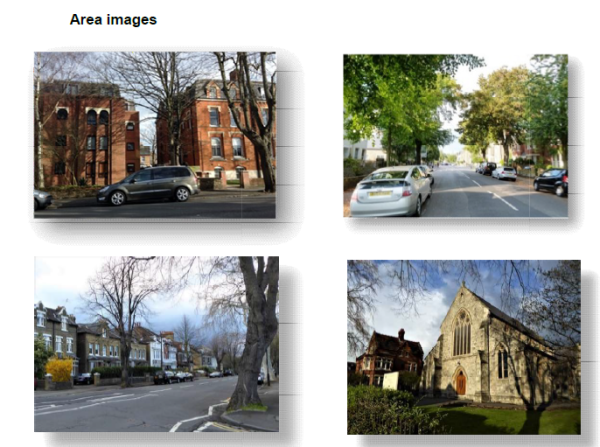
This part of Alma Road is a wide gracious avenue with mature trees and town villas and two churches along its length together with the large Victorian buildings of Camperdown House now converted to flats. The northern half of the area is in the Trinity Place and Clarence Crescent Conservation Area. The southern half, nearer to Goslar Way, is not in a conservation area and modern development has been allowed here, some of which seriously erodes the character of the area.
The area currently includes a few non-residential uses but retains a primarily residential character. There is a variety of styles, materials and ages of buildings within the vicinity with Victorian and Edwardian villas predominating to the north and buildings with flats to the south together with the police station from the 1970s and the recent Holiday Inn.
Alma Road is a main entrance to the town with relatively high levels of traffic, including visitors arriving by coach. At present most of the southern part of the Road provides an attractive first impression of the town centre and will provide a positive contribution to the visitor experience. Car parking is allowed on both sides of the road, but the many trees help to soften the overall impression and the cars do not dominate. A pedestrian crossing half way along this stretch of Alma Road gives access from the town centre via St Marks Road to a welcome small green space and the well-used footpath and cycleway leading to Vansittart Recreation Ground and to West Windsor beyond.
Street trees along Alma Road create an impressive entrance to the town which should be enhanced by new development and appropriate landscaping.
| OBJECTIVE | DESIGN RESPONSE | AVOID |
|---|---|---|
|
1. For new development to preserve or enhance the leafy and spacious residential feel of the area with complementary buildings and extensions which echo the buildings in the Conservation Area, and appropriate landscaping. Recent developments are not to be taken as precedents for future design. |
Front setbacks should be no less than the average setback of the adjoining buildings. Buildings can be three or four storeys (even five exceptionally) although it will be important to maintain spaces between buildings. |
Development in front of the normal building line or too close to plot boundaries. |
|
2. If the police station is redeveloped, to replace it with a building more in keeping with its surroundings and which creates an attractive landmark building or buildings (two may be more appropriate facing Alma Road). |
The community expects to see a development of exceptional quality which restores this site to its place as a key component of an attractive residential area and important town gateway. |
Unimaginative slab-sided design. Intrusive car parking. |
|
As a focal point opposite the junction with St Marks Road. The existing building is too dominant and monolithic. |
The site is suitable for flats although some family houses are also acceptable. New building(s) will be sensitive to the mass, spacing and building lines of existing nearby buildings. There were special circumstances for additional height added after the existing building was completed and proposals of similar height will not necessarily be acceptable in a new building. The existing gap between new building(s) and Connaught Court will be maintained and a similar setback will be provided on the return frontage to the side road. The building(s) will generally conform to the building line of Connaught Court. New building(s) will have a traditional pitched roof in keeping with properties to the north. Dormer windows in the roof are acceptable. Elevations will be articulated to create interesting facades. Landscaping is considered to be integral to the design and a comprehensive landscaping scheme is required to be submitted. The layout should provide for the planting of trees on the Alma Road frontage. The existing historic boundary stone will be accommodated in the layout and be visible to the public. |
|
Vehicle access should be from the side road. Car parking must not dominate the layout. Basement parking is preferred or if this is not possible, under-croft parking. |
||
3. To enhance the visual quality of the area through using best quality materials |
Materials will be of high quality and selected from a palette of traditional materials (see General Design Guide). For extensions, materials should generally match those used on the main building. |
The use of poor-quality, non-traditional materials |
|
4. Maintain or replace green boundaries and front garden landscaping. |
Seek opportunities to retain existing trees and shrubs and to introduce new trees and appropriate landscaping. |
The loss of trees and front garden greenery. |
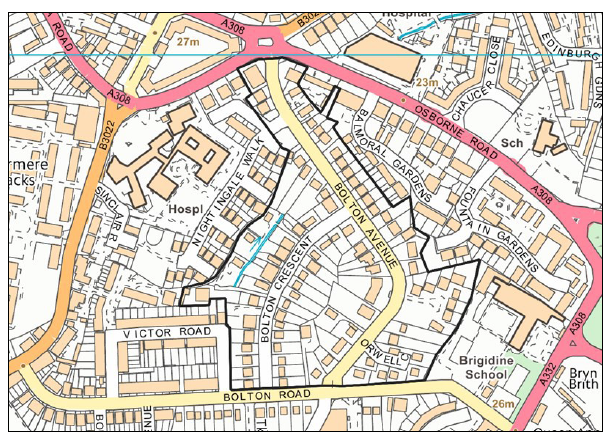
Neighbourhood Area—outlined in black
Area Images
Area Character Assessment
Bolton Avenue, and Bolton Crescent form part of the Boltons Estate, which was originally built in late Victorian/early Edwardian times. The two roads are part of south suburban Windsor situated within walking distance of Windsor Great Park and about 15 minutes walk to the town centre. The RBWM Townscape Assessment characterises the area as leafy residential suburbs. The topography is gently undulating. The Bourne Ditch runs behind Bolton Crescent and under Bolton Avenue in a culvert in places and open in others.
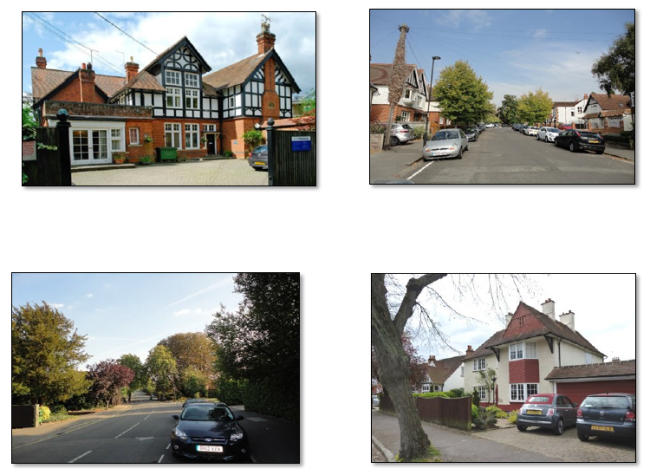
The original houses on these two roads had very large plots, but these have gradually been infilled over the years, so there is now a range of individual detached houses in a mix of periods and styles ranging from Victorian/Edwardian, 1930s, post WWII, as well as late twentieth century mock Georgian and some very recent redevelopments. Several of the original early houses have substantial mock tudor elements to their style and three of these remain (Essex Lodge, The Boltons, Burnell House). The mock tudor theme (mostly black and white beamed gables) was reflected in some of the later mid-twentieth century houses, so there is an architectural thread in places. Several of the houses also have Arts and Crafts architectural elements. Red brick, render and red clay tiled roofs predominate.
| OBJECTIVE | DESIGN RESPONSE | AVOID | |||
|---|---|---|---|---|---|
|
1. To encourage appropriate residential developments which are sensitive to the local character. |
Ensuring that new building forms and design relate to the street scene and reflect good quality materials which respect local character features such as wooden detailing, ornate chimneys and red tiled roofs, while allowing sympathetic modern design. |
Taking design clues from the more urban Victorian buildings in the town centre rather than from the surrounding "Boltons" buildings eg by using slate or slate substitutes for roofs and cream, rather than red, brick for walls. |
2. To maintain as far as possible the spacious feel of the area |
Ensuring buildings are sufficiently set back at the front and sides to sustain sense of space and separation, with some vegetation, particularly at front side boundaries and between dwellings. Use articulation and detailing to minimise the effect of bulk New building will respect the building lines and the heights of surrounding buildings |
Avoid development right up to plot boundaries. 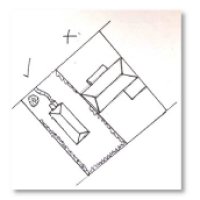
|
|
3. To Maintain a green feel with gardens and green boundaries and appropriate street trees, strengthening the tree canopy of the neighbourhood, in private gardens, streets and areas of parkland |
Buildings should be sited and designed to minimise loss of existing vegetation. Replace any trees lost with trees that will grow to a similar size. Where buildings are already close to the street replace with suitable varieties to avoid problems with roots/subsidence. Maintain and re-instate green boundaries and plant trees and substantial shrubs. Front boundary treatments should be in accordance with the street scene that predominates in the street. Fencing/walls should be in accordance with the street scene and accommodate planting. |
Site clearance. The loss of trees and shrubs, green front gardens and established garden boundaries. Replacing green boundaries and vegetation with hard landscaping High close boarded fencing on front garden boundaries. |
|||
|
4. Ensure there is sufficient parking for residents, but ensure plots are not dominated by impervious surfacing or car parking areas |
Local garages, carports and car parking areas behind the front façade of the dwelling. Minimise impervious surfacing in front garden areas. Provide only one front garden vehicle crossover per frontage |
Front gardens/setbacks dominated by car parking structures and hard surfacing. Loss of street trees due to cross over construction |
Neighbourhood Area—outlined in black
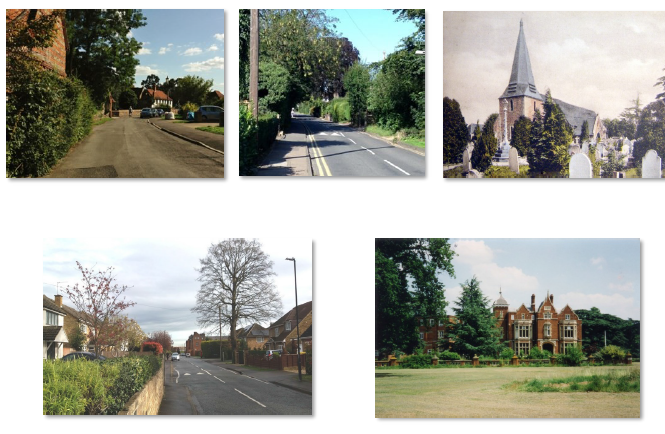
Area Images
Area Character Assessment
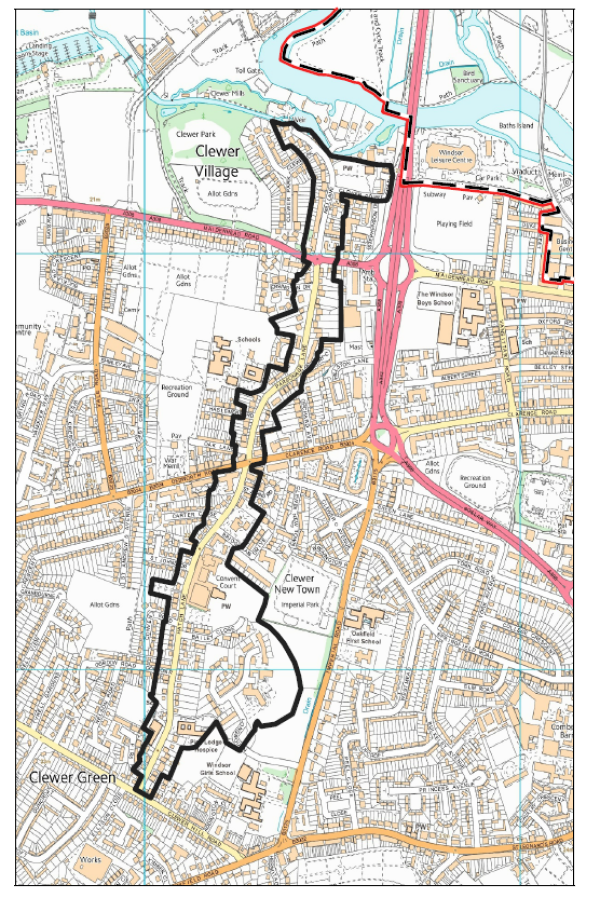
The “Clewer Corridor” is the continuous ancient route stretching between the mill at a fordable spot on the Thames and St Leonard’s Hill, Clewer Wood and Windsor Forest. The surrounding area through which it runs was held latterly by Harold II until his death at the Battle of Hastings: the Manor of Clewer (‘Cliffwara’, ‘Clivore’, Domesday Book) covering much of what is now Windsor, including the cliff which gave the Manor its name and land on which construction of the present Windsor Castle was begun under William I.
Mesolithic flints and flint tools discovered near modern-day Hatch Lane’s northern egress and further along the river near the castle provide the earliest evidence of human habitation. Later Saxon occupation is thought to have given rise to the construction of a wood-and-thatch chapel near the ford at the top end of modern-day Mill Lane. By the early medieval period there appear to have been two very small villages in the Manor, one by the mill and Norman church dedicated to St Andrew (Clewer Village) and one at the foot of St Leonard’s Hill where the Clewer Manor House was erected (Clewer Green).
Several cottages built well before the 1817 Enclosure Awards are still extant and provide valuable heritage character. A number of small terraces appeared before the end of the pre-Victorian period along with more significant houses and inns. At this time, the smaller dwellings would have been primarily for those working for the Manor or on local farms.
From 1851 construction began on the large buildings of the Convent of St John the Baptist (II/II*) as well as the red brick exterior of Clewer Green (Harcourt) School. No new houses appear to have been built near the Convent until decades after its completion in the 1880s. In 1922 the pre-Victorian Clewer Manor (II) replacing the medieval House was sold, leading to construction of several villas along Hatch Lane set in substantial gardens. The sale of the Rectory in Parsonage Lane led to more development in that road. Mill Lane was designated as a conservation area in 1991.
For a long period in its recorded history, the whole of this trackway was known as Hatch (Woodhatch) Lane -- footpath, cart route and droving road through open land with common fields and farms. Around the 19th century this was separated into three segments (Hatch Lane, Parsonage Lane and Mill Lane) when adjoining paths running east and west were formally incorporated into the emerging road network linking Clewer, Dedworth and Windsor.
It is only through a detailed awareness of this history that these “three” lanes can be more accurately evaluated. The RBWM Townscape Assessment was insufficiently researched in relation to this area, relying on outdated evidence, giving rise to mistaken assumptions about the significance and relationships of buildings and sections of the Corridor. This NP Area Character Assessment provides an important opportunity to clarify these matters.
Despite a variety of developments over the centuries and few remaining early buildings, throughout much of its length the route still maintains the appearance of a green country lane. This survival is rare in the area. The NP aims to preserve and enhance this remaining early route whose character is in danger of being further eroded. There was another ancient route further west at Wolf Lane but this has almost wholly lost its character as a result of modern development.
All developers should carefully consider the impact that any development along the Clewer Corridor would have on its leafy appearance and country lane character. They should seek to replace features which have been lost in some parts, such as native hedging. A recent application in a sensitive area of Hatch Lane had a condition imposed to help protect soft landscaping, which is a positive move. Buildings should be appropriate in scale and set well back from the road and property boundaries to ensure sufficient space for planting.
| OBJECTIVE | DESIGN RESPONSE | AVOID |
|---|---|---|
|
1. To encourage appropriate residential developments which are sensitive to scale, structure and detail in local architectural character and heritage. Good modern buildings have taken their design cues from older, often vernacular, structures and dwelling alignments. 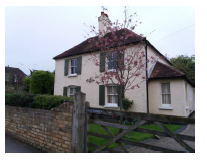
|
Development should be small in scale, height (two-storey) and mass, set well back from the lane edges and should be well articulated and site responsive. Reclaimed London clay or aged red bricks, warm-toned render, style- appropriate timber details, older door and window designs. Modern windows should be sympathetic to the existing or new buildings and their historic surroundings. |
Townhouse styles and terraces with frontages which are devoid of planting. Development which is in front of the normal building line or too close to plot boundaries. Unsympathetic materials and too modern UPVC window frame designs which lack "warmth" and attractive character. |
|
2. To avoid building styles suited to town centre roads rather than leafy country lanes which would gradually urbanise this corridor. Recent inappropriate developments should not be taken as precedents for future designs. To retain historic hedgerows and mature trees which provide important continuity in the character, appearance and biodiversity of the area. |
Pitched roofs with traditional slate, wooden shingle, quarry or similar tiles, chimneys, dentilled cornices and other brickwork patterns found in older buildings. Roof treatments for extensions should match main building roof style and materials. Frontages should include appropriate subtle variations which provide visual interest and avoid unbroken "flat" facades. Street-facing roof conversions should be unobtrusive, sensitive in design and materials, and consistent with the scale of adjacent older buildings. Extensions should be in keeping and subservient to the principal buildings. |
Rooflines, designs and materials which are incompatible with local heritage features or are overbearing in structure. Bulky or box-like shapes, inappropriate details and materials. |
|
3. To ensure that buildings infilling between or replacing existing villas and bungalows have setbacks and spacing which maintain the scale, atmosphere and appearance of the country lane. Positive site-appropriate examples include Monsell Walk, Brookside and Copper Horse Court in Hatch Lane and a range of new detached dwellings in Parsonage Lane. |
Front setbacks should be at least the average setback of the adjoining two buildings. Buildings should be set back from both side boundaries of the plot to allow space for vegetation between buildings. Front boundary treatments should be green and any historic walls, fences and gates retained. |
Boundary to boundary development, continuous hardstanding where no space is retained for planting along plot edges Isolated planters unconnected with the soil below . 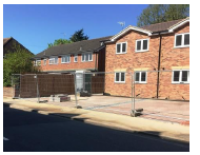
|
|
4. To maintain the quality and settings of the remaining ancient non-designated and designated heritage buildings. |
Development should especially respect the scale and vernacular architecture of any nearby remaining pre- or early-Victorian buildings and be subservient to larger listed ones. Existing 17th, 18th and 19th C. cottages and terraces are good examples of ordinary street architecture and continuous historic townscape. They also provide valuable visual and heritage context for listed buildings in and to the south of the Mill Lane CA. Listed buildings should be correctly maintained and LBC obtained for any works undertaken. |
Too large, inappropriate modern buildings beside small two-storey cottages. 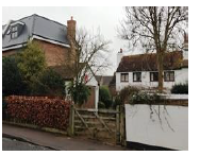
Dominating structures and "pastiche" styles. |
|
5. To retain natural green boundaries and planting. |
Where single homes are replaced with either larger ones or more dwellings, the new development should maintain a single access point or an "in and out" driveway. Hedges which have already been lost should be replaced with appropriate, preferably native, planting. |
Removal of hedges, trees and shrubs, particularly adjacent to roads. Multiple accesses which alter the character of the area and are considered unsafe with respect to local road conditions. |
|
6. To ensure that front gardens are not dominated by either impervious treatments, extensive driveways or car parking structures which will have adverse environmental and visual impacts. |
Care should be taken with vehicle access points to maintain, where necessary replace, or extend areas of planting. Encourage the use of driveway and parking surfaces appropriate to a rural setting such as gravel, rather than impermeable paving or hard-standing |
Front gardens dominated by paving and cars. |
Neighbourhood Area—outlined in black
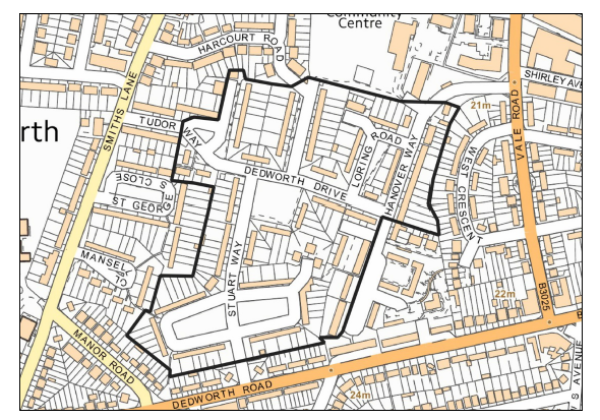
Area images
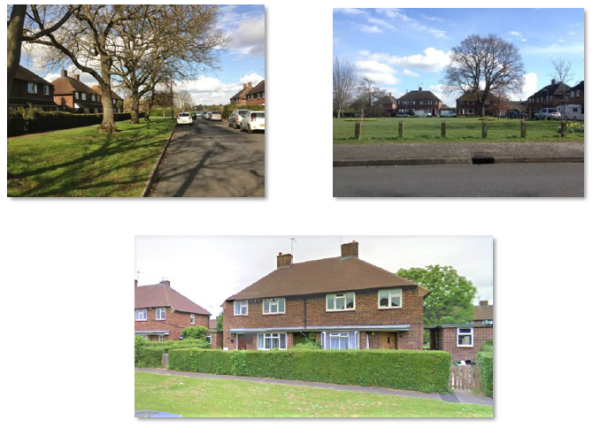
Area Description
The Dedworth Drive neighbourhood comprises a mostly 1950s area of public housing all of a similar design and laid out on Garden City principles with semi-detached houses on spacious plots with hedged boundaries, wide grass verges and village style greens.
Houses are red brick (rendered and painted in the first part of Stuart Way) with a stretcher bond and steep pitched tiled roofs. Houses are predominantly well-spaced semi-detached with hipped roofs and prominent central chimneys. There are also distinctive terraces of four houses with single storey hipped roof bungalows to the outside of a pair of houses with side facing gables. There is a variety of porch styles.
| OBJECTIVE | DESIGN RESPONSE | AVOID |
|---|---|---|
|
1. To ensure that infill and extensions complement existing buildings |
This is an area where the character is formed by the architecture being similar. New building should match in materials and style to the existing, with brick exterior of same type and bond as neighbouring properties. windows of same size and proportion, materials and colour as neighbouring properties. Roof materials and pitch to match those of neighbouring properties. Individual styling can be introduced with different porch types The building line is observed |
Different coloured bricks on external walls to neighbouring properties. Pebble dashed exterior walls. Black or dark window frames. Roof tiling of different material, size and colour to neighbouring property. Buildings forward of existing building line |
|
2. To ensure that building setbacks maintain the spacious feel of the estate. |
Side extensions to be set back from the front face of the building. |
Filling in the space between buildings so as to create the appearance of a terrace. |
|
3. To integrate roof extensions (see Borough Wide Design Guide) |
Dormers only on rear elevations with front roof windows flush with the roof and as unobtrusive as possible |
Making hipped roofs into gable roofs where hipped roofs are a distinctive feature of a row of houses. |
|
4. To ensure that the front gardens are not dominated by impervious surfacing, driveways or car parking structures |
With the exception of driveways, minimise impervious surfacing in front garden areas. Keep or introduce front garden vegetation. |
Front gardens dominated by car parking structures and hard surfacing. |
|
5. To maintain the front garden hedging which is such an important and attractive feature. |
Keep vehicle access width to the minimum allowed. Consider parking bays or strengthening grass verges for parking as an alternative to allowing vehicle crossovers. |
Removing hedges and replacing with fences or walls. Close boarded or panel fencing to street boundaries. |
|
6. To preserve and enhance trees, shrubs and green open spaces. |
New building should be sited and designed to minimise the loss of vegetation. Any trees or mature planting lost should be replaced. |
Any development impacting on the “village greens” |
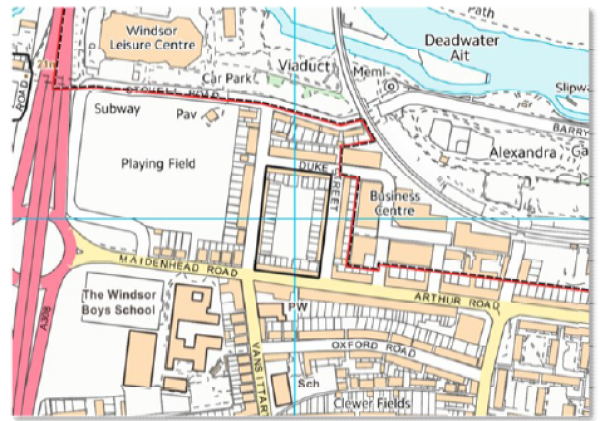
Neighbourhood Area—outlined in black
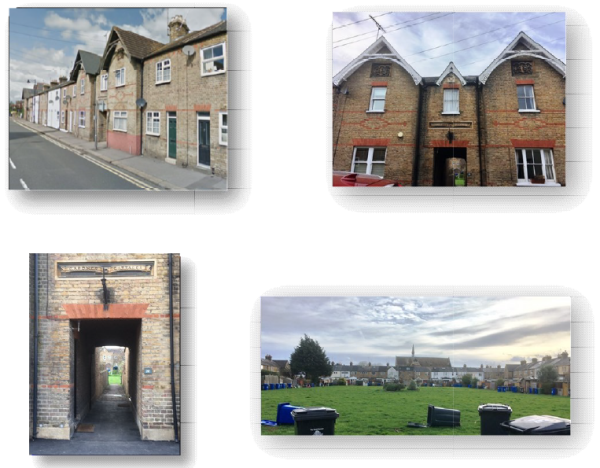
Area images
Area Character Assessment
Gardner Cottages is situated immediately to the West of Windsor town centre in an area of Victorian terraced cottages built largely from the mid nineteenth to the early twentieth century.
This unusual square of 96 two-storey workers cottages (plus 1 extra squeezed in later) fronting Albert Road, Vansittart Road and the L-shaped Duke Street, and with a large central green, was built in 1870 for Robert Richardson Gardner who owned a large number of cottages in the area and was the town’s MP from 1874 – 1890.
Each terrace of twelve cottages has a larger one at each end and a pair of larger ones in the middle flanking a passage leading to the rear. The cottages are built of London stock brick with red brick string courses, front door lintels and decorative brick panels in the larger cottages. The larger cottages have gables front and back with carved bargeboards and with the Gardner and Richardson arms carved in the front gables.
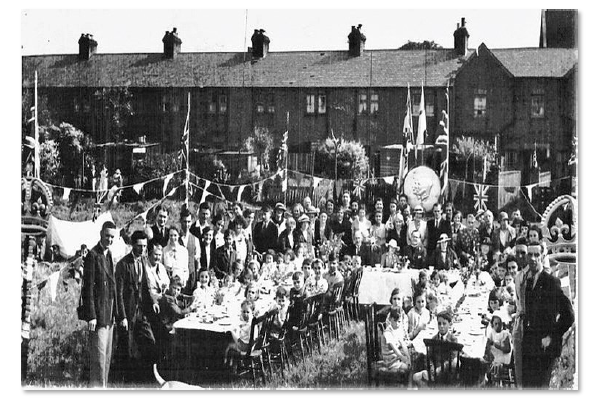
It is believed that Gardner Cottages was one of the projects for better working class homes following on from those encouraged by Prince Albert. Residents there after the Second World War recall that as children they appreciated the chance to play safely on the “green” though they also played on the street as well. There is a locally well-known picture of a party on the green believed to be for the coronation of King George VI in 1937.
The original architecture of the cottages is already considerably altered by painting, rendering and replacement of windows and doors but the group remains an interesting and attractive addition to the townscape.
(Much of the potential alteration to these cottages is presently permitted development and as such cannot be directly influenced but we hope that by publicising what is considered to be good practice for repairing and altering these historic buildings, owners will be encouraged to retain historic features and even to replace some of those which have been lost.)
| OBJECTIVE | DESIGN RESPONSE | AVOID |
|---|---|---|
|
1. To encourage the preservation and enhancement of this unusual set of planned workers cottages |
Conservative repair of external walls. Replace spalled bricks with similar or red render to retain the string courses and decorative red brickwork. Retain chimney stacks |
Further loss of heritage features by painting or rendering brick-work, particularly of the larger cottages. Especially avoid painting over the carved plaques Removing chimneys. |
|
2. To preserve the roof-scape as far as possible when roof conversions are carried out. |
The minimum number of small conservation roof-lights only Modest rear rooflights, preferably roof dormers only. Dormers if permitted finished to match the roofing materials. Re-roofing in slate or slate-like tiles. |
Roof-lights which dominate the roof slope. These cottages are unusual in that the rear elevations are very visible from the central “green” and excessive or intrusive rear dormers or rooflights should be avoided. Concrete tiles. |
|
3. Seek opportunities to retain original windows and doors or, if they have to be replaced do so with traditionally derived features using natural materials. |
Wooden sash windows and wooden front doors. Windows should be inset and not flush with the external wall. Windows should as far as possible keep or restore the original window sizes. Where bow windows remain these should be retained if at all possible. |
UPVC windows and doors and windows of a different size shape, materials or pattern from the original. |
|
4. Retain each cottage’s small back garden as far as possible |
The scale of new extensions should be sympathetic to the scale of the existing buildings. Extensions should be designed to match the original, preferably in recycled bricks and with recessed windows to match existing. |
Boxy over large extensions in inappropriate materials Large expanses of glass. |
|
5. Seek opportunities for more attractive bin storage. |
Communal purpose-built stores? |
Most bins are now stored on the "green" which is unattractive. (see photo) |
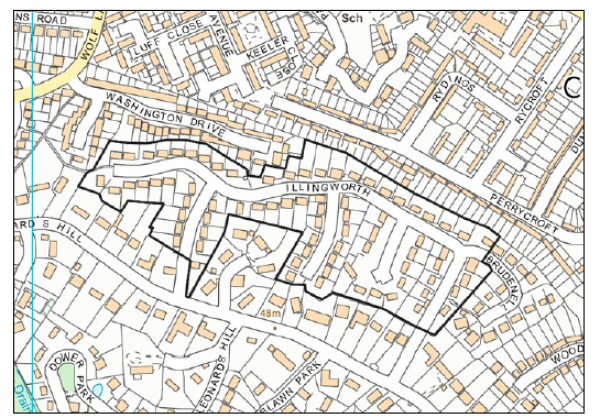
Neighbourhood Area—outlined in black
Area Images
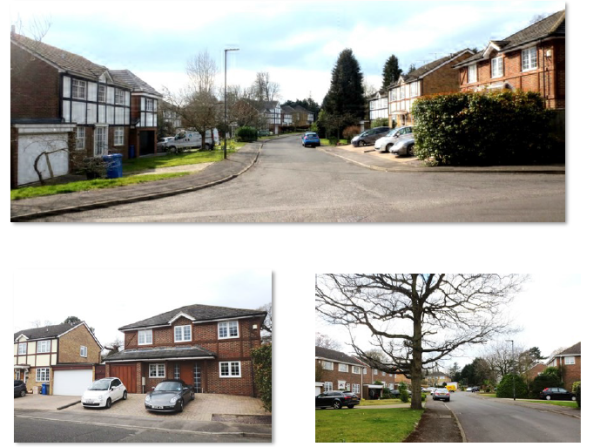
Area Character Assessment
Illingworth comprises a residential Estate built around the 1970's. The Estate is a loop off St Leonards Hill, a much sought-after large cul-de-sac, and is thus blessed with no passing traffic. There are some 80 houses on the Estate, all originally built as two storey houses with open front gardens. The houses are of a similar mock Tudor/Georgian style in one of two brick colours, with the same colour roof tiles and pitch. The houses at the entrance of the Estate are larger than the ones at the top of the Estate. A significant proportion of residents have extended their houses both sideways and upwards, whilst ensuring the style of the house is maintained.
| OBJECTIVE | DESIGN RESPONSE | AVOID |
|---|---|---|
|
1. To ensure that buildings are well articulated and relate to neighbouring houses and match the street scene |
Buildings should have the appearance to the street of two storeys. Roof windows facing the street to be flush with the roof |
Dormer windows facing the street. Roof line increased by more than 1 metre. |
|
2. To ensure that buildings complement existing buildings |
Wholly or partial brick exterior of same type as neighbouring properties. Windows of same size and proportion and colour as neighbouring properties. External shutters to match neighbouring properties Roof materials to match those of neighbouring properties. The building line is observed |
Different coloured bricks on external walls to neighbouring properties. Pebble dashed exterior walls. Black or dark window frames. Lack of external shutters when neighbouring properties have such. Roof tiling of different material, size and colour to neighbouring property. Buildings forward of existing building line. Roof pitches which differ from those of neighbouring properties. |
|
3. To ensure that building set-backs allow space between dwellings. |
Dwellings should be set back from both side boundaries. |
Boundary to boundary development. |
|
4. To ensure that the front set-backs are not dominated by impervious surfacing, driveways or car parking structures |
Locate garages, carports beside the building. Provide a balance of driveway and front garden. |
Front setbacks dominated by car parking structures and hard surfacing. Gun barrel driveways. |
|
5. To ensure that car parking structures, driveways, manoeuvring areas and out-buildings do not dominate the streetscape. |
Locate garages, carports beside the building. Provide a balance of driveway and front garden. |
All the front area devoted to car parking. Garages set more than 1m forward from building line. |
|
6. To encourage open frontage treatments, including the use of vegetation instead of front fencing and/or low fencing |
Provide no front fence Alternatively, provide an open style fence up to 0.9 metres in height. Low vegetation at the front boundary |
High, solid front fences. Loss of open frontages. Dwellings set too far forward. Car parking structures and driveways dominating the front setback. High hedges or vegetation. |
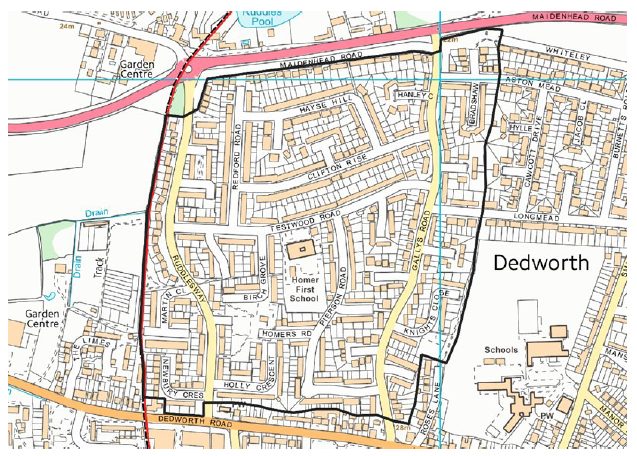
Neighbourhood area—outlined in black
Area images
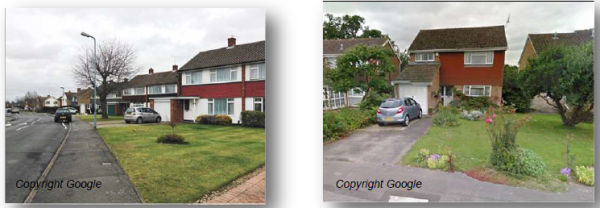
Area Character Assessment
The Laing Estate is a residential area, located on the west side of the Windsor Neighbourhood Plan area. The estate was built by John Laing, starting in 1962 and finishing in 1969 /70.
The land slopes gently from its southern boundary, the Dedworth Road, some 7 to 10 metres down to its northern boundary, the Maidenhead Road. Gallys Road and its side roads form the eastern boundary and Ruddlesway and its side roads form the western boundary.
The estate comprises a mix of residential units. Those on the Maidenhead Road and on the lower part of the west side of Ruddlesway are detached two storey homes. The remainder include bungalows, semi-detached two storey units, three storey town houses, terraced two storey units and additional detached units. At the heart of the estate lies Homer First School, attended by 218 pupils between the ages of 5 to 9 (Ofsted Report 2013).
The layout of the estate embodies a distinctive and attractive character, using gently sweeping curves rather than a formal rectangular grid and this brings a pleasant individuality to the location of each of the homes. The front gardens are open plan in that there are no fences or front garden hard boundary features. These gardens were originally laid to lawn and these generally remain, although over the years some have been transformed into hard paved areas for the parking of cars.
A consistent set of design features were used in the construction of the estate and this impression is readily evident as one passes along the roads of the estate. The original floor areas of the detached properties on the Maidenhead Road and Ruddlesway are of a similar size and are of a similar height. So too are the semi- detached and terraced properties. Only the town houses are three storey.
The properties have been constructed using brick elevations, under pitched, tiled roofs. Window areas in the elevations are generous, giving the interiors the benefit of natural daylight and the advantage of good aspects from within the properties.
The developers wished that these features should be retained and the deeds of individual properties included covenants that were intended to achieve this outcome.
Development Guidance
| OBJECTIVE | DESIGN RESPONSE | AVOID |
|---|---|---|
|
1.To ensure that future development on the Laing estate conforms to the building forms and appearance that were employed in the original design |
Development should not exceed the height and bulk of surrounding buildings unless it can be shown to have no adverse effect on the character of the estate. The building line should be observed. Materials should be of high quality in keeping with surrounding properties. |
Buildings that are not in character with nearby buildings on the estate. |
|
2.To ensure that building setbacks maintain the spacious feel of the Estate |
Spatial separation between buildings should be retained in order to maintain the character of the street in which the buildings are situated. Side extensions are to be setback from the front face of the building |
Infilling between buildings where this creates the appearance of new development forming a terrace with adjacent buildings, where none previously existed. |
|
3.To ensure that future development conforms to the style and character employed in the original design. |
Elevations and roofs of new development should conform to the style and character of the surrounding buildings of a similar use category. |
The use of building materials which are different in character to those used in the construction of the Estate |
|
4.To integrate roof extensions |
Dormers should be constructed only on rear elevations. |
Making hipped roofs into gable roofs. |
Development in the WNP area must make adequate provision to meet objectively assessed parking needs of inhabitants, visitors and tradespeople.
1. New housing developments that include the provision of garage space must be of the minimum space size for cars 7.0m x 3.0m (internal dimension) for this to be counted as a parking space. If a garage is proposed, then the driveway must be of a sufficient length to allow a second car to park clear of the pavement whilst providing space for the garage door to open.
2. Consideration of underground and/or undercroft parking will be encouraged for an efficient use of space, subject to design considerations.
3. Front garden parking must consider design guidance in the Borough Design Guide and WNP General Design Guide.
4. In cases where planning permission is necessary for alterations and extensions to properties, support will not be given for the conversion of garage space to habitable rooms/residential use where there is inadequate space to park cars off the street in line with the parking standards.
5. Development proposals should not result in a net loss of parking spaces.
6. Design and layout of off- site parking areas, on street parking areas, garage parking blocks will be designed to allow ease of access from driveways and accessibility to parking areas without causing obstruction.
7. A range of parking solutions should be used appropriate to the context and the types of housing proposed. Where parking is positioned to the front of the property, ensure that parking area is balanced with at least an equal amount allocated to an enclosed landscaped front garden as it is for parking to reduce vehicle domination.
8. Allow for plenty of trees, planting and landscaping. Wholly paved front gardens should be avoided.
9. Where rows of narrow terraces are proposed, consider positioning parking within the street scene, for example a central reservation of herringbone parking.
10. Where parking is limited, in/out driveways should be discouraged.
11. To reinforce the spatial enclosure of the street, the areas reserved for parking and landscaping and footpaths should be made clear. Use discrete marking such as small brass numbers or block markers rather that white lines to delineate spaces, to avoid unsightly markings.
12. Ensure parking is visible from homes so that users know it will be safe, where possible avoiding rear parking courts.
13. In major developments, a combination of allocated and unallocated spaces is suggested.
14. The Borough’s former Parking standards provided good guidelines for the provision of parking spaces in new developments, although the historical note below does suggest a lack clarity of process.
In the absence of a timetable for the implementation of proposed revised RBWM standards, the existing standards are preferred and are re-stated in the table below.
Preferred Residential Parking Standards: As per Borough Parking Strategy (Adopted in May 2004 as a non-statutory plan) Section 9.
USE |
PREFERRED AREA (poor accessibility) |
PREFERRED AREA (good accessibility) |
|---|---|---|
GENERAL RESIDENTS |
||
1 bed unit |
1 space per unit |
½ space per unit |
2-3 bed units |
2 spaces per unit |
1 space per unit |
4 or more bed units |
3 spaces per unit |
2 spaces per unit |
Flats and HMO |
1 space per bedroom |
½ space per bedroom |
HOSTELS & HOTELS |
||
Hostels |
1 space per 3 residents |
1 space per 6 residents |
Hotels / Guest houses |
1 space per bedroom |
1 space per 2 bedrooms |
OLDER PERSONS HOUSING |
||
Active elderly with warden control |
1 space per unit |
½ space per unit |
Nursing and rest homes |
1 space per 4 residents plus 1 space per full-time staff |
1 space per 8 residents plus 1 space per full-time staff |
Historical note:
These former standards are embedded in the **Local Transport Plan (2006 – 2011)** Section 8.7 and the **Borough Parking Strategy (Adopted in May 2004 as a non-statutory plan)** Section 9.
In November 2007 Cabinet resolved not to pursue a major Park & Ride facility on the Windsor and Eton relief Road corridor and to develop an alternative strategy.
The Windsor Parking Strategy (2009) replaced documentation specifically relating to parking in Windsor in the Local Transport Plan and the Parking Strategy document (as above). However this 2009 document contained only 2 pages of text and excluded any mention of parking standards on all new and expanded developments.
Whilst councillors and officers continue to refer to the **2004 Plan**, it is not clear whether such standards remain valid.
Consider BLP 2013-2033 Submission Version (2017)
4 references to Parking are included.
Housing: Para 7.14: Policy HQ 6 - Loss and Sub-division of Dwellings
Sub Para 1.h provides for “satisfactory access, car parking and secure cycle parking”.
Sustainable Transport: Para 14.4.14
Consideration will be given to the provision of development proposals with zero parking in Town Centres, providing it does not create new or exacerbate existing on-street car parking problems.
Local Transport Plan: Para 14.6.3
In terms of car parking, development proposals should incorporate appropriate and effective parking provision and vehicle servicing arrangements consistent with the Council’s Parking Strategy which will be used to negotiate the number of parking spaces which are provided. This should be read in conjunction with any locally specific parking standards included in Neighbourhood Plans. A Supplementary Planning Document will be produced, which will include parking standards and parking design and be in line with the Parking Strategy.
Sustainable Transport: Para 14.7: Policy IF 2
Sub Para (2): The Council will develop and implement revised parking standards. Transport and parking proposals including any varied parking standards set out in Neighbourhood Plans that have been made will also be supported.
Consider the Infrastructure Delivery Plan (May 2017) forming part of the BLP 2013-2033
2 references to Parking are included.
RBWM Parking Strategy
Para 3.1.7
Policies relating to parking have been set out in the Borough Parking Strategy, which was adopted in May 2004 as a non-statutory plan. It provides detailed policy on parking throughout the Borough, including the level of parking expected in new developments.
Para 3.1.8
The Strategy covers all aspects of parking across the borough and aims to manage the stock of public parking subject to public control in a manner that supports the objectives of the Local Transport Plan. The Windsor Parking Strategy (2009) replaces documentation specifically relating to parking in Windsor embedded in RBWM Parking Strategy (currently under review).
1.1 Introduction
This guide is intended to provide advice on the design of businesses and shop fronts within the designated Windsor Neighbourhood Plan area, and should be taken into account when planning replacement or new shop fronts within the WNP area as per the WNP Policy RET.01.
Most shops in the WNP area are in buildings which vary in character and period, from converted Victorian buildings, to small mid-twentieth century parades or clusters, or more modern purpose built structures. There are some in Victorian buildings which have been converted without much care for their context. Although the architecture of some quite modern buildings and shop fronts can be seen anywhere in the country, it is the view of the WNP that, in places, their appearance can be improved.
General Principles: Any shop front should reflect the building overall. A sense of local character should be encouraged. Exterior metal roller shutters should be avoided. Where possible the whole frontage area including parking and landscaping should be considered, as well as pedestrian and disabled access.
In developing this guidance document the Neighbourhood Forum has taken into account the wider social, cultural, economic and environmental benefits that the conservation of the historic environment can bring (NPPF), and the current RBWM guidance.
1.2 Key Objectives:
The key objectives in relation to business and shop front design and signage in the Windsor Neighbourhood Plan area are as follows:
To ensure the retention, refurbishment and reinstatement of original architectural features of merit. including pilasters, console brackets, cornicing, stall-risers, recessed doors, brickwork, doors and windows, and other traditional detailing, using buildings materials as may be identified, to retain and enhance the character of the area.
To support well-proportioned frontages. Doors, fascias and windows and canopies should be in proportion with the building itself, including the upper floors, and not overlarge. Glazing bars should be used to sub divide large areas of glass
To use appropriate materials from our General WNP Design Guide, in keeping with the wider building, high quality, and in materials and colours appropriate to the overall building.
To ensure accessibility to all including those with disabilities and prams and pushchairs (as per current building regulations).
To create attractive window displays at all times, that are not obscured by advertising (which creates a "dead" frontage). Vacant shops empty for more than 2 months or awaiting renovation should use imaginative ways to avoid looking run down, (such as through the use of temporary vinyl pictures).
To integrate security features, which have a minimum impact on architectural features. Toughened security glass, internal fine grilles or mesh are more effective for security and preferred to external roller shutters which damage the street scene (and which are anyway strongly discouraged by RBWM).
Signs, canopies and awnings should be in proportion to the building frontage and not obscure the shop front, obstruct the view or damage the public realm and street scene. Signage that is discrete, is sympathetic to the character of the building and street, and brand advertising that does not dominate the architecture and character of the building or surroundings, is preferred.
Make maximum use of the forecourt (where within the shopkeepers control), incorporating soft landscaping and benches and parking where possible, without obstruction of the highway, footway or visibility (and conforming with RBWM licensing rules for use of forecourts), contributing to the attractiveness and vitality of the street scene.
Colour to be used sympathetically and harmoniously within individual frontages and in relation to neighbouring buildings. Aesthetic cohesiveness of decoration within shopping parades, as well as in the decoration of individual shops adds to the visual attractiveness and experience of these areas.
1.3 WNP Illustrative examples
| Figure 1 Bumbledee | |
|---|---|
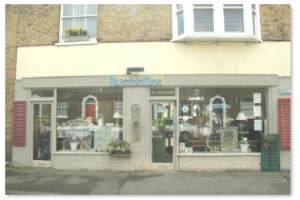 |
Attractive window display. Incorporates traditional brickwork into the design, good use of stallriser, small fascia. Harmonised paint colour both within the shop front and with the brickwork. Flowerboxes brighten up the frontage. |
| Figure 2 Buds & Blooms | |
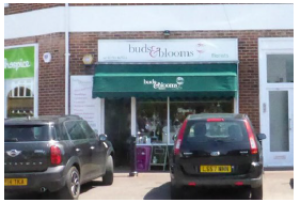 |
Good use of stall-riser, white mullions, sensitive canopy, discrete signage. |
| Figure 3 The Co-Op | |
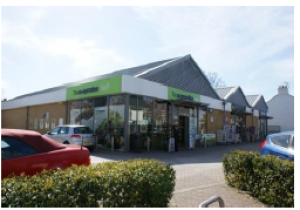 |
Modern integrated plate glass shop front suitable for the style of building along with soft landscaping of the parking area. |
| Figure 4 Hetpole Pharmacy | |
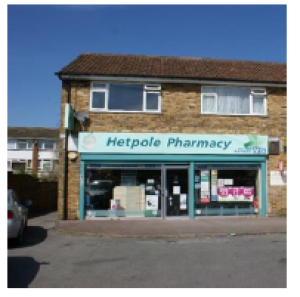 |
Signage is in proportion, and the colour scheme is integrated between the frame and the sign. The shop interior is visible despite the stick-on signs, so the frontage is kept alive. |
| Figure 5 Blossoms | |
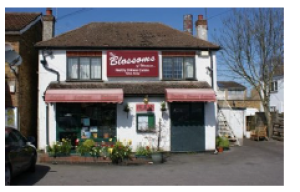 |
Planted flowers brighten up the tarmac parking area, and canopy, signs, and building have an integrated colour scheme, and are in harmony and proportion with the building. |
| Figure 6 Security shutters | |
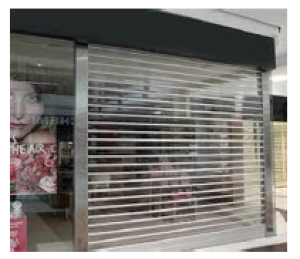 |
If security shutters are absolutely necessary, then see-through integrated designs like these are preferred rather than external box solid metal roller shutters, which create a dead appearance and enhance the perception of crime. |
Figure 7 A traditional shopfront
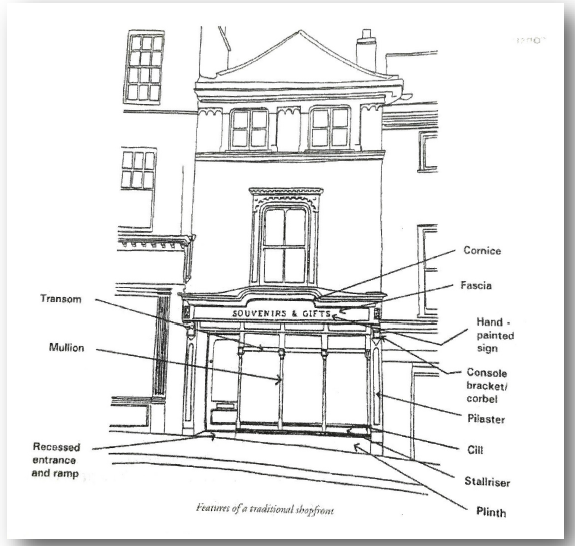
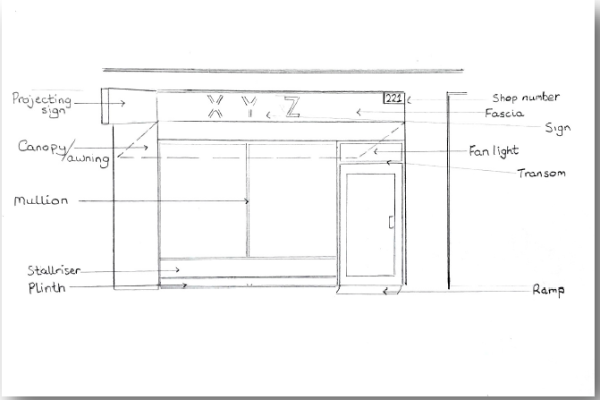
Figure 8 A typical Modern Shopfront
Endnote
We are proud of our area and we believe that no one wants to build buildings which people who live nearby or pass by will dislike. This document should help to prevent inappropriate new developments by explaining the kind of buildings and features which the people who live and work in our Neighbourhood Plan area would like to see being built here. Developers will of course have to consult a whole range of documents in the course of project planning and design. Alongside this design guidance, the following documents should be helpful in ensuring good design which is appropriate for the WNP Area.
< Previous | ^ Top | Next >