
Note:
The following list is compiled and managed by the Windsor and Eton Society but incorporated into this Neighbourhood Plan with the permission of the Society. The list covers the whole of Windsor and so some of the assets listed are not in the area of the Windsor Neighbourhood Plan but are in the area covered by the Windsor 2030 Neighbourhood Plan. Those assets in the following list which ARE in the WNP are shown in the list in shaded boxes. Text in red denotes significant non-listed buildings identified in Conservation Area Appraisals prior to the compilation of this list
This version of the list is dated April 2019 and there may be a later version. The latest version of the list can be accessed via the Windsor and Eton Society website https://www.wesoc.org.uk/heritage-environment/non-designated-heritage-assets (control + click)
Version 5, March 2019
This list has been compiled by the Windsor and Eton Society with the assistance of conservation officers from the Royal Borough of Windsor and Maidenhead and members of the Society and the general public. It has also been adopted as an appendix to the Windsor Neighbourhood Plan.
The list is primarily comprised of buildings but a “heritage asset” does not need to be a building, it can be a structure such as the Lych Gate at W26/16 or an object such as the post box at W5/16 or the Bylaw Notice at W24/16. A heritage asset can be something very modest such as the outbuildings at W92/16 or the cottage at W29/16. Indeed it will often be especially important to identify more modest heritage assets which make an important contribution to character as they are likely to be more at risk than prominent heritage buildings. It is the context in which the asset sits and its particular contribution to character or history that will determine its inclusion in a list.
It is intended that each building, object or structure included here will now be assessed by a Panel comprising RBWM Councillors and officers, a local architect, an independent expert, and Members of the Windsor and Eton Society, against criteria provided by RBWM officers. (see next page). The Panel will decide which buildings and structures should be put forward to RBWM to form an Approved List. (note: this process has been put on hold due to lack of resources at RBWM)
National Policy supports the preservation and enhancement of Heritage assets of all kinds whether designated or not. “The effect of an application on the significance of a non-designated heritage asset should be taken into account in determining the application. In weighing applications that directly or indirectly affect non-designated heritage assets, a balanced judgement will be required having regard to the scale of any harm or loss and the significance of the heritage asset.” (NPPF paragraph 197). Developers are expected to explain the effect of any proposed development on a NDHA or its setting (or indeed on any identified heritage asset, whether on a formal list or not) and to justify any adverse impact.
Assets listed in the following tables in red were proposed as “important non-listed buildings” via a formal Conservation Area Assessment, prior to work starting on these NDHA lists.
The list will be regularly reviewed and updated at least twice a year and suggestions for additional assets to be added to it are welcome. We would also be delighted to hear more about the history of any of the assets listed in order to enrich understanding of our town’s past.
Windsor and Eton Society
Criteria for identifying buildings or features of local significance
To be considered for inclusion in the formal list, at least two of the following criteria should be met:
Windsor NDHA List - in alphabetical order by street
| Location | No. | Photograph | Description/Justification (Numbers refer to list of criteria on page 3) |
|---|---|---|---|
| Alexandra Road 14 - 28 | W1/16 | 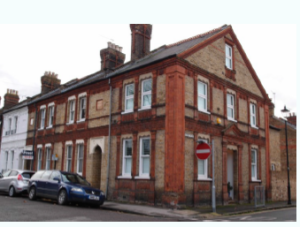 |
Highly decorative terracotta, classical detailing on modest terraced dwellings is particularly striking. These examples, built in the 1880s, survive intact with one having been unfortunately paint white. They represent the high quality approach to building by local house builders that reflects the desire of each to stand out and provide the most attractive dwellings they could. (1, 4, 8) |
| Alma Road Camperdown House | W2/16 | 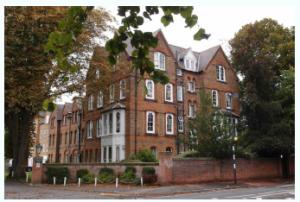 |
Late 19th Century survivor of St Mark’s School built as a dormitory during 1870's. Four storey large detached property of London Stock brick with red clay brick details and gauged brickwork to window heads. Two storey canted stuccoed bay windows to and decorative sash windows throughout of four over four, now flats. (1, 2, 6, 7, 8) |
| Alma Road | W3/16 | 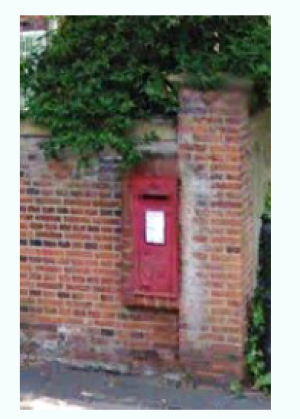 |
George V 1910 – 1936 post box inserted in brick wall. (4, 8) |
| Alma Road Outside No. 1 | W4/16 | 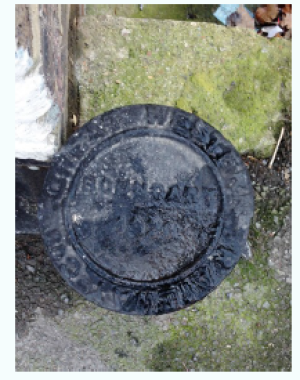 |
Cast iron post set into the pavement at the corner of no 1 Alma Road and reading: “Great Western Railway Boundary 1920”. (4, 5, 7) |
| Alma Road Kwik Fit No. 22A | W5/16 | 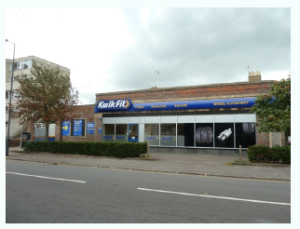 |
Art Deco brick building rare in Central Windsor. Once a prominent corner site which was once occupied by a large villa - no 12 Clarence Crescent. No 12 was at one time the home of George Job Elvey, composer and organist at St George's Chapel for 35 years. No 12 appears to have been demolished by 1926 for unknown reasons and may have been a garage before a Co-operative Store was built about 1930. (1, 2, 7) |
| Alma Road No. 44 | W6/16 | 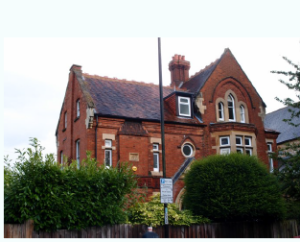 |
detached three storey red clay brick property featuring stone window dressings, two storey canted bay window and dormer window. Victorian gothic revival in style. (1, 3, 4, 8) |
| Alma Road Nos. 53/55 | W7/16 | 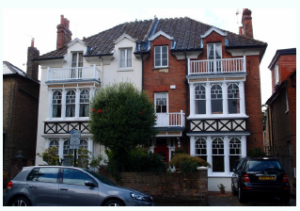 |
Late 19th Century semi-detached three storey property. Square bay windows over ground and first floor to both along with four small dormers protruding the roof line. Decorative glazing and balconies to both properties and decorative clay tile roof. Number 55 is stuccoed to the front elevation while number 53 is red clay brick. (1, 4, 8) |
| Alma Road Nos. 56 / 58 | W8/16 | 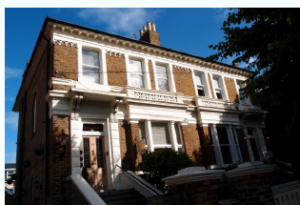 |
Mid 19th century pair of semi-detached two bay, two storey properties with basements. Highly decorative with stucco details against London Stock brick construction with shallow pitch slate roof. Details include pierced Juliette balconies, tripartite sashes to ground floor, arched sashes, returns, decorative cornice and corbelled porch head. Original boundary wall survives. London Stock brick and pierced stone. (1, 4, 8) |
| Alma Road Hunters Mews No. 6 | W9/16 | 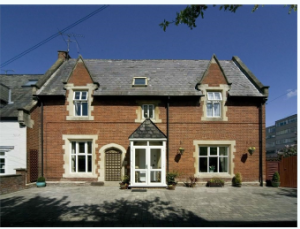 |
Now a private residence but said to have been at least partly built about 1855 as the original Holy Trinity Primary School and then St Ann's School when Holy Trinity moved to its present site in Vansittart Road. Brick façade with string course and ornate stone window and door surrounds. Steeply pointed dormers protruding into the roof. Behind the modern glass porch is an arched stone doorway, similar to the one to the left. (4, 6, 7, 8) |
| Arthur Road The Duke of Connaught No. 165 | W10/16 | 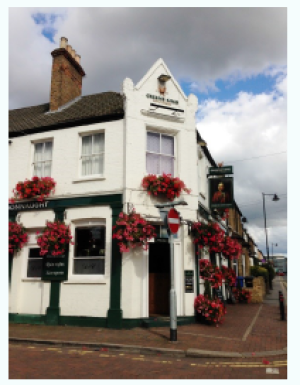 |
On the corner of Arthur Road and Duke Street. One of the few remaining examples of the areas' Victorian pubs still in use. Mid 19th Century. 2 storeys, brick built, terraced corner building with angled entrance and gable feature above. Pilasters to ground floor, 4 to each elevation. One door blocked off but door step remains. Timber sash windows at first floor (2, 4, 7, 8) |
| Barry Avenue Browns Restaurant | W82/16 | 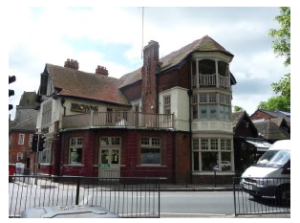 |
Early 20th century property within prominent location. Significantly altered and extended. Series of pitched roofs with red tile. Red brick. (1, 2, 8) |
| Barry Avenue Nos. 1 to 18 | W11/16 | 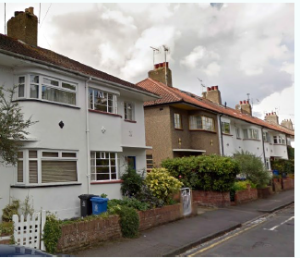 |
4 Terraces of 1930s Art Deco "sun trap" style houses, rare in Windsor. Much altered but a few still with curved Crital type windows (nos. 1, 3, 10, 11 and 13) and original doors. Many of the harled facades are now painted but a few still retain the plain unpainted treatment with decorative motifs. (1, 4, 8) |
| Bexley Street The Bexley Arms | W12/16 | 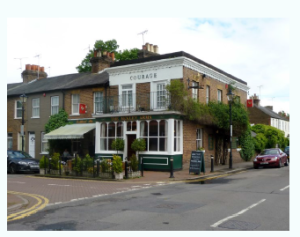 |
Pretty nineteenth century pub with much needed greenery. Mid 19th Century. 2 storey and end of terrace. Pitched slate roof behind parapet with frieze on three sides. Yellow brick. Projecting ground floor to main entrance and steps up to doorway. Garden to side and rear. (1, 4, 8) |
| Bolton Avenue Coach House | W13/16 | 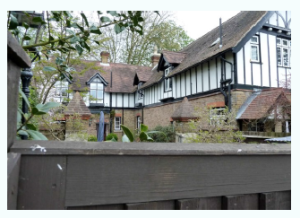 |
Built in 1897 this was the original stables to Essex Lodge, and the ground floor still has features from those days-for example flag stone floors, and front yard. It was once the home of Miss Lethe who was Matron of Princess Christian Hospital, her sister and mother. (4, 7, 8) |
| Bolton Avenue and Osborne Road Essex Lodge See Osborne Road | W14/16 | ||
| Bolton Avenue No 20 Audley Mead | W15/16 | 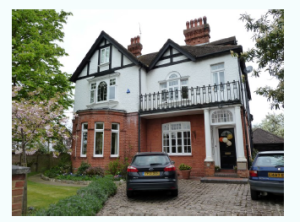 |
Edwardian detached 3-storey villa, red clay facing bricks to ground floor with harled and painted surfaces above. Much interesting detail including five part ground floor angled bay window with an oriel window above, pillared entrance and decorative "aesthetic" style cast iron balcony rail. (1, 4, 8) |
| Bolton Avenue No. 23 Burnell House | W16/16 | 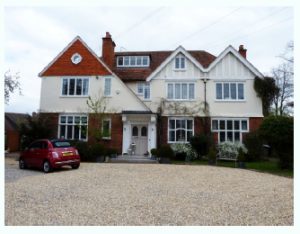 |
Edwardian 3-storey villa with asymmetric design and grand doorway. Red brick ground floor and rendered and painted above. Three front facing gables, one tile hung with circular window and long shallow dormer in the roof. (1, 4, 8) |
| Bolton Crescent No. 36 | W17/16 | 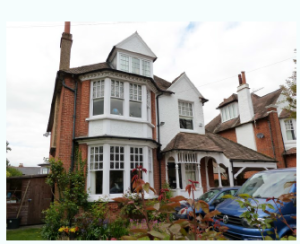 |
3-storey, prominent Edwardian red brick villa incorporating a two storey angled bay window. Tall wooden sash windows the top light divided into nine panes above a plain lower light. Rustic style curved wood porch with tile roof to match the main roof. Large dormer to third floor with three twelve pane lights to the window. (1, 4, 8) |
| Brook Street No. 2 | W18/16 | 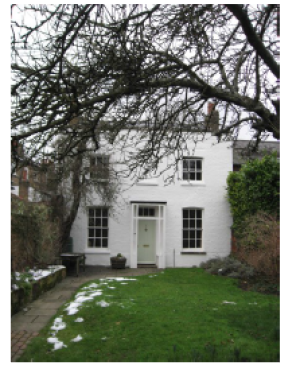 |
Simply styled early or mid Victorian villa with central doorway and low pitched slate roof in attractive green setting, well back from the road providing a significant relief from the urban surroundings. (3, 4, 8) |
| Church Lane No. 1 | W83/16 | 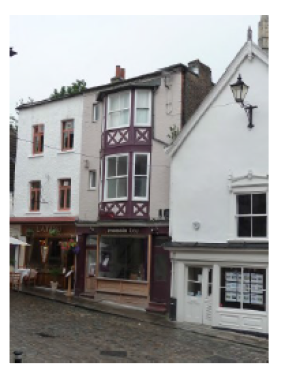 |
construction with decorative features such as timber balconies and large bay windows (1, 3, 4, 8) |
| Church Street Nos. 1-3 | W84/16 | 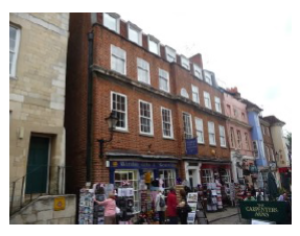 |
Altered shop front beneath two storey 19th Century, 3-storey red brick building. 3 sliding sash timber windows at first and second storeys, either side of narrow projecting 3 storey central bay. Moulded stone string course between first and second storey has range of large dormers. Two symmetrical shop fronts each with double bow windows either side of central door. (1, 4, 8) |
| Bolton Road - Queen's Acre Cottage Groom's Cottage Coach House Cottage | W2/17 | 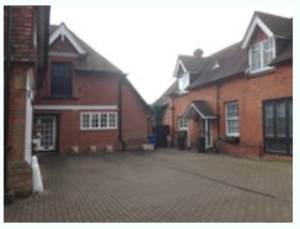 |
A rare survival of ancillary buildings to the 1880's Queen's Acre House, sensitively converted to residential use. A pleasing informal group of red brick, pantile hung, buildings round a courtyard. The section facing the road still has a first floor doorway for hoisting in hay or grain and the on the left is what looks like an original carriage house double door. (4, 7, 8) |
| Clarence Road - The Colonnades Parade of shops | W19/16 | 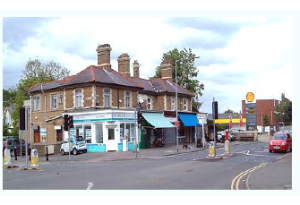 |
Clewer Old Police Station now shops. Cells said to be still there at the rear. Classical stone quoins to windows and wall edges and prominent decorated chimney stacks. (2, 4, 6, 8) |
| Clarence Road - The Residence | W20/16 | 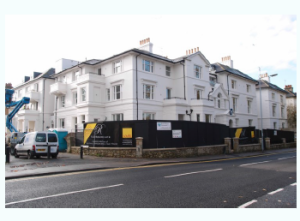 |
Originally a series of villas called Clarence Villas, subsequently joined to become the Princess Christian Hospital. Now converted to flats called The Residence. Three storey with basement, stuccoed entirely with ruling on ground floor. Later addition of two storey entrance bay with semi-circular pediment and rusticated voussoirs within the arch and exaggerated key stone, first floor additions include a Serulian window. Moulded corbels and window heads and string course. Impartite sashes throughout similar in style to 22 Clarence Road and 1 Dorset Road. (1, 2, 3, 4, 6, 8) |
| Clarence Road No. 22 (also 1 Dorset Road) | W21/16 | 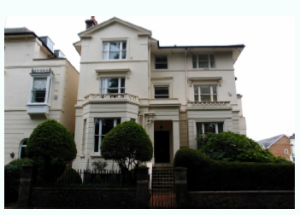 |
Joined three storey properties dating from mid 19th century. Stuccoed (ground floor ruled) Italianate styled suburban villas with projecting eaves, pierced stone detailing and corbelled window heads. Canted bay window to ground floor of number 22 and two square bay windows to number 1 Tripartite sashes remain throughout. (1, 4, 8) |
| Clarence Road Nos. 26 / 28 | W22/16 | 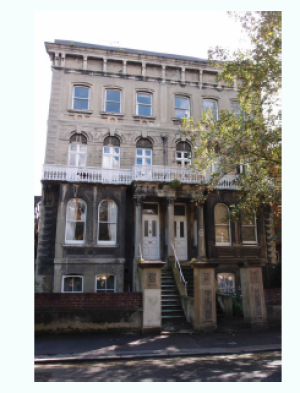 |
An imposing, semi-detached, 4 storey building in an Italianate style, considerable decoration lavished on the elevations with a decorative iron balustrade at first floor level, key stone detailing above windows and decorative modillions and cornice mouldings at eaves height. Vermiculated gate posts and front wall bound the site along Clarence Road. (1, 4, 8) |
| Clarence Road No. 34 | W23/16 | 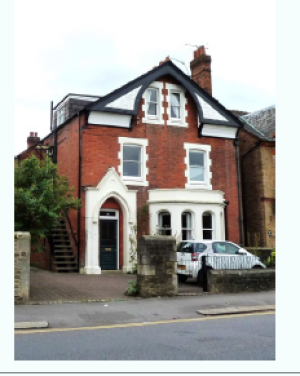 |
Late 19th century former Methodist Manse previously known as Epworth Villa, the house is styled after the Windsor Methodist Church which is adjacent. Three storey, two bay red clay brick property with carved detailing to the gable end. Ground floor stuccoed canted bay window and porch modelled after the entrance to the church with lancet arch. (1, 3, 4, 8) |
| Clewer Fields | W24/16 | 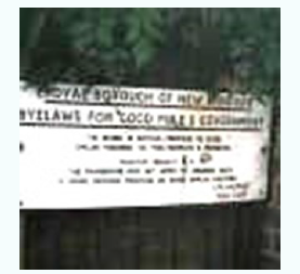 |
Cast iron Royal Borough of New Windsor bylaw notice attached to a wall at the Alma Road end of Clewer Fields. New Windsor was incorporated into the Royal Borough of Windsor and Maidenhead in 1974. (6, 8) |
| Clewer Hill Road Nos. 32 – 42 Albert Cottages | W2/18 | 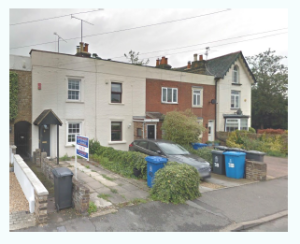 |
A rare (for Windsor) surviving row of Georgian (1821 or earlier) workers cottages with a grander house at either end (later?). The group of eight terraced houses in the centre are typically Georgian with flat fronts and a pediment hiding a shallow pitched slate roof behind. The right hand four are red brick with interestingly shaped window surrounds? in stone. There is a step back to the remaining four plainer left hand houses in yellow brick. The two end houses are three storey with ground floor canted bays, arched second floor windows, steeply pitched front facing gables and prominent decorative barge boards. (1, 4, 8) |
| Datchet Road The Royal Oak | W85/16 | 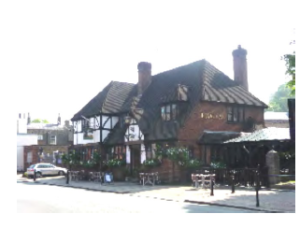 |
19th century public house of dark red brick construction. Prominent building in terms of location. Steep pitched modern tile roof with dormers. Applied timber for decorative features. Timber case-ment windows with leaded lights. Timber doors. |
| Dedworth Road No. 10 | W25/16 | 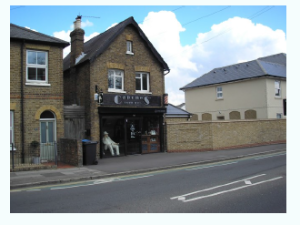 |
Former Clewer New Town Post Office now a barber shop. Built in 1886. London Stock brick with prominent front facing gable and carved barge boards. Rather unusual pitch attached to upper floor windows. Modern shop front. (4, 6, 8) |
| Dedworth Road - Clewer Memorial Park | W26/16 | 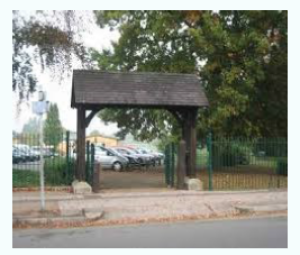 |
The lychgate came from the Church of the Saviour which was situated in nearby Bier Lane. This is all that remains of the church as this has since been demolished. It was placed at the entrance to the park as a heritage feature. (1, 6, 7, 8) |
| Dedworth Road - All Saints Church | W27/16 | 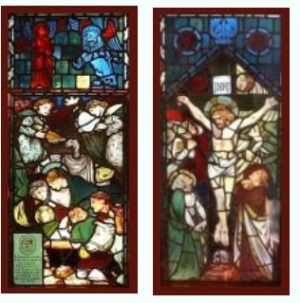 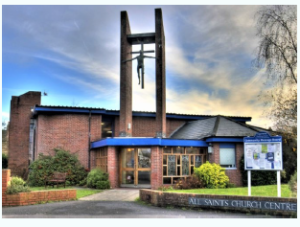 |
Dedworth was given its own church in 1863 - All Saints' - erected by GF Bodley for the Tudor family. It was an arts and crafts brick structure with a small belfry in the style of a 14th century building. It was demolished in 1971 after suffering from subsidence and replaced by the current modern building, designed by Tony Monk of Hutcheson, Locke and Monk, with open tower (now with a rather interesting sculpture). Uniquely, the glorious Morris windows were saved and the new church sports stained-glass by Morris himself, Burne-Jones, Rossetti and Ford Madox Brown! (1, 2, 6, 8) |
| Dedworth Road - The Black Horse | W28/16 | 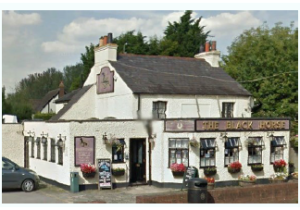 |
Original part is early 19th century two storey detached cottage with pitched slate roof and chimneys at either end. Later ground floor extensions to front and side. (2, 4, 8) |
| Dedworth Road No. 288 | W5/17 | 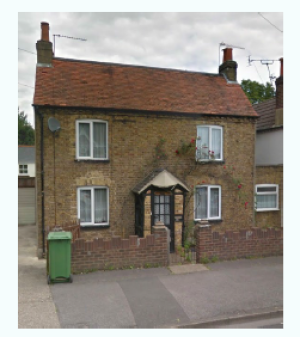 |
A little bit of old Dedworth worth preserving as a survival. (4, 5) |
| Dedworth Road - Nos. St Mary's Cottages | W30/16 | 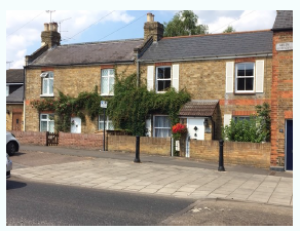 |
Late Victorian cottages surviving among later developments. London stock brick with red brick dressings. One with surviving wooden sash windows. (4, 8) |
| Dorset Road Montessori School | W32/16 | 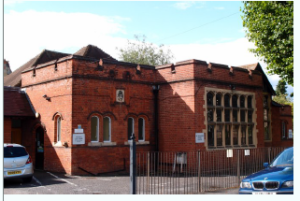 |
Late 19th century hall in the grounds of the Roman Catholic Church. Originally St Edwards Primary School. Single storey, red clay brick, gothic in nature with leaded lights and parapet crenellations. |
| Dorset Road 3/5 and 7/9 | W33/16 | 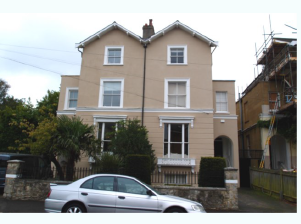 |
Series of four mid 19th century properties of three stories with basements. Numbers 3 and 5 entirely stuccoed (ground floor stucco ruled) and numbers 7 and 9 stuccoed on ground floor. Numbers 3 and 5 retain historic windows including tripartite sashes to ground floor. Pierced stone ground floor Juliette balconies to numbers 3 and 5. Number 5, historically owned by Mrs Mary Hull, frequently visited by Queen Victoria. (1, 3, 4, 6, 8) |
| Dorset Road No. 1 | W86/16 | 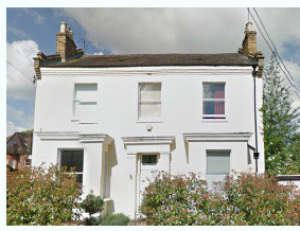 |
cream stuccoed front elevation. Dual pitch slate roof. Moulded cornice, porch/door architrave and square bay window heads. Late 19th century windows present as plain glazed sashes. Canted bay window addition to the south elevation at ground floor level. (1, 3, 4, 8) |
| Frances Road Nos. 37 / 39 | W36/16 | 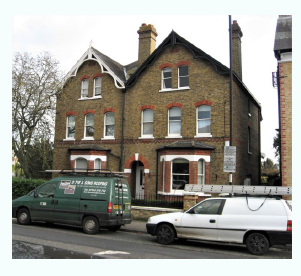 |
A pair of late Victorian semi-detached villas. Three storey in yellow brick with red brick detailing. Front facing gables under slateroofs with fancy barge boards. Arched sliding sash windows. Angled bay windows to ground floor. (1, 4, 8) |
| Frances Road No. 41 Fairlight | W37/16 | 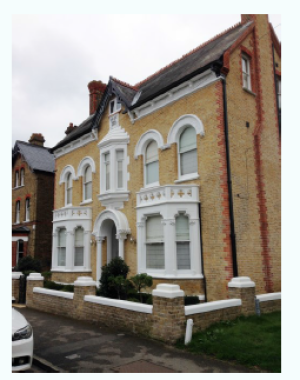 |
Built in 1885. "The Buildings of Windsor" Richard Morriss and Ken Hoverd, Alan Sutton, Stroud 1994 describes it like this - "Built in brick and detailed in stone, its architectural motifs are mixed and mysterious but the house certainly has character." It has recently had a sensitive external renovation. (1, 4, 8) |
| Frances Road Nos. 43 - 49 | W38/16 | 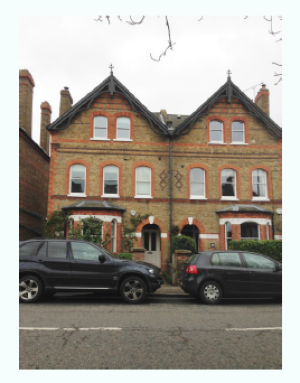 |
A striking group of four three storey villas in yellow stock brick with red brick detailing and red and blue brick string courses. Front facing gables with chequerboard pattern and black painted fancy bargeboards and extant finials. Arched windows and bay to ground floor. No 47 with original tiled pathway to front door. (1, 4, 8) |
| Frances Road Nos. 52 / 54 | W39/16 | 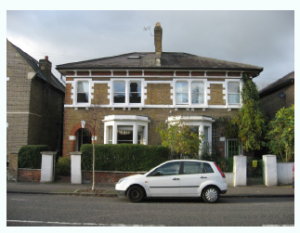 |
A pair of Victorian semi-detached two storey villas in yellow brick with prominent painted stone window surrounds and string courses. Elliptical arches to first floor windows. Pedimented canted bay windows to the ground floor. Shallow pitched slate roof above with corbelled brackets supporting a fascia board, mirrored by similar brackets supporting the first floor window sills. (1, 4, 8) |
| Frances Road Nos. 59 - 65 | W40/16 | 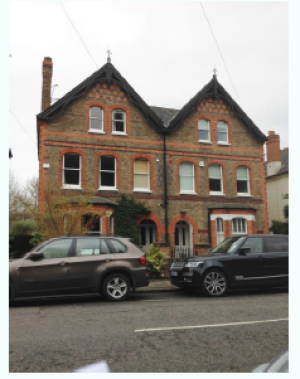 |
As 43 to 49 above. 59/61 have lost their finials and 59 is unfortunately painted white. (1, 4, 8) |
| Goswell Hill | W1/18 | 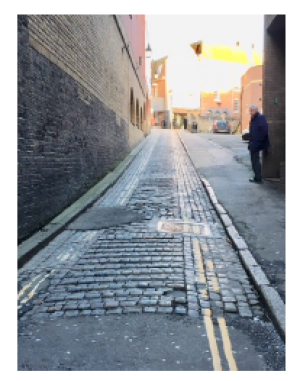 |
Cobbled Road Surface a rare survival. (4, 7, 8) |
| Grove Road No. 29 The Prince Arthur | W41/16 | 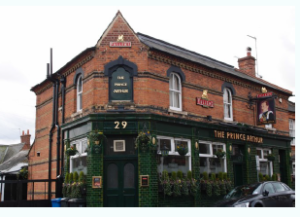 |
Built circa 1880s, a corner building, finished with green glazed tiles and faience to the ground floor storey facing the street and decorative brick string courses cutting through windows and eaves. A high quality, attractive example of a traditional Victorian pub built to serve the local community which included soldiers and families from the nearby garrison. (1, 2, 4, 8) |
| Grove Road | W88/16 | 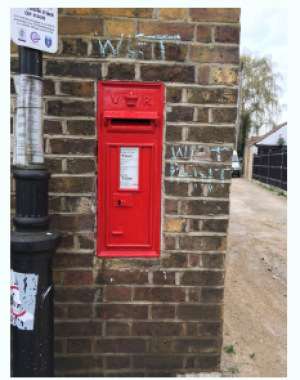 |
Victorian post box in wall adjacent to Prince Arthur Public House. (7, 8) |
| Hatch Lane Farm Cottage | W120/16 | 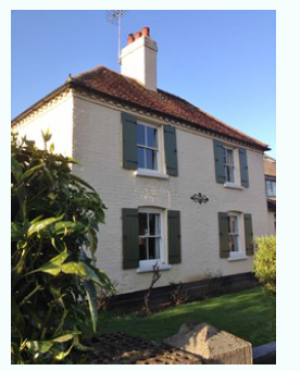 |
Survival from a time when this was a country lane with scattered cottages along it. Mid Victorian. Oversailing brick at roofline with dentil course above. Red tiled roof with central chimney. (4, 7, 8) |
| Hatch Lane Albion Place Nos. 1 to 6 | W3/18 | 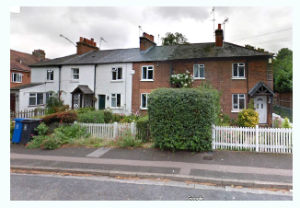 |
A terrace of two storey brick Georgian cottages 1821 - 1839. A rare survival in this area. Slate roof with hipped ends. Unsympathetic window replacement to all but no. 5. (4, 7, 8) |
| Hatch Lane Clewer Green First School | W4/18 | 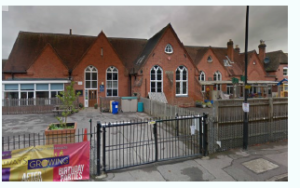 |
Nineteenth century single storey school buildings in traditional red brick with arched windows. The building encloses Georgian cottages of pre-1806 date. (1, 4, 8) |
| Hatch Lane Thames Hospice | W5/18 | 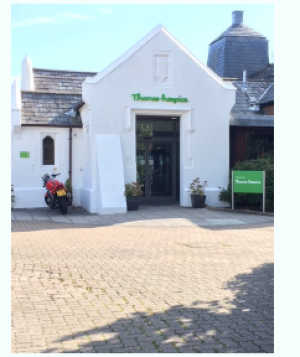 |
Add text |
| Hatch Lane Montague Cottage | W121/16 | 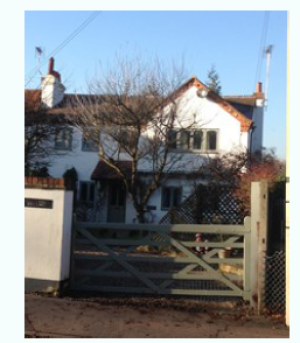 |
Surviving early cottage (4, 7, 8) |
| Hatch Lane Twin Cottage | W122/16 | 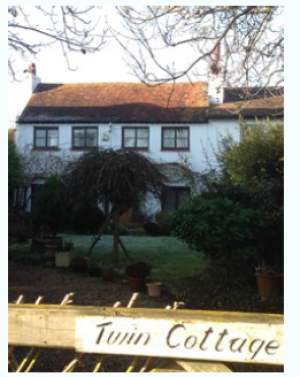 |
Surviving early cottage (4, 7, 8) |
| High Street Nos. 27- 28 | W89/16 | 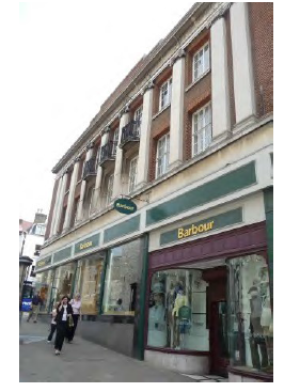 |
19th century, 3-storey red brick building. 6 sliding sash timber windows to first and second floors with pilasters between. (1, 4, 8) |
| High Street Nos. 29/30 Barclays Bank | W42/16 | 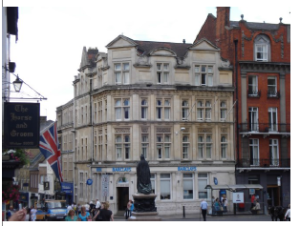 |
Classically styled, late 19th century 3-storey and attic ashlar stone corner building. Stone mullion and transom square headed windows with vertical sliding sashes. String course between ground and first storey, deep modillion cornice above second. Parapet with triangular and segmental pediments above. Ground storey (long used as a bank) has rustic-ated plinth and square ashlar pilasters. (1, 4, 8) |
| Kings Road Queensmead Brigidine School | W43/16 | 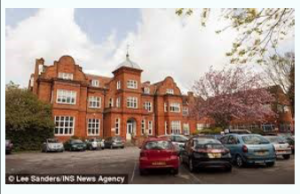 |
The core of the school is the Victorian mansion Queensmead built of local red brick in the Elizabethan Style. “The elegant structure which houses the Brigidine School was designed by W. F. Lyon, F.R.I.B.A., for Henri C. J. Henry of the Windsor Tapestry Manufactory who leased the land from the Crown Commissioners in 1888. High at one end of the hall above the main staircase a pair of windows includes the arms of the Royal Borough of New Windsor in stained glass. A pair of front gallery windows each contain a peacock in full plumage facing in opposite directions, reputed to record the German Crown Prince's opinion of the Prince of Wales at that time. These windows were made by the short lived Windsor Stained Glass Works at Old Windsor (1878 – 1890). (1, 6, 8) |
| Kings Road No. 2 | W44/16 | 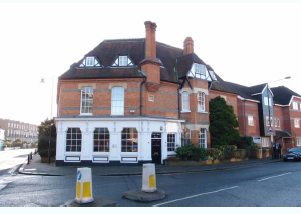 |
An important corner building that displays interesting composition and tile detailing creating considerable interest on this corner plot. (1, 4, 8) |
| Kings Road No. 40 Gower Lodge | W45/16 | 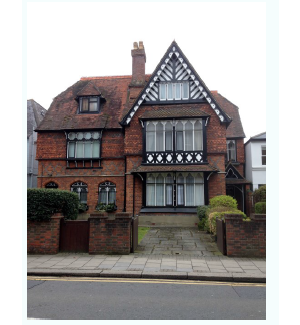 |
Gower Lodge is an eclectic Victorian red brick 3 storey Villa with Tudor and Gothic elements. The prominent protruding front facing gable is hung with a pattern and adorned with applied timber decoration. The steeply pitched roof is of red clay tiles. The tall narrow windows on the gable end have trefoil arches. Once the home of Lord Ronald Gower a younger brother of the 3rd Duke of Sutherland and close friend of Oscar Wilde who was a frequent visitor. Lord Ronald is famous for his artistic taste and he filled the house with pictures and art objects. (1, 4, 6, 8) |
| Kings Road No. 56 | W46/16 | 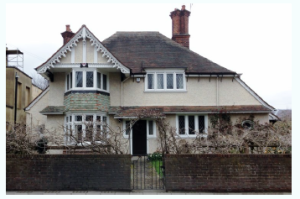 |
Nicely proportioned arts and crafts villa with wonderful fancy barge-boarding. This house is described in "Windsor in Watercolour" by Jeff Sanderson as being built in 1912 to a design by architect Stephen Salter (1862 – 1956). Son of a local master builder also Stephen. The firm later became Salters Steamers. The building is said to show the influence of Charles Voysey on Stephen eg - asymmetrical design, prominent cross-gable, green tiles, sloping buttress, mullioned and porthole windows and the use of the heart motif on some internal features. The house was originally called Amerden. (1, 4, 8) |
| Kings Road The Windsor Castle | W47/16 | 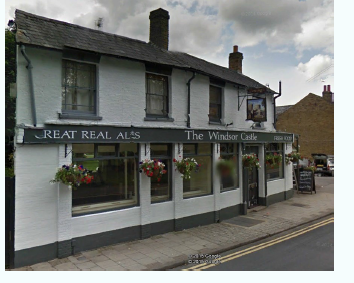 |
Mid 19th Century. 2 storeys, painted brickwork under slate tiled roof. Unusual sash windows to first floor. (2, 4, 8) |
| Kings Road Queen's Acre House | W1/17 | 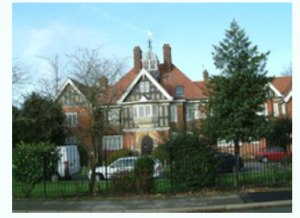 |
Queen's Acre is a late Victorian villa built in a quaintly eclectic style popular at the time: red brick, tile-hanging, tall roofs, tall chimneys and a cupola. From about 1890 until his death in 1920 it was lived in by the author and socialite Howard Sturgis and his partner William Haynes-Smith. The American writer Edith Wharton was a regular visitor. Later during World War 2 it was the home of the first Commander of the Windsor Home Guard Sir George Crichton. (1, 4, 6, 8) |
| Kings Road Kings Walden | W48/16 | 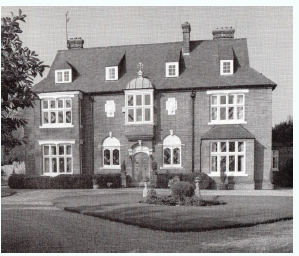 |
Villa of 1901 opposite the Great Park. Illustrated in “Buildings of Windsor.” (1, 4, 8) |
| Maidenhead Road Nos. 2/4 | W49/16 | 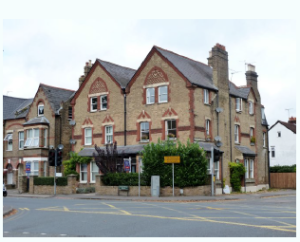 |
A quirky pair of late Victorian semis (1870–1900) on a prominent corner site. London Stock brick with red clay brick window surrounds. (1, 2, 4, 8) |
| Maidenhead Road The Willows Main House | W6/18 | 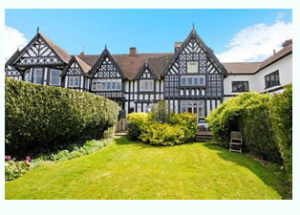 |
Original Thames-side house of late eighteenth century much enlarged and altered to nineteenth century mock Tudor. Residence of notable people including Roger Eykyn MP for Windsor 1866-74. During WWll the house was occupied by the military and **Mulberry Harbours were developed there**. Now divided into four houses. (1, 6, 8) |
| Maidenhead Road The Willows – Winter Garden House | W7/18 | 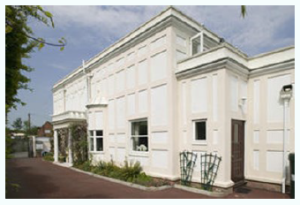 |
Detached house converted from an orangery or conservatory next to the main house. (1, 4, 6, 8) |
| Maidenhead Road The Willows Clock Tower | W8/18 | 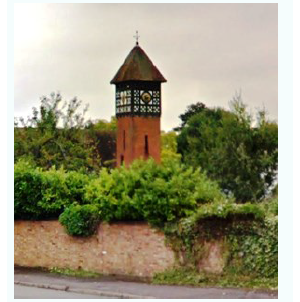 |
Clock Tower associated with the Stables and Carriage House at The Willows. The clock mechanism of 1893 is still operational. (1, 2, 4, 6, 8) |
| Maidenhead Road Sutherland Grange | W9/18 | 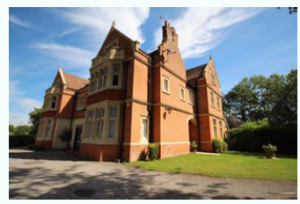 |
An attractive large late Victorian Villa. Built on the site of the notorious Surly Hall Hotel. Owned at one point by a founder of Hammer Films. (1, 4, 6, 8) |
| Market Street No. 4 The Carpenters Arms | W50/16 | 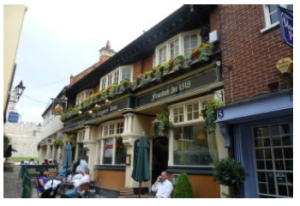 |
Late 19th century 2-storey public house with interesting detail. (1, 3, 4, 8) |
| Mellor Walk Leworth Place | W91/16 | 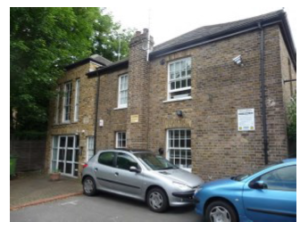 |
19th century 2-storey yellow brick building with recent rear extension. Timber sash windows, slate roof and central corbelled projecting chimney in centre of first floor front elevation. Former chapel. (4, 7, 8) |
| Mill Lane The Swan | W51/16 | 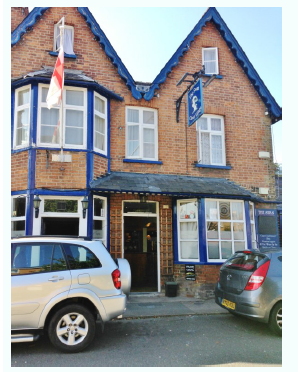 |
Nineteenth Century pub and yard. The Swan – the current building dates from the 18th Century – provided ale and food and simple accommodation, together with a coaching service, with new horses for travellers. The stables still stand at the back of the pub, while a tunnel from the pub yard to the church is still believed to be intact**, although the entrance was filled in in 1990. Until the 19th century, the inn was used as the local coroner's court, with a brisk trade in bodies from the river. The mortuary was at the rear of the inn, and the landlord, Charlie, was a part-time mortician. Recently bought by a community interest company and is being refurbished as a pub and community resource. (1, 4, 6, 7, 8) |
| Mill Lane Nos. 1-7 and 15-33 | W52/16 | 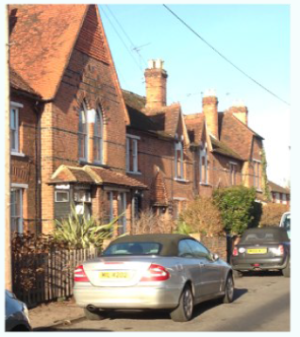 |
Estate workers cottages in two terraces flanking The Swan and dating from 1869 (date taken from Coat of Arms on the wall of the first cottage). (1, 4, 6, 8) |
| Oak Lane Nos 1-41 | W124/16 | 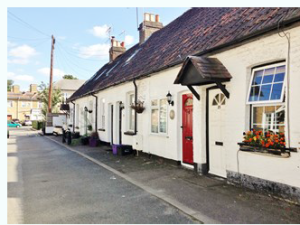 |
An interesting and varied road of worker's cottages including these unusual single storey ones and some in stone which is very rare in Windsor. (1, 4, 8) |
| Osborne Mews Mews Blocks | W53/16 | 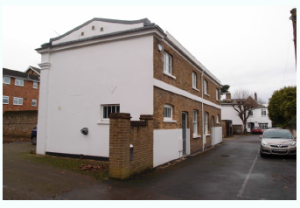 |
Many of the large villas along Osborne Road are listed at grade II on the National Heritage List for England however an important part of their original design and function were the mews blocks to the north... (4, 7, 8) |
| Osborne Road Nos. 21/23 | W54/16 | 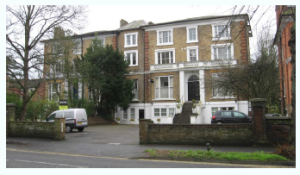 |
These grand Victorian villas on the South side of Osborne Road contribute greatly to a sense of opulence and spaciousness along this stretch of the road. (1, 4, 8) text to add |
| Osborne Road Nos. 25/27 Lockerbie and ? | W55/16 | 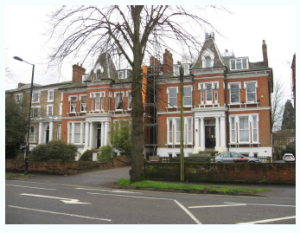 |
Typical late Victorian houses of wealthy businessmen or courtiers. The design is reminiscent of a French Chateau. These grand villas on the South side of Osborne Road contribute greatly to a sense of opulence and spaciousness along this stretch of the road. (1, 2, 3, 4, 8) |
| Osborne Road No. 31 | W56/16 | 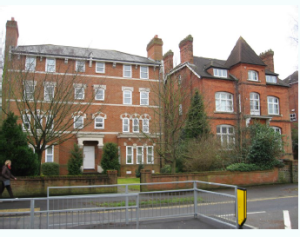 |
These grand villas on the South side of Osborne Road contribute greatly to a sense of opulence and spaciousness along this stretch of the road. (1, 4, 8) |
| Osborne Road Nos. 33/35 | 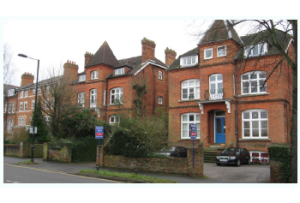 |
These grand villas on the South side of Osborne Road contribute greatly to a sense of opulence and spaciousness along this stretch of the road. (1, 4, 8) | |
| Osborne Road No. 69 Essex Lodge | W14/16 | 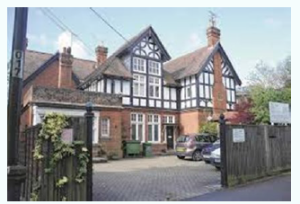 |
Built to exacting standard in 1897 this imposing Edwardian Tudorbethen villa has an interesting history which includes being the home of a Baronet, Sir George Pigot, visits by Sir Edward Elgar, the Military of two world wars, SOE, and the Queen Mother. With the similar Kings House opposite (and within a Conservation Area), Essex Lodge forms an important gateway to the town. Other properties in this area have been lost to flat developments but these two landmark houses help to retain the historic character of this part of the town. (1, 2, 4, 6, 8) |
| Oxford Road No. 183 Former Elephant and Castle Pub | W59/16 | 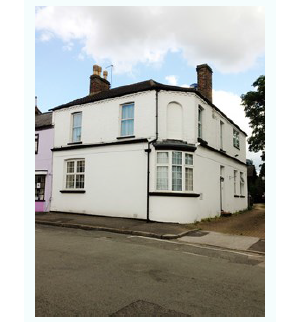 |
Now a private house this 19th Century building was a Courage Pub. Radius bay at corner. There is a photograph of the pub in the 1920s on the Windsor Royal Forum. The pub is in Marshalls 1898 Windsor Directory but probably predates that. (4, 7, 8) |
| Oxford Road No. 161 Former Perseverance Inn | W60/16 | 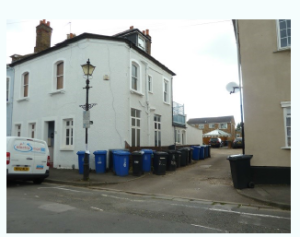 |
private flatted conversion of former pub closed in the 1960s. The pub is listed in the 1881 census. Attractive window detailing. (4, 7, 8) |
| Park Street Nos. 4 & 5 Stables/outbuildings to the rear | W92/16 | 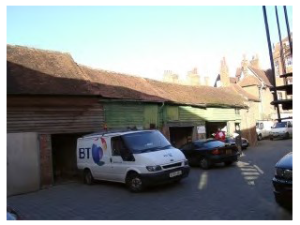 |
1770's. Constructed as part of the development of 4, 5 and 6 Park Street.Traditionally stabling and coaching facilities in connection with the Black Horse Pub. Now a rare survival of this type of 18th century back building. (1, 3, 4, 7, 8) |
| Park Street Nos. 25 - 28 | W93/16 | 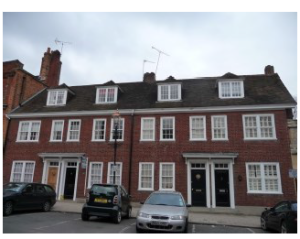 |
20th century, 2-storey infill row in neo-Georgian style. Timber vertical sliding sash windows with rubbed brick segmental arches. Paired door cases with rectangular fanlights and flat hood on timber brackets. Clay tiled roof with 4 hipped dormers and timber casement windows. (1, 4, 8) |
| Peascod Street No. 3 Molton Brown | W62/16 | 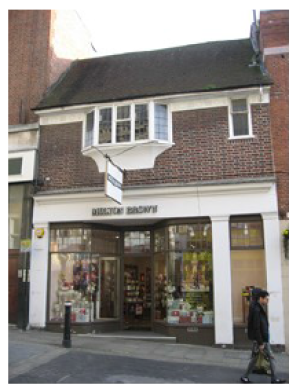 |
The Society is very impressed with the elegance of this simple building which needs ensuring that it is maintained and its link with the Burton tailoring chain's architectural styling is retained. Early 20th century, 2 storey red brick building with first storey oriel window with leaded lights under deep eaves. Elegant curved glazed ground floor shop entrance. (1, 4, 8) |
| Peascod Street Nos. 8/9 | W64/16 | 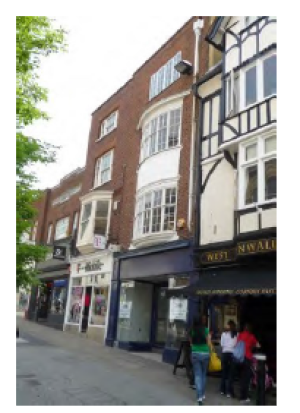 |
19th century, red brick 4-storey buildings with modern shop front. No. 8 has first storey canted bay window beneath single windows with margin-panes and segmental arches to second and third stories. All windows are sliding sashes. No. 9 has a 2 storey segmental bay with single window to third storey. All windows are casements. (1, 4, 8) |
| Peascod Street No. 10 | W94/16 | 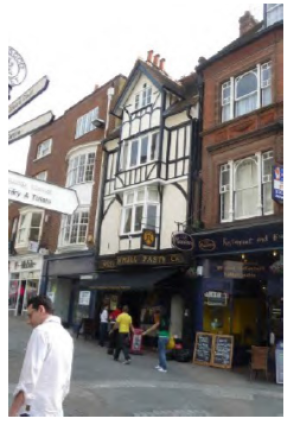 |
Early 20th century, 4-storey building of white render and black decorative timber framing. Central canted first storey bay beneath larger 2 storey square bay under a gabled clay tile roof. Traditional shop front at ground floor level. (1, 4, 8) |
| Peascod Street Nos. 11 - 12 | W95/16 | 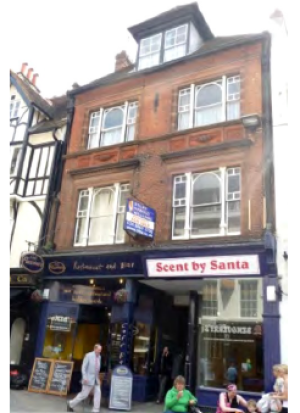 |
19th century, 3-stories plus attic red brick buildings with altered shop fronts. First and second stories have ornate sliding sash. Street windows of 3 lights divided by decorative iron mullions. Decorative flat hood moulds and terracotta panels. Single large central dormer. (1, 4, 8) |
| Peascod Street Nos. 13 - 14 | W96/16 | 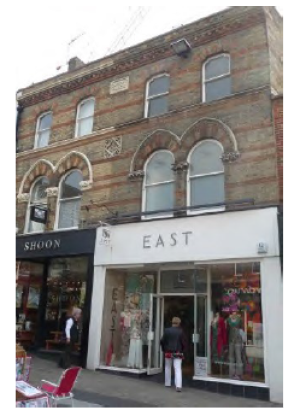 |
19th century, 3-storey yellow brick building with decorative red brick horizontal and arch details. Classical style cornice and parapet, moulded string course between first and second storey. First storey windows are engaged pairs with pointed two-centred heads and mouldings springing from ornately carved stone impost blocks. Central carved 1886 date stone. (1, 4, 8) |
| Peascod Street Nos. 23 & 24 | W97/16 | 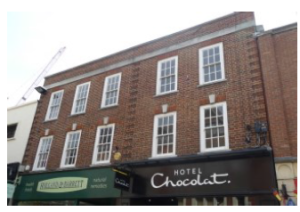 |
Plain, early 19th century symmetrical pair of 3-storey red brick buildings. Each has a modern shop front at ground floor. The left hand of the pair has 3 sliding sash windows to first and second storey while the right hand has two. Flat arches above windows and first storey windows have key stones. Brick parapet above broad rendered string course. (1, 4, 8) |
| Peascod Street Nos. 29 & 30 | W98/16 | 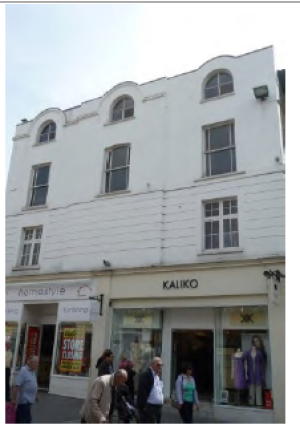 |
Early 20th century, 4-storey rendered building of 3 bays with projecting central bay. Modern shop fronts. First storey with two single casement windows and horizontal banded decoration. Three sliding sash windows to second storey with segmental arch central window. Small third storey windows have semi-circular heads that project above the parapet. String course missing from right window. (1, 4, 8) |
| Peascod Street No. 31 | W99/16 | 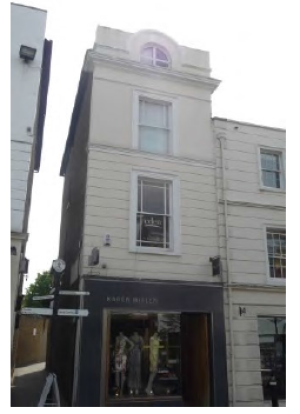 |
Narrow early 20th century, 4-storey rendered building of similar style to 29 and 30 Peascod Street. Modern shop front. First storey with single sliding sash window and horizontal banded decoration. Sliding sash window to second storey with deep cornice above. Small third storey window has semicircular head and string course that project above the parapet. (1, 4, 8) |
| Peascod Street No. 34 | W63/16 | 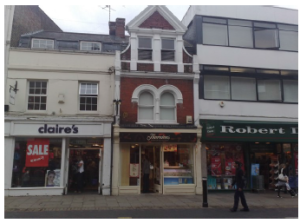 |
Narrow three storey building with decorative terracotta name plate stating 1886. Brick construction with shopfront at ground floor level. Mansard slate roof with decorative projecting gable. Dual arched window to first floor level. (1, 4, 8) |
| Peascod Street No. 45 | W100/16 | 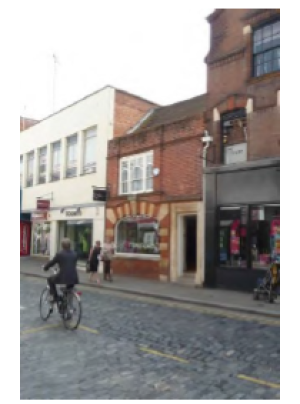 |
Interesting, small, early 19th century 2-storey red brick building. Entrance door to right has stone dressing. Original shop window surround of muticated stone and red brick with segmental arch, key stone and string course. Ornate sliding sash window above has a central light with margin-panes, each with arched glazing bars and small square panes above. Moulded brick cornice and parapet beneath clay tiled roof. (1, 4, 8) |
| Peascod Street No. 46 | W65/16 | 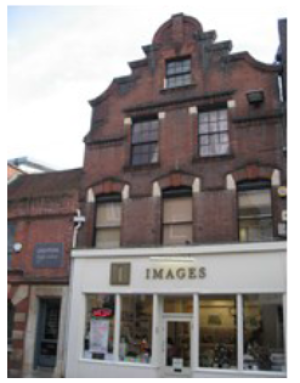 |
Imposing 19th century 4-storey red brick building with stepped, shaped gable. Sliding sash windows to third and forth storeys. Single forth storey window has flat arch, the two third storey windows are joined by a flat moulded decorative brick head and the three second storey (modern) windows have segmental arches with keystones. Modern shop front. (1, 4, 8) |
| Peascod Street Nos. 47 - 50 | W101/16 | 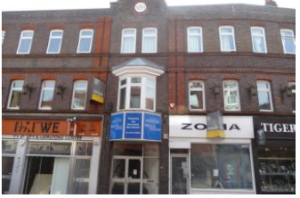 |
Imposing 3-storey dark red brick brick building with 1907 date stone. First and second floors each have 4 timber sliding sash windows with bright red brick segmental arches arranged around central narrow 3 storey bay. Central bay has first storey oriel window and is enclosed by coupled, bright red pilasters. Distinctive row of decorative iron lanterns to first storey. Modern shop front. (1, 4, 8) |
| Peascod Street No. 51 | 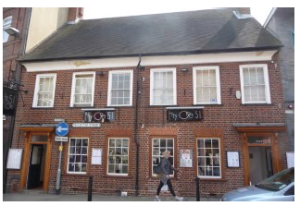 |
Symmetrical early 20th century, 2-storey red brick building. Possibly once two properties. With four central sliding sash windows with flat crew cut arches between left and right hand doorways, each with a flat hood on timber brackets. Two groups of 3 windows to first storey beneath deep cavetto moulded cornice and steep clay tile roof. (1, 4, 8) | |
| Peascod Street No. 55 | W103/16 | 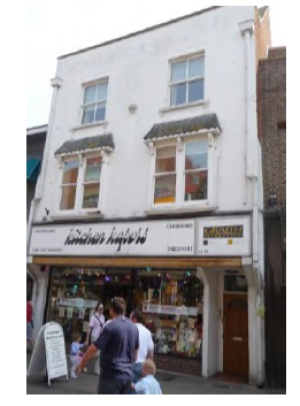 |
Rendered, late 19th century possible refronting of earlier 3-storey building. Modern shop front beneath two plain sliding sash windows with decorative lead covered hoods on brackets. Parapet wall hides steeply pitched roof behind. (1, 4, 8) |
| Peascod Street Nos. 57 - 59 | W104/16 | 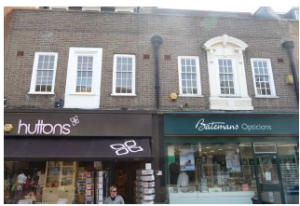 |
19th century, 2-storey plus attic pair of buildings of brown brick. Modern shop front. Two groups of 3 sliding sash windows to first storey. Central of right hand group has a grand applied classical surround with open segmental pediment (a feature that is missing from the left hand group). (1, 4, 8) |
| Peascod Street Nos. 65 - 67 | W105/16 | 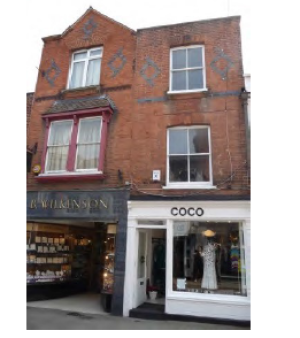 |
Two 19th century, 3-storey red brick buildings with matching glazed header decoration. Left hand has brick gable and and first storey square timber bay with decorative clay tile hood. Modern shop fronts. (1, 4, 8) |
| Peascod Street Nos. 74 - 76 | W106/16 | 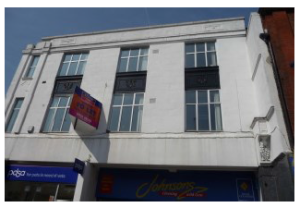 |
Distinctive 3 storey 1920's Art Deco building, now subdivided. Ashlar-style masonry and three, 2-storey window openings separated by cast iron panels with thistle decoration. Narrow windows to left. Modern replacement 'crittal-style' window frames and modern shop front. (1, 4, 8) |
| Peascod Street No. 77 | W107/16 | 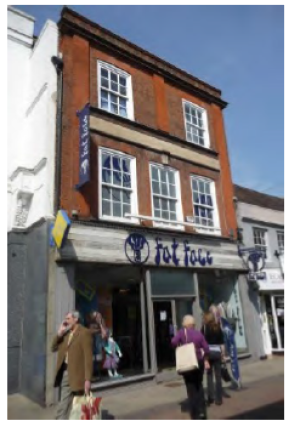 |
19th century, 3 storey red brick building with modern shop front. Brick segmental window arches and 2 moulded brick string courses between first and second storeys. 3 sliding sash windows to first and 2 to second storey all set between brick pilasters beneath a moulded brick cornice and parapet. (1, 4, 8) |
| Peascod Street No. 91 | W108/16 | 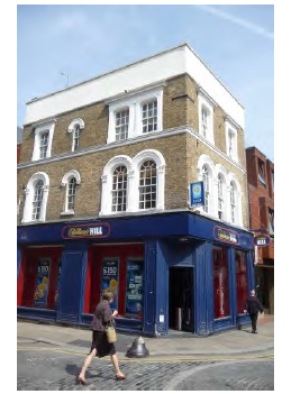 |
19th century, 3-storey yellow brick corner building with distinctive painted stone windows and bold rendered parapet. First storey windows have semicircular heads springing from richly decorated capitals, some are coupled. Second storey windows have narrow flat arches beneath deep cornices. Moulded string course between first and second storeys. Modern shop front. (1, 4, 8) |
| Peascod Street No. 96 | W109/16 | 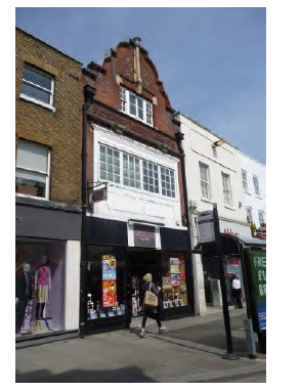 |
Imposing 19th century 3-storey red brick building with stepped, shaped gable with moulded coping. Timber casement between 2 narrow sliding sash windows to third storey. Distinctive range of timber casement windows to first storey set within full width timber panel is possibly a later insertion. Square cast iron hopers and rainwater pipes to either side. Modern shop front. (1, 4, 8) |
| Peascod Street No. 112 | W110/16 | 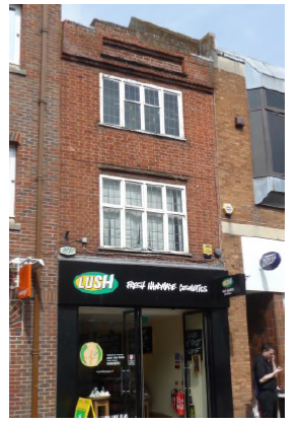 |
Early 20th century, 2-storey red brick building. Rectangular panel set with incorbelled brick parapet, crittal-style windows to first and second storeys. Modern shop front. (1, 4, 8) |
| River Street Public Conveniences | W111/16 | 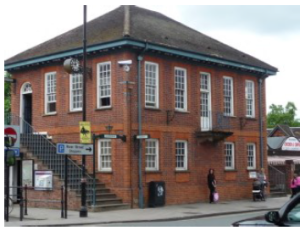 |
1930, 2-storey building of red brick with burnt headers. Hipped roof with clay tiles and deeply overhangng eaves. Tall sliding sash windows, decorative ironwork to signs, clock and first storey balcony to south east. External stairs to first storey. Purpose built as public conveniences. Square cast iron rainwater pipes. (1, 4, 8) |
| Springfield Road The Alma | W66/16 | 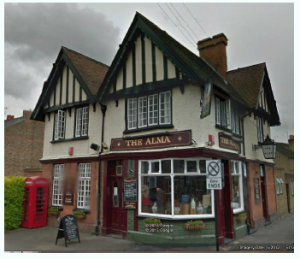 |
Late 19th/early 20th century. Detached two storey building. Plain clay roof tiles;red brick and green glazed tiles to ground floor, painted pebbledash to first floor. Two gables to Springfield Road and one to Elm Road. Ground floor angled corner. Garden to rear. (1, 4, 8) |
| Springfield Road Outside The Alma | W3/17 | 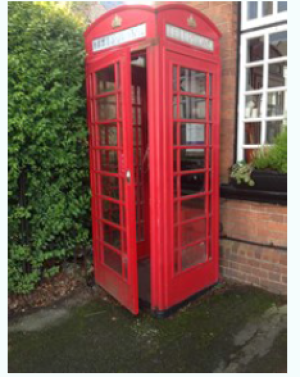 |
K6 telephone box designed by Giles Gilbert Scott. Increasingly rare. Purchased privately in order to preserve it. (2, 7, 8) |
| Sheet Street, Nos. 6-12 Coburg House and Royal Albert House | W112/16 | 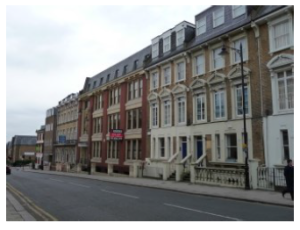 |
Range of 20th century, 3 storey plus attic neo Georgian buildings. 6-12 and Coburg House are yellow brick with some rich detailing (e.g. stone segmental pediments to first storey windows and deep eaves cornice) but with clumsy attic dormers. Royal Albert House is of red brick with simpler, more modern, stone detailing and stone statue of Prince Albert over left hand entrance bay. (1, 4, 8) |
| St Albans Street Church Lodge, | W113/16 | 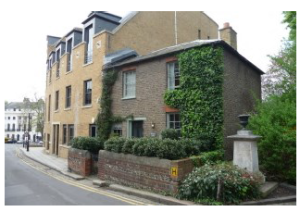 |
19th century dwelling. Two bay wide of yellow-brown brick construction. Shallow pitched slate roof. Timber sliding sash windows to front elevation. Now somewhat overshadowed by neighbouring building. Demarcated by brick and flint wall. (1, 4, 8) |
| St Leonards Hill Castle Peep, | W67/16 | 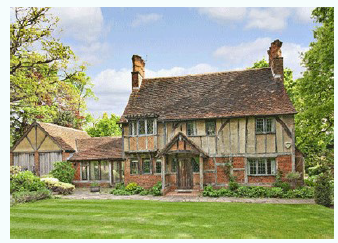 |
A characterful mock-tudor early 20th Century property. Plain red clay tiled roof with decorative chimneys at either end. Small paned leaded light windows and exposed timberwork. Exposed brickwork to above the ground floor windows, rendered above. Rustic style gabled porch to the front door. (1, 8) |
| St Leonard's Road Nos. 1–11 and Victoria Street Nos. 85–89 | W114/16 | 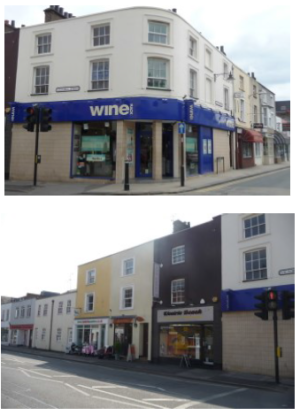 |
Range of 19th century, 3-storey, rendered buildings extending around corner from Victoria Street to St Leonard's Road. Although the shop fronts are largely modern or altered, the buildings are united as a single development by the use of identical first and second storey window mouldings and parapet. Many timber sliding sash windows have been retained. (1, 4, 8) |
| St Leonard's Road The Old Court Arts Centre | W68/16 | 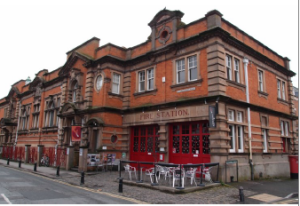 |
Magistrates Court, Police Station and Fire Station opened 1907 is an architecturally strong building along St Leonard's Road. As was the late Victorian approach to accommodate various associated and related civic functions within one building complex, this building provided space for the local police, the Magistrates courts and the local fire station. Some socco terracotta detailing adds decorative flourishes to the St Leonard's Rd elevation. The building represents and important civic hub serving the local community of Windsor. (1, 4, 6, 7, 8) |
| St Leonard's Road The Windsor Trooper | W69/16 | 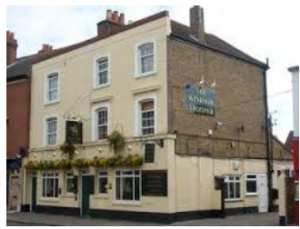 |
Late Victorian public house. Three storey London stock brick with slate roof behind a plain parapet. Front rendered to first floor level with painted brick above. First and second floor have nicely proportioned **timber sliding sash windows, the left half of the building has one window per floor and the right half two per floor with slightly different window treatments suggesting that this was once two properties. (1, 4, 8) | St Leonard's Road The Windsor Trooper | W70/16 | 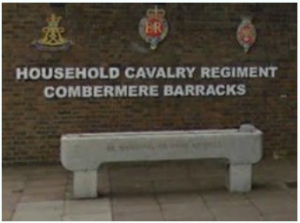 |
Horse trough. Relocated from London but retains cavalry connection with Barracks. (6, 8) |
| St Leonards Road Nos. 134/6 May Cottages | W71/16 | 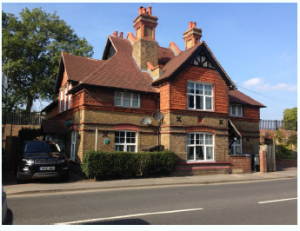 |
Very quirky late Victorian or Edwardian house next to Combermere Barracks. Fancy tile hung upper storey and gables. Decorative brickwork to tall chimneys. Dentil cornice and string courses to ground floor which also has arched brick lintels. Now two houses. Windows replaced but proportions replicated. (1, 4, 8) |
| St Leonards Road The Duke of York | W72/16 | 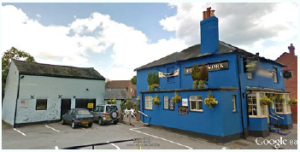 |
Mid 19th Century. Two storey detached building. Slate roof, painted render. Double bay windows to front elevation with central doorway. Mid 19th century stable/store building to rear. Brick with slate roof. (1, 2, 4, 8) |
| Off St Leonards Road Cemetery Chapel and Gatehouse | W73/16 | 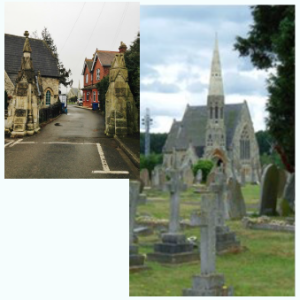 |
Windsor Cemetery also known as "Spital Cemetery", was first opened in 1854. When first opened it was set out as a Traditional Cemetery where full sized memorials could be placed on all graves. The Cemetery has links with Windsor Castle and the two army barracks based in the town with a number of Victoria Cross holders being buried there. (1, 2, 4, 6, 8) |
| St Leonards Road St Agnes Church Next to 332 | W74/16 | 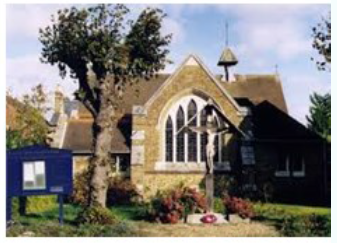 |
The church stands on St Leonard's Road and was built in yellow brick in 1874. It consists of a nave with a W gallery, a Lady Chapel, added as a S aisle, and a S porch at the W end of the S aisle. In its present use as a Music Centre, the weekly Service is held in the Lady Chapel, while the main altar has been removed and replaced by a grand piano. The only Romanesque sculpture here is the 12th C font. (1, 4, 8) |
| River House Thames Side No. 10 | W115/16 | 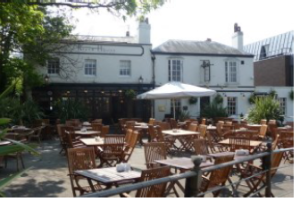 |
Two adjoining 19th century properties. Both featuring low pitch slate roofs. Brick construction with white render. Both buildings have sliding timber sash frames. Two bay windows to upper floor. (1, 4, 8) |
| Thames Avenue No. 1 | W116/16 | 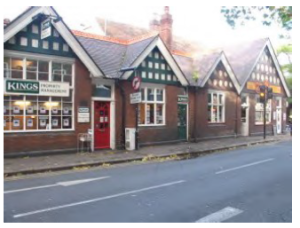 |
Row of early 20th century single storey red brick buildings with four gables of differing size and applied timber decoration facing Thames Avenue. Clay tile roof. Traditional painted timber door openings and timber mullion and transom windows. (1, 4, 8) |
| Thames Street Nos. 36-37 | W117/16 | 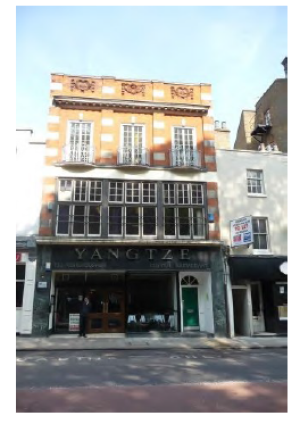 |
19th century, 3-storey building of red brick and light stone with distinctive brick / terracotta decoration to parapet and window detailing. Deep moulded cornice over third tall, French windows opening to Juliet-style balconies to second storey. The three first storey timber window openings have interesting glazing which each split into 3 large panes beneath 3 windows of smaller panes. Modern shop front with access door to the above accommodation to the right. (1, 4, 8) |
| Thames Street No. 39 | W118/16 | 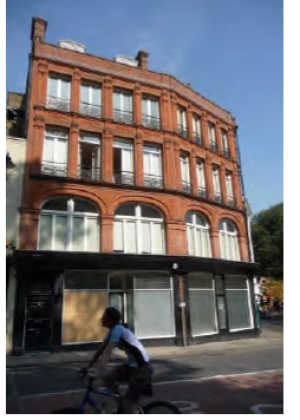 |
19th century 4-storey plus attic red brick building with brick parapet and large number of windows set between moulded brick pilasters. 8 plain French windows and Juliet balconies to third and second storeys. 4 flat arched windows to first storey and largely unaltered shop front and accommodation access door to ground storey. (1, 4, 8) |
| Vansittart Road The Vansittart Arms | W75/16 | 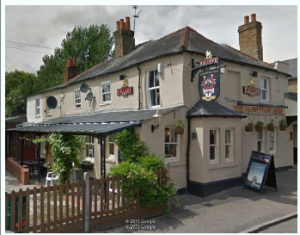 |
Mid 19th century. 2 storeys. Brick and render under slate roof. Square bay to ground floor on front elevation. 3 chimneys. Garden to side. (1, 4, 8) |
| Vansittart Road (also Arthur Road and Duke Street) Gardner Cottages | W76/16 | 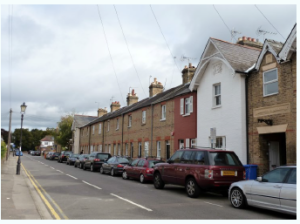 |
This unusual square of workers cottages fronting Albert Road, Vansittart Road and the L-shaped Duke Street, and with a large central green, was built in 1870 for Robert Richardson Gardner who owned a large number of cottages in the area and was the town's MP from 1874 - 1890. His arms are in the gables of the larger cottages. He does not sound a very attractive character and it is said 'Streets of Windsor and Eton, ed Brigitta Mitchell, Windsor Local History Publications, 2003 page 69' that he required his tenants to vote Conservative and evicted them if they did not. Pleasant or not, he is a prominent historical figure in the town. The original architecture of the cottages is already somewhat damaged by painting, rendering and inappropriate replacement of windows and doors. (1, 4, 6, 8) |
| Vansittart Road St Stephens House | W77/16 | 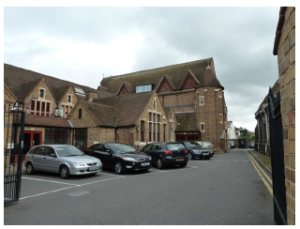 |
This complex of office buildings is situated to the north of the listed St Stephen's Church and previously formed the St Stephen's School. An Infant School was opened in 1872, a Boy's school in 1873 and a Girl's School in 1877. Henry Woodyer was probably the architect (Buildings of Windsor) in 1899. An Intermediate School was started for "the daughters of the smaller trades people who could pay more than two pence per week". (1, 3, 4, 6, 7, 8) |
| Vansittart Road Trinity St Ste- phen First School | W78/16 | 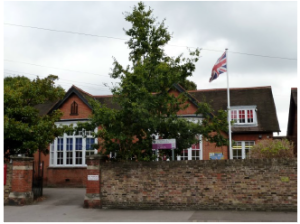 |
1906 school buildings. (1, 4, 6, 8) |
| Victor Road 2-16 | W4/17 | 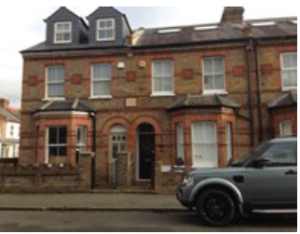 |
Unusually highly decorated, even for Windsor, terrace of eight small Victorian Villas. Brick dentil cornice, terracotta plaques and string course, dogtooth detailing. Some with original doors and crenelated front garden walls. (1, 4, 8) |
| Victoria Street Chariott House | W119/16 | 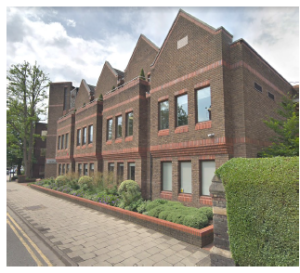 |
This development won the Brick Design Award in 1985. The citation praised the development's design which echoed features of the adjacent almshouses while not replicating them. The yellow mottled brickwork banded in red complements the older buildings and the hard landscaping in brick and stone with walkways and raised brick planting areas was said to have been very sensitively handled. All in all a "fine contribution was been made to the urban fabric and a sense of place established with great skill and imagination". (1, 4, 8) |
| Winkfield Road Friary Lodge | W1/19 | 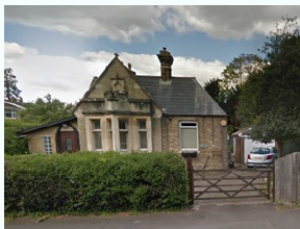 |
Single storey brick and stone lodge cottage with front facing gable with crenelated pediment above pointed bay window. Slate roof and prominent chimney. (1, 4, 7, 8) |
| York Road No. 6 | W79/16 | 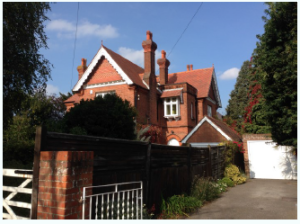 |
Delightful Edwardian Villa. (1, 4, 8) |
| York Road No. 19 | W80/16 | 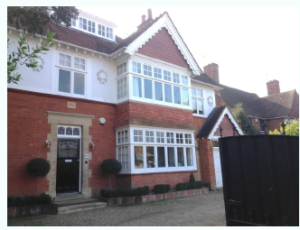 |
Another delightful Edwardian Villa with unusually large eight frame casement bay windows. (1, 4, 8) |
| York Road No. 38 | W81/16 | 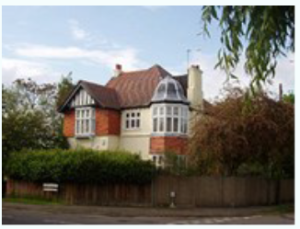 |
Prominent landmark villa at the corner of York Road and Green Lane. In February 1920, a reference to the house 'Tokio' (38 York Road) was found in an ISC journal 'Chronicle' which reads "The house 'Tokio' in York Road, which is now the property of the College (ISC) and is to be known in future as the Chaplain's House, is under Mr Healey's charge.". This house was the subject of a planning application for demolition in 2003 which was refused. (1, 2, 4, 8) |
NumNumbered list of Windsor NDHAs
| Asset No | Location | Street No or other identifier | Single or multiple property |
|---|---|---|---|
| W1/16 | Alexandra Road | 14 - 28 | 8 houses |
| W2/16 | Alma Road | Camperdown House | Several flats |
| W3/16 | Alma Road | Wall next to Camperdown House | Post box |
| W4/16 | Alma Road | Next to 1 | Boundary marker |
| W5/16 | Alma Road | Kwik Fit 22A | Service garage |
| W6/16 | Alma Road | 44 | House |
| W7/16 | Alma Road | 53/55 | Semi-detached house |
| W8/16 | Alma Road | 56 / 58 | Ditto |
| W9/16 | Alma Road | Hunters Mews | Ex school buildings now 2? homes |
| W10/16 | Arthur Road | 165 The Duke of Connaught | Public House |
| W11/16 | Barry Avenue | 1-18 | Row of houses |
| W12/16 | Bexley Street | The Bexley Arms | Public House |
| W13/16 | Bolton Avenue | Coach House | Single house |
| W14/16 | Bolton Avenue | 1, Essex Lodge | Commercial Building |
| W15/16 | Bolton Avenue | 20, Audley Mead | House |
| W16/16 | Bolton Avenue | 23, Burnell House | House |
| W17/16 | Bolton Crescent | 36 | House |
| W18/16 | Brook Street | 2 | House |
| W19/16 | Clarence Street | N side of junction with Parsonage Garden | Parade of shops ex police station |
| W20/16 | Clarence Road | The Residence | Flats ex Princess Christian Hospital |
| W21/16 | Clarence Road | 22 (also 1 Dorset Road) | House |
| W22/16 | Clarence Road | 26 / 28 | flats |
| W23/16 | Clarence Road | 34 | 3 flats ex Methodist Manse |
| W24/16 | Clewer Fields | Row of houses group | |
| W25/16 | Dedworth Road | Barber shop formally Clewer New Town Post Office | |
| W26/16 | Dedworth Road | Clewer Memorial Park | Lytch Gate |
| W27/16 | Dedworth Road | All Saints Church | Stained Glass panels |
| W28/16 | Dedworth Road | The Black Horse | Public House |
| W29/16 | Dedworth Road | About 230, Comely Cottage | House |
| W30/16 | Dedworth Road | St Mary's Cottages | Group of cottages |
| W32/16 | Dorset Road | Montessori School | School |
| W33/16 | Dorset Road | 3/5 | Semi-detached |
| W35/16 | Dorset Road | 7/9 | ditto |
| W36/16 | Frances Road | 37 / 39 | Semi-detached houses |
| W37/16 | Frances Road | 41, Fairlight | house |
| W38/16 | Frances Road | 43 - 49 | Semi-detached house |
| W39/16 | Frances Road | 52 / 54 | Semi-detached houses |
| W40/16 | Frances Road | 59 - 65 | ditto |
| W41/16 | Grove Road | 29, The Prince Arthur | Public House |
| W42/16 | High Street | 29/30, Barclays Bank | Commercial Building |
| W43/16 | Kings Road | Queensmead | Brigidine School |
| W44/16 | Kings Road | 2 | Commercial building ? |
| W45/16 | Kings Road | 40, Gower Lodge | house |
| W46/16 | Kings Road | 56 | house |
| W47/16 | Kings Road | The Windsor Castle | Public house |
| W48/16 | Kings Road | Kings Walden | house |
| W49/16 | Maidenhead Road | 2/4 | Flats? |
| W50/16 | Market Street | 4, The Carpenters Arms | Public house |
| W51/16 | Mill Lane | The Swan | Public house - closed |
| W52/16 | Mill Lane | cottages | |
| W53/16 | Osborne Mews | Mews Blocks | Coach houses converted to residential |
| W54/16 | Osborne Road | 21 / 23 | houses |
| W55/16 | Osborne Road | Lockerbie and ? 25/27 | houses |
| W56/16 | Osborne Road | 31 | house |
| W57/16 | Osborne Road | 33/35 | houses |
| W58/16 | Oxford Road | on wall of Former Elephant and Castle Pub 183 | Flats |
| W59/16 | Oxford Road | Former Elephant and Castle Pub 183 | Flats |
| W60/16 | Oxford Road | Former Perseverance Inn 161 | Flats |
| W62/16 | Peascod Street | Molton Brown 3 | Shop and premises above |
| W63/16 | Peascod Street | 34 | Shop and premises above |
| W64/16 | Peascod Street | 8 / 9 | Shop and premises above |
| W65/16 | Peascod Street | 46 | Shop and premises above |
| W66/16 | Springfield Road | The Alma | Public house |
| W67/16 | St Leonards Hill | Castle Peep | house |
| W68/16 | St Leonards Road | Fire Station | Arts Centre |
| W69/16 | St Leonards Road | The Windsor Trooper | Public house |
| W70/16 | St Leonards Road | outside Combermere Barracks | Horse trough |
| W71/16 | St Leonards Road | 134/6 | 2? houses |
| W72/16 | St Leonards Road | The Duke of York | Public house |
| W73/16 | Off St Leonards Road | Cemetery Chapel and Gate-house | Chapel/house |
| W74/16 | St Leonards Road | Next to 332 | St Agnes Church |
| W75/16 | Vansittart Road | The Vansittart Arms | Public house |
| W76/16 | Vansittart Road(also Arthur Road and Duke Street) | Gardner Cottages | houses |
| W77/16 | Vansittart Road | St Stephens House | offices |
| W78/16 | Vansittart Road | Trinity St Stephen First School | school |
| W79/16 | York Road | 6 | house |
| W80/16 | York Road | 19 | house |
| W82/16 | Barry Avenue | Browns | Restaurant |
| W83/16 | Church Lane | 1 | Shop and premises above |
| W85/16 | Datchet Road | Royal Oak, | Public house |
| W86/16 | Dorset Road | 4? | house |
| W88/16 | Grove Road | Adjacent to Prince Arthur | Victorian Post box |
| W89/16 | High Street | 27-28 | Shop with office or flat above |
| W90/16 | Market Street | 7 | shop and premises above |
| W91/16 | Mellor Walk | Leworth Place | Commercial building? |
| W92/16 | Park Street | rear of 4 and 5 | Stables/outbuildings |
| W93/16 | Park Street | 25 - 28 | Terraced houses |
| W94/16 | Peascod Street | 10 | Shop and premises above |
| W95/16 | Peascod Street | 11 - 12 | Shop and premises above |
| W96/16 | Peascod Street | 13 - 14 | Shop and premises above |
| W97/16 | Peascod Street | 23 and 24 | Shop and premises above |
| W98/16 | Peascod Street | 29 and 30 | Shop and premises above |
| W99/16 | Peascod Street | 31 | Shop and premises above |
| W100/16 | Peascod Street | 45 | offices |
| W101/16 | Peascod Street | 47 - 50 | Shop and premises above |
| W102/16 | Peascod Street | 51 | offices |
| W103/16 | Peascod Street | 55 | Shop and premises above |
| W104/16 | Peascod Street | 57 - 59 | Shop and premises above |
| W105/16 | Peascod Street | 65 - 67 | Shop and premises above |
| W106/16 | Peascod Street | 74 - 76 | Shop and premises above |
| W108/16 | Peascod Street | 91 | Shop and premises above |
| W109/16 | Peascod Street | 96 | Shop and premises above |
| W110/16 | Peascod Street | 112 | Shop and premises above |
| W111/16 | River Street | At entrance to car park | Public Conveniences |
| W112/16 | Sheet Street | 6-12 Coburg House and Royal Albert House | Offices ? part converted to flats |
| W113/16 | St Albans Street | Church Lodge | house |
| W114/16 | St Leonard's Road and Victoria Street | 1-11 85 - 89 | General store and premises above |
| W115/16 | Thames Side | River House 10 | |
| W116/16 | Thames Avenue | 1 | Estate agent and offices |
| W117/16 | Thames Street | 36-37 | Restaurant and premises above |
| W118/16 | Thames Street | 39 | Shop flats\above |
| W119/16 | Victoria Street | Chariott House | Offices and flats |
| W120/16 | Hatch Lane | Farm Cottage | House |
| W121/16 | Hatch Lane | Montague Cottage | House |
| W122/16 | Hatch Lane | Twin Cottage | House |
| W123/16 | Alexandra Road | 40 - 58 | Group of houses |
| W124/16 | Oak Lane | Group of houses | |
| W125/16 | St Leonards Road | old gatehouse to Clewer Lodge at entrance to Peel Close | House |
| W1/17 | King Street | Queen's Acre House | ? flats |
| W2/17 | Bolton Rd | Queen's Acre Cottage, Grooms Cottage and Coach House Cottage group | 3 houses |
| W3/17 | Springfield Road | Phone Box outside the Alma Public House, | Phone box |
| W4/17 | Victor Road | 2 - 16 | Group of houses |
| W1/18 | Goswell Hill | Cobbled road surface | surface |
| W2/18 | Clewer Hill Road | 32-42 Albert Cottages | Group of ten cottages |
| W3/18 | Hatch Lane | 1-6 Albion Place | Group of cottages |
| W4/18 | Hatch Lane | Clewer Green School | school |
| W5/18 | Hatch Lane | Thames Hospice | Hospice building |
| W6/18 | Maidenhead Road | The Willows main house | houses |
| W7/18 | Maidenhead Road | The Willows Winter Garden | house |
| W8/18 | Maidenhead Road | The Willows Stables | Clock tower |
| W9/18 | Maidenhead Road | Sutherland Grange | 5 houses |
| W1/19 | Winkfield Road | Friary Lodge | House |