
7.1 The townscape and heritage of Old Windsor is important to the community. It is one of the things that defines ‘Old’ Windsor as a distinct village, setting it apart from Windsor, its larger neighbour.
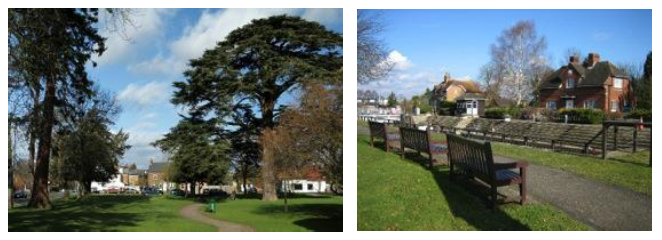
7.2 The RBWM Townscape Assessment7 recognises its significant history and how that has come to shape the settlement today, particularly its rapid expansion since World War II. It has a number of features that define the townscape of Old Windsor:
7.3 The classification in the Townscape Assessment differentiates between the different areas, and this is shown in Appendix B. It is vital that new development observes the important elements that make up the townscape of these respective areas and seeks, as far as possible, to observe those through high quality design.
7.4 Whilst Old Windsor has a rich history which has defined much of its development, there is a distinction between its heritage – and the importance of protecting this – and the contemporary townscape in the built-up area of Old Windsor. Opportunities for enhancement of the townscape through high quality design which reinforces the local distinctiveness of Old Windsor should be encouraged.
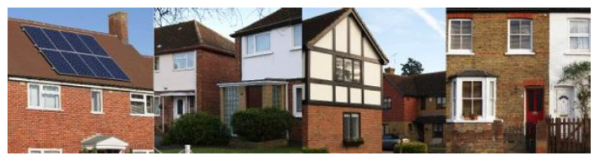
7.5 Considering the townscape does not only relate to the built form of development. Satisfactory arrangements will be required for parking and access. Generally parking areas to the front of the property using the front garden will not be acceptable unless this is the predominant pattern of parking in the locality.
7.6 Also, boundary treatment along any frontage should reflect that prevailing in the area. Proposals for open frontages or the use of the frontage for parking will not be acceptable in areas where enclosed front boundaries prevail.
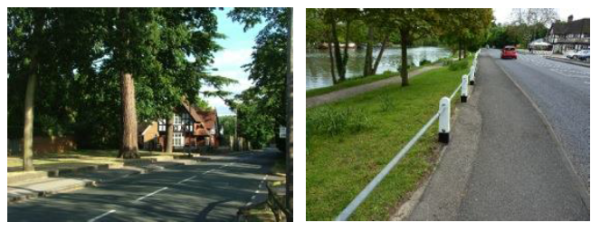
7.7 This is also relevant to development which may affect the setting of the Old Windsor Conservation Area. This was designated in December 1981. It has not been reviewed by RBWM since that date, nor has an appraisal been undertaken with a view to reviewing it. Therefore any proposed development within or in close proximity to the Conservation Area should articulate how it would not impact detrimentally on the features of the Conservation Area.
POLICY OW8: TOWNSCAPE
Development proposals should reflect the character of the surrounding area and protect the amenity of neighbours. Development proposals must demonstrate how they are in keeping with and contribute positively to the respective townscape classification area, as defined by the RBWM Townscape Assessment, or any successor document.
Opportunities for enhancement of the townscape through high quality design which reinforces the local distinctiveness of Old Windsor is encouraged.
In particular, development proposals shall:
Heritage assets
7.8 The NPPF identifies all elements within the historic environment that are worthy of consideration in planning matters as ‘heritage assets’. A heritage asset is identified as an environmental component that holds meaning for society over and above its functionality. This term includes buildings, parks and gardens, standing, buried and submerged remains, areas, sites and landscapes, whether designated or not and whether or not capable of designation.
7.9 Old Windsor has a network of significant heritage assets. There are 31 listing entries (including one grade 1 and four grade II), four scheduled monuments and six entries for Registered Historic Parks and Gardens for the parish on the National Heritage List for England. It is important that development properly considers the significance of these assets and therefore the weight that should be given to their conservation.
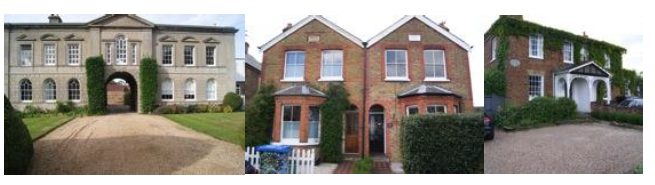
7.10 The majority of the Neighbourhood Plan area consists of the designated heritage asset of the Grade I Registered Park and Garden of Windsor Great Park. This contains a number of important monuments and earthworks, some of which are Scheduled Monuments and listed buildings. Also designated are areas to the north and east of the village, including much of Ham Island, St. George’s Farm and Manor Farm. These areas have a degree of, in principle, protection from development, along with their wider setting.
7.11 National policy contained in the NPPF requires that development must conserve and enhance the heritage assets of the parish and their setting.
7.12 In addition to the nationally listed buildings and the Old Windsor Conservation Area, a number of buildings and sites are considered to be of architectural significance, local distinctiveness, character or importance. These ‘Buildings or Structures of Character’ are identified in Policy OW9 and more detail on each is contained in Appendix C. Where relevant, these buildings or structures of character will be submitted for inclusion on the RBWM local register of heritage assets at risk.
7.13 There will be a strong presumption against the loss of these buildings and developments, and also to inappropriate extensions or revisions.
POLICY OW9: HERITAGE ASSETS
Development proposals within the designated areas shown on the Policies Map must demonstrate that they have fully considered the significance of the heritage assets within the designated area and have included appropriate measures to conserve those assets, based on their significance.
Proposals within the setting of heritage assets as shown on the Policies Map must demonstrate that they will not affect the setting of the heritage assets, based on their significance.
Planning permission will not be supported for development that would result in the loss of either listed buildings, or the following Buildings or Structures of Character:
Archaeological assets
7.14 Outside of Windsor Great Park, the archaeology of the parish is dominated by the Scheduled Monument of the early medieval and medieval palace of Kingsbury, a site of national importance. This covers most of the land to the north of the village and includes two large areas on Ham Island. While the importance of the scheduled area is specific to its Roman and early medieval archaeology, all of the areas north of Old Windsor, including Ham Island have a high potential for prehistoric archaeology.
7.15 In recognition of the considerable archaeological heritage of the parish, Old Windsor Parish Council commissioned a heritage survey8 to inform the Neighbourhood Plan. This looked at the heritage potential of the parish broken down into the three main cultural heritage elements: archaeology, historic buildings and historic landscape. The report used this information to identify areas where heritage sensitivities may affect development proposals and areas where these constraints may be less significant.
7.16 The Heritage Survey concluded that Old Windsor is one of the most important sites in Berkshire and the potential for discovering significant archaeology dating from all periods, especially on the floodplain is high. Whilst the existing settlement itself is not particularly significant and only contains a few historic houses, the historic integrity of its surroundings is in some areas high.
7.17 National and Local Plan policy requires the preservation and enhancement of the historic environment. The Neighbourhood Plan encourages a proactive approach by development to ensure that this can be achieved. This approach reflects the recommendations of the Heritage Survey.
7.18 On land outside of the designated areas, especially on the floodplain and associated with Tileplace Farm, there is still considered to be a significant possibility of archaeological remains being found. This is particularly the case in any area where the ground is relatively undisturbed. In such circumstances, it would be appropriate to undertake a programme of archaeological work as part of assembling any development proposals. To ensure that this programme is sufficiently robust, it should ideally reference the Historic Environmental Record (HER) and be agreed in advance by RBWM’s archaeological advisor.
7.19 OWNP aims to continue to support the on-going preservation and enhancement of the Great Park and appreciate its unique significance as a National Heritage Asset with the plan boundary.
POLICY OW10: ARCHAEOLOGICAL ASSETS
Due to the potential impact on assets of archaeological interest and the need to preserve or enhance the historic environment, development proposals within the designated areas shown on the Policies Map must be informed by a programme of archaeological investigation completed in accordance with a written scheme of investigation agreed in writing with the Council’s archaeological advisors.
Elsewhere within the plan area, proposals should be informed by early consultation with the Council’s archaeological advisor, which should determine whether archaeological investigation to inform development proposals will be required and, where they deem it necessary, such investigation should be completed before an application for consent is submitted.
Where archaeological investigation demonstrates that remains of archaeological interest are present or likely to be present within the development site, development should be designed to preserve remains in situ, giving the highest priority to preserving archaeological remains of national importance. Significant loss of remains of archaeological interest within the designated areas is unlikely to be justified, unless it is to ensure the conservation and increased appreciation of the wider area of archaeological interest.
Elsewhere in the neighbourhood plan area, any loss of archaeological remains would have to be robustly justified on the basis of delivering public benefits that could not otherwise be provided, Where the significance of remains does not merit their preservation, an appropriate record should be made of any remains that will be lost and deposited with the Historic Environmental Record.
7 Land Use Consultants (2010) RBWM Townscape Assessment, Volume 2, for RBWM
8 Oxford Archaeology (2015) Old Windsor Parish Heritage Survey, for Old Windsor Parish Council
< Previous | ^ Top | Next >