
In December 2020, the Datchet Neighbourhood Plan Steering Group launched a village-wide survey asking which local non-designated heritage assets (NDHAs) should be preserved for future generations because of their heritage significance. This might be for architectural, historic, archaeological, or artistic reasons, for their association with important people or past events, or because they contribute positively to the character and appearance of the area.
The survey was published in December 2020 issue of The Link, a quarterly magazine delivered to every house in Datchet; on the Datchet Neighbourhood Plan website, and also publicised on social media.
Around 40 buildings were nominated for consideration. For the purposes of the Datchet Neighbourhood Plan, the following list, which focuses on heritage assets around The Green, is finite; however, Datchet Parish Council will work with the Royal Borough of Windsor and Maidenhead to identify and add other NDHAs, particularly outside the central area, to its Local List.
The owners of the following structures were notified and invited to comment and add information. Details of the selected buildings have also been published in the September 2021 issue of The Link, and on the Datchet Neighbourhood Plan website where the full assessments of each NDHA can also be found28.
| 1. Drinking fountain, The Green | |
|---|---|
|
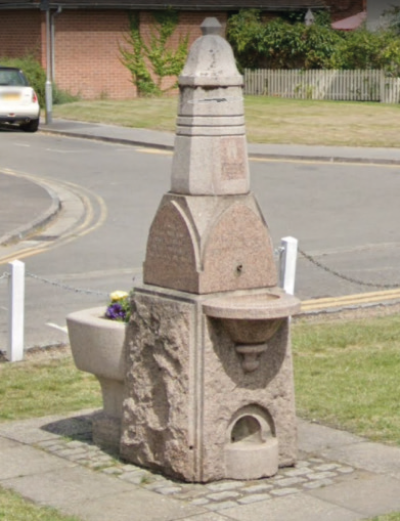
The drinking fountain was the first public monument to be erected in the centre of the village, in 1886. It originally stood at the top of the High Street and was topped by a lamp. It was the philanthropic gift of Lady Georgiana Needham of Datchet House, following the principles of the Metropolitan Free Drinking Fountain Association. A typical Victorian monument, it bears biblical quotations on the subject of water while providing bowls for dogs and horses as well as villagers. It is made from prestigious pink and mottled Aberdeen granite, a monumental stone which was fashionable at the time and favoured by the wealthy for their family gravestones. (There are other examples of its use in St Mary’s Churchyard and the church’s interior.) NPPF Significance: Historic |
| 2. 1930s' Garage, The Green | |
|
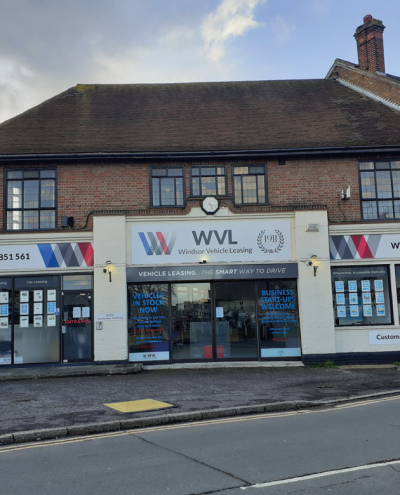
In 1935, this new, purpose-built garage was recorded in Kelly’s Local Directory as Frank Jarrett Ltd, Motor Garage. It is positioned just outside the Conservation Area and is an unusual survival and striking landmark at the west end of the village centre. It closes the long view from the eastern end as Montagu House does from west to east. Built in dark-red mixed bricks, with a pitched tiled roof, it is the design of the façade which reflects the popular Art Deco look of ‘modernism’—shown in the streamlined arrangement of rectilinear panels and pilasters for display. Above the central broad entrance area is a distinctive mounted octagonal clock (of a type often found on MG dealerships and visible on early photographs). On the southern forecourt there used to be a row of petrol pumps. NPPF Significance: Architectural / Historic |
| 3. Hall Cottage, The Green | |
|
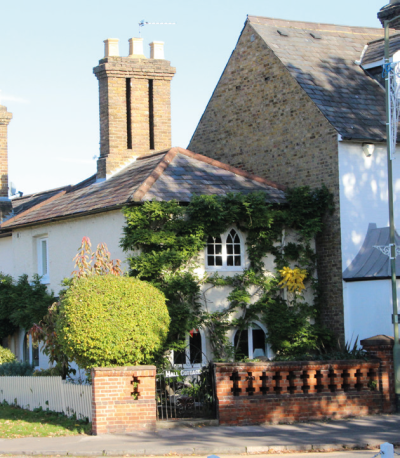
This picturesque cottage is a survivor from two previous uses of this site. From medieval times the land was owned by Eton College and there was a farmstead here. This was replaced by a large house, The Hall, in the 1870s. Hall Cottage is believed to have been originally a farm building which then served as the lodge to The Hall. (The Hall has since been demolished and replaced by the maisonettes of Hall Court in the 1960s.) The pretty Gothic arched casement windows, some with glazing bars, were inserted by a local builder and more in this style can be seen around the village. The decorative brick work on the front boundary wall echoes that at the Manor Houses. NPPF Significance: Historic / In the setting of a Heritage Asset |
| 4. Horse/Cattle Trough, The Green | |
|
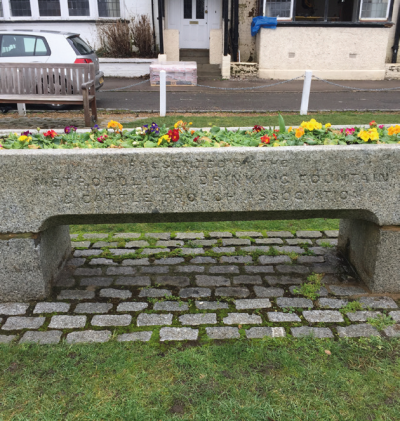
This 19th-century trough was originally sited on Windsor Road. It is made of granite and stands on a base of granite setts, and is kept full of flowers by Datchet Parish Council. The inscription states “Presented by the Metropolitan Drinking Fountain & Cattle Trough Association”. At some point, date as yet unknown, the trough was moved from Windsor Road and, along with the drinking fountain, was taken to Churchmead School on Slough Road for safe-keeping. They were returned to North Green around 1990 when the Greens were refurbished, prior to Datchet winning the Best-Kept Village competition in 1992. NPPF Significance: Historic |
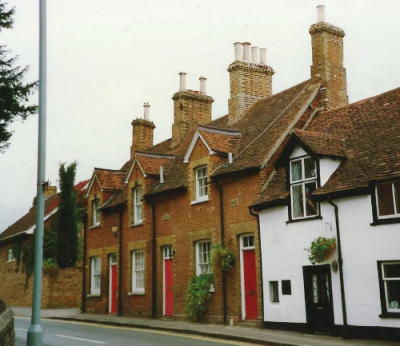
| 5. James's Cottages, London Road | |
|
James's Cottages are a terrace of three, Victorian, two-storey, red-brick cottages. They occupy a prominent location on the southern section of London Road, adjoining the listed Church Cottage and facing St Mary's Church, with views to The Green. They were built in 1853 for the Hale-Pearce family who were artisans in various trades for several generations. The cottages are also on RBWM's list of notable non-listed buildings in Datchet. NPPF Significance: Historic / In setting of a Heritage Asset |
| 6. Jubilee Cross, The Green | |
|
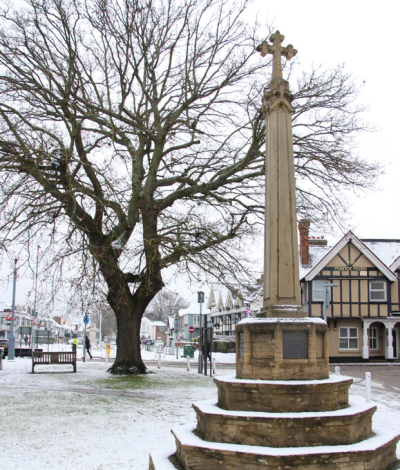
This free-standing, upright, Hamstone monument was made by Messrs Doulton and given as a gift to the village by a local resident, Mrs Mary Anne Crake of The Lawn to commemorate Queen Victoria's Diamond Jubilee. It was unveiled in June 1897. Mrs Crake persuaded the newly-formed Datchet Parish Council that a cross of a medieval type, like that in Muchelney, Somerset, would be an appropriate commemoration. She was following the philanthropic lead of two other wealthy Victorian ladies in the village: Lady Georgiana Needham who donated the drinking fountain, and the Dowager Duchess of Buccleuch who gave the Jubilee Oak planted in honour of Queen Victoria's Golden Jubilee in 1887. NPPF Significance: Historic |
| 7. Montagu House, The Green | |
|
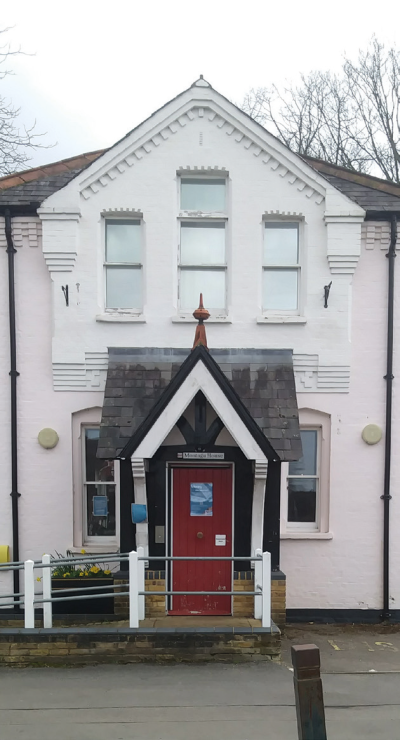
Located at the eastern end of The Green, in close proximity to the village school, this two-storey yellow-brick building is a significant link with Datchet's Victorian social history. Montagu House, formerly the Datchet Working Men's Club, was built on land provided by the Duke of Buccleuch in 1881 on a long lease and at a nominal rent. It was designed by the architect Stephen Mogg Wyborn of Windsor and funded by public subscription. It was intended to contribute to the welfare of the working classes; in particular to provide a place where educational and improving leisure activities were available. To celebrate Queen Victoria's Jubilee in 1887, Lady Needham provided the funding for the porch. She also gave generously, with a group of benefactors including the Duchess of Buccleuch, for another room to be added at the back in 1889. This room became the village hall and it played a central role in the life of the village until recent times. The ground floor has now been successfully converted to a branch library, with a police outpost upstairs, giving the original building a new community purpose in this prominent village location. NPPF Significance: Historic / In the setting of a heritage asset |
| 8. Manor Hotel, The Green | |
|
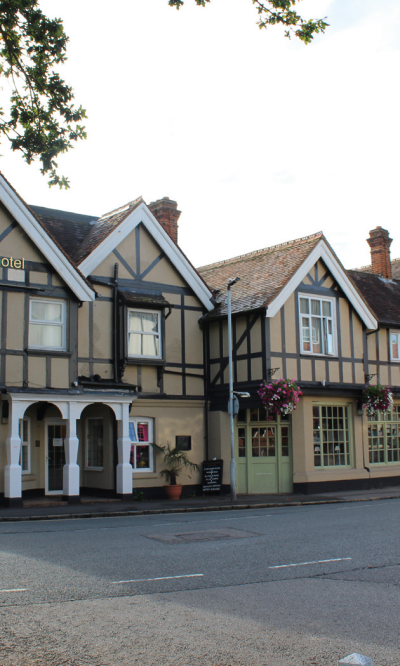
Historically, the Manor Hotel was part of a range of buildings owned by the Lords of the Manor. The Manor Houses and Manor Cottages to the east of the hotel have surviving 16th- to 17th-century timber frames. It is probable that the Manor Hotel building, in line with the whole manorial row, had similar origins. The building is known to have been a public house at least by the 1750s. From the 1850s, after the Waterloo-Windsor railway line opened, Datchet's popularity as a summer resort grew and a period of expansion followed. The Manor House was dramatically re-modelled by the Lords of the Manor, the Buccleuch and Montagu families, to attract prosperous tenants in the 1870s. The whole front of the building was redesigned with applied mock-Tudor timber-framing, the emerging fashionable style. The Manor Hotel received similar treatment. In Datchet, the mock-Tudor style is now everywhere, either applied to genuine old buildings or as a style choice in more recent developments. NPPF Significance: Historic / Architectural / In the setting of a heritage asset |
| 9. North Green/Patrixbourne, The Green | |
|
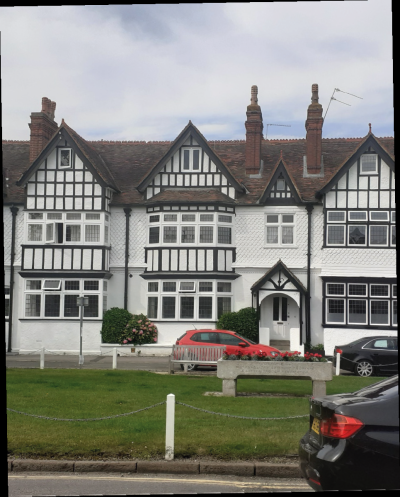
This pair of very large houses dominates the western end of the village centre as the Manor Houses do at the eastern end. They are also superficially like them in the variety of gable heights and mock-Tudor applied timbering. However, the Manor Houses date from the 1600s while North Green and Patrixbourne were built in the late 1880s or early 1900s. The style is a revival of picturesque Tudor and Jacobean features, which is typical of houses in the late Victorian period. During the early 20th century the ‘Datchet Yacht Club' was run privately as a social club from here. Although it was kept very quiet at the time, King George V used to play billiards here while Queen Mary gossiped with her friends; Datchet was used to behaving discreetly when royalty paid visits. NPPF Significance: Architectural, Historic |
| 10. Pharmacy, The Green | |
|
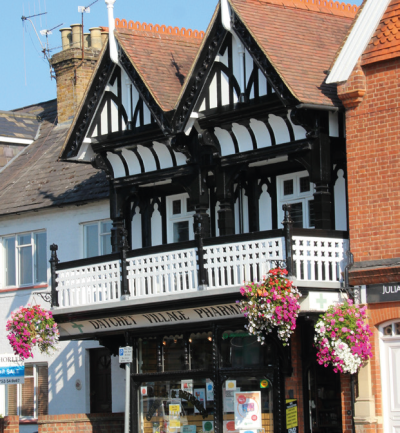
The Pharmacy is a narrow, black-and-white two-storey building which stands out from the other properties facing The Green because its façade is such a fine example of mock-Tudor-/Jacobean architecture. It makes an exceptional addition to Datchet's Conservation Area. The building was part of a group of cottages on a site which once belonged to Eton College. The pharmacy was originally called Tring Cottage. (Rose and Chestnut cottages to the west still survive.) It was purchased by the village pharmacist, Arthur Willcocks, who spared no expense on the 1904 refurbishment of his new shop façade. This is evident in the quality of the decorative detail which has lasted well to this day. NPPF Significance: Architectural / Historic / In the setting of a heritage asset |
| 11. St Mary’s School, The Green | |
|
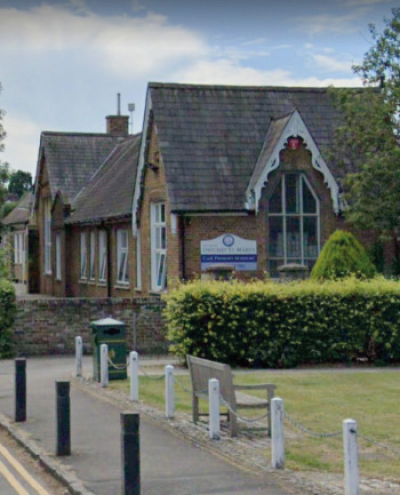
The village primary school was founded by Rev Isaac Gossett who set up a charity to raise the necessary funds to build the school and provide free education for the poorer children in Datchet. It was built on land given by the Lord of the Manor, the Honourable Walter Francis Montagu Douglas Scott, 5th Duke of Buccleuch and 7th Duke of Queensberry and opened in 1843. The section of heritage value is the long, narrow series of Victorian brick-built buildings extending back from The Green. The original structure dates from 1843 with later additions. Elements of Gothic revival design reflect the religious drivers behind much 19th-century education: steeply pitched slate roofs, pointed arches on front-facing gables, decorative bargeboards, tall windows and bell tower (later removed). NPPF Significance: Historic / In the setting of a heritage asset |
| 12. WWI Crucifi x, London Road (beside the Baptist Church) | |
|
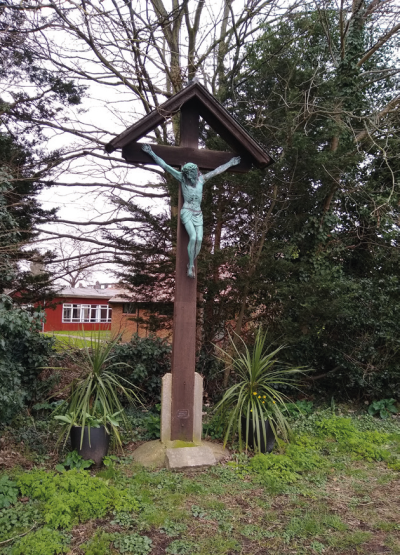
Datchet's crucifix memorial is similar in style to the French wayside shrines which would have been familiar to those who fought on the Western Front in WWI. It was donated by the Curling family of Datchet and was dedicated on Empire Day in May 1919. It was Datchet's first WWI memorial, erected a year before the obelisk memorial on The Green. It was positioned on an open site at the entrance to the village. At the time, there was no other development nearby. The oak cross is approximately 4m tall. The upright shaft is slightly tapered and the cross-bar has quadrants cut from the lower outer edge. The copper figure of Christ has a blue-green verdigris patina. The cross and statue are topped by a wooden, pointed-arch canopy-/apex with inscription. There is also an inscription at the base. NPPF Significance: Historic |
28 www.datchetneighbourhoodplan.org/local-list---non-designated-heritage-assets.html.
< Previous | ^ Top | Next >