
6.1 This chapter is framed around the following objective:
Objective 3: To retain the rural setting and individual identities of Cookham Village, Cookham Rise and Cookham Dean, separate from each other and above all from Maidenhead, providing opportunities for all to enjoy and benefit from access to the countryside.
6.2 It presents policies, and projects, in respect of the setting and identity of the Parish, its cultural identity as reflected in the paintings of Stanley Spencer and writing of Kenneth Grahame, and Local Green Spaces designated for their importance to the community.
6.3 The NPPF notes that planning policies and decisions should contribute to and enhance the natural and built environment, protecting and enhancing valued landscapes and recognising the intrinsic qualities of the landscape. This is also recognised in the Local Plan (at para 3.5), which notes that the Borough's landscape "provides opportunity for conservation, enhancement, restoration and creation, to strengthen distinctive character through design and management".
6.4 Through consultation on the Neighbourhood Plan the importance of the setting of Cookham was raised, both in respect of the separate identity from Maidenhead, but also between the three settlements. Equally, the value of and quality of the landscape was noted, significantly contributing to local identity, character and sense of place.
6.5 This is reflected in the RBWM Townscape Assessment published by RBWM which identifies key features, landmarks and views. Although excluding Cookham Dean from the assessment, it states that "the Cookhams are two (excluding Cookham Dean) clearly related, but distinct historic village settlements, separated by The Moor, with an intimate, rural village character, rich variety of built heritage, and quintessential views to the river, across historic open spaces and to the distinctive wooded backdrop (including those features by Stanley Spencer in his paintings)." This is further developed in the RBWM Landscape Character Assessment which divides the Parish into three separate character areas: Cookham Dean, Cookham Rise and Cookham Village are located in different character areas, contributing to their separate and distinct identities.
6.6 As noted in the RBWM Edge of Settlement Analysis prepared for the Local Plan, land between Cookham Rise and Maidenhead is assessed as very strongly contributing to the purposes of the Green Belt, and that 'it is vital that these areas and their functions are protected and maintained'. It notes that land to the south of Cookham Rise contributes to the separation between Maidenhead and development here would cause risk to that separation and increase the impression of sprawl. This reflects messages in the VDS which note the importance attached by the community to the separate identity between Cookham and Maidenhead. The Edge of Settlement Analysis also has similar findings in respect of land west of Cookham Rise and south of Cookham Village. These help to emphasise the separate identity and character of the three settlements, but also between Cookham and Maidenhead.
1. Proposals for development in the Neighbourhood Area outside the built-up areas of existing settlements should:
"I like to take my thoughts for a walk and marry them to someplace in Cookham"Stanley Spencer
6.7 Sir Stanley Spencer, RA (1891-1959) was one of the greatest and most original British painters of the 20th century. He was born and raised in Cookham, where he also spent much of his working life. Immersed, from an early age, in musicality and spiritual matters as well as in drawing and painting, Spencer developed unique perspectives which contributed to the exceptional and memorable nature of his art.
6.8 His work combined the realism of everyday life with a startling fidelity to the natural and built environment before him, and visionary insights. He offered joyous and vivid fusions of the ordinary with the extraordinary and the earthly with the heavenly. Spencer's dazzling skill, his personal idiosyncrasies, the intriguing contradictions of his life, and the breadth of his unique talent ensured his iconic status amongst fellow artists of the time and continue to ensure his outstanding identity in the history of art.
6.9 Overall, Stanley Spencer delivered to us some 450 oil paintings and perhaps thousands of works on paper. His works are now spread throughout the world in public institutions and private collections. In the UK, the collections of Tate, Cookham's Stanley Spencer Gallery, the Imperial War Museum, and the Burghclere Chapel are the most extensive, but there is hardly a major City Art Gallery in Britain without at least one Spencer, from Aberdeen to Southampton, from Swansea to Hull, and from Belfast to Glasgow.
6.10 The name, Stanley Spencer is regarded as synonymous with Cookham, which he loved beyond measure and considered to be his 'Village in Heaven', or his 'Holy Suburb of Heaven'. At least 80 of his oil paintings directly show built forms or vistas of Cookham and it is these that are highlighted in Appendix 5.
6.11 Scottish author Kenneth Grahame (1859-1932) also has a strong association with the Parish. His most famous book, The Wind in the Willows, was written from his home in Cookham. Quarry Wood and the River Thames are believed to be the inspiration for the setting of the story.
6.12 The National Trust, who own and manage the Cookham Commons, note On their website that
"the impressive vistas and great expanses of open grassland offer an idyllic rural landscape that inspired the likes of Stanley Spencer and Kenneth Grahame to some of their most impressive and iconic works".
6.13 The works of Spencer and Grahame represent important artistic interest for the Parish, relating to our appreciation of and therefore the significance of the built environment as well as the landscape and its setting as a cultural and heritage asset. Their work contributes to the significance of both the place that is seen and experienced, as well as the place you are looking from.
6.14 The NPPF requires planning policies and decisions to contribute to and enhance the natural and local environment through protection and enhancement of valued landscapes. It noted that heritage interest can be artistic, can be reflected in the general aesthetics of a place as well as interests in creative skills. This is also reflected in guidance from Natural England (An approach to landscape sensitivity assessment) and Historic England (Advice Note 11, Neighbourhood Planning and the Historic Environment, and Good practice advice in planning: The setting of heritage assets ). The Spencer paintings in particular are strongly associated with the Parish but also inform a wider understanding of the place and its evolution over time.
6.15 The retention and safeguarding of the Spencer views (see Appendix 5) are important to the character and identity of the Parish. Equally, they contribute towards the local economy, with visitors to the area attracted because of the Spencer legacy, for leisure and recreation activities. This is recognised in the Cookham High Street Conservation Area Statement which notes that:
'due to the international focus on Sir Stanley this [the setting of the paintings] is not solely of significance to Cookham in isolation, but is an issue of interest to a much wider audience'.
6.16 It goes on to note that:
"The paintings, however, are not always accurate depictions of the village; he was not afraid to exercise artistic licence to aid his narratives. Many details in the smaller canvases are actual, recognisable views and are as direct as many of his bold portraits. In the larger pictures, however, artistic liberties are taken so that the spirit of the place is captured. It is this character and appearance which designation as a conservation area serves to protect".
6.17 Cookham is surrounded by attractive countryside, providing opportunities for leisure and recreation for all to enjoy, and benefits from an extensive pattern of footpaths radiating out of and connecting the three settlements within each other and the countryside.
6.18 The parks, commons and countryside surrounding Cookham make an enormous contribution to the character of the Parish and it is important that they are recognised, protected and preserved for their recreational value and their contribution towards retaining the overall character (including wildlife habitat) of the area. Much of this comprises Common Land within the ownership of and managed by the National Trust. Such land benefits from protection under statute for our benefit and enjoyment. Other land is in the ownership of the Parish, Royal Borough, Environment Agency and other third party landowners. Spaces of importance in the Parish for public access, wildlife, and for their contribution to wildlife and the rural character of the Parish are set out in Information Box 6.
INFORMATION BOX 6: Important open spaces and areas of countryside in Cookham benefitting from open public access
|
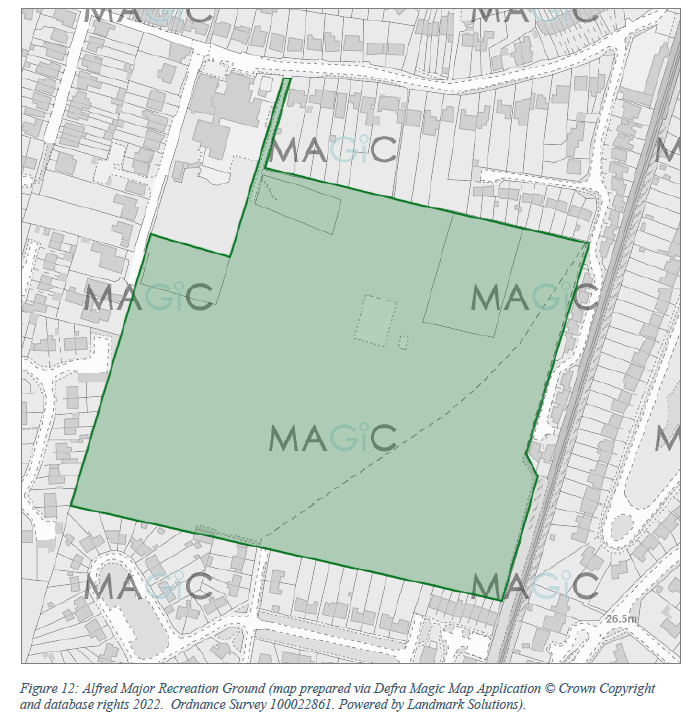
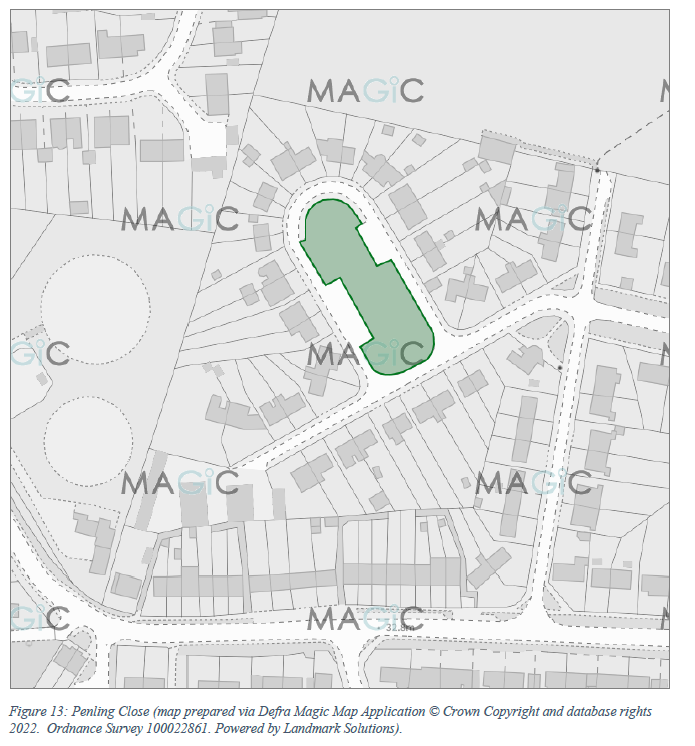
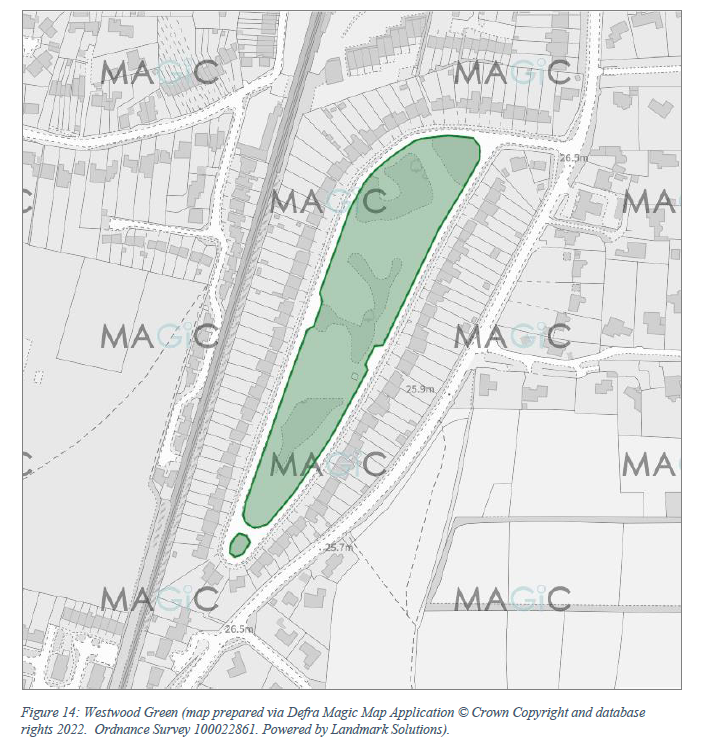
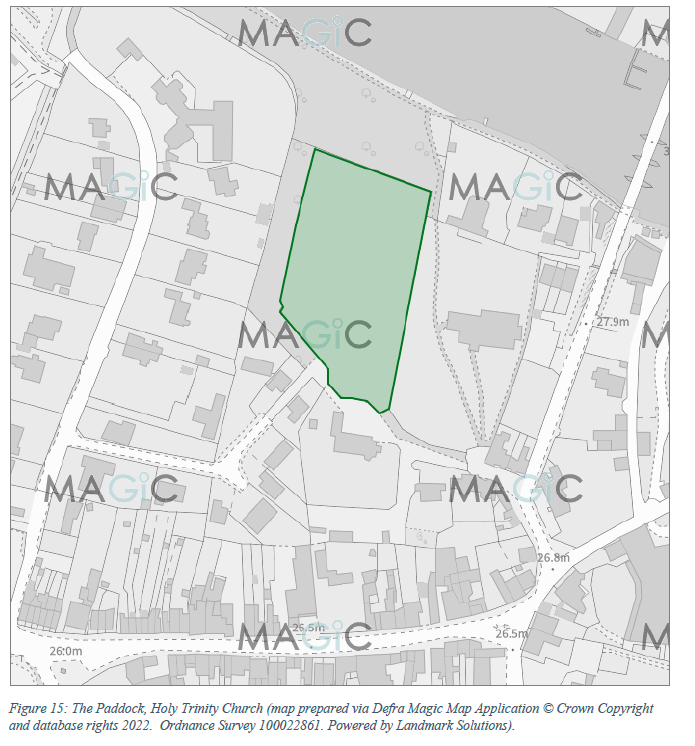
6.19 The NPPF permits local communities to identify and designate local green spaces that are of importance to them. Appropriate spaces for designation are those which are:
< Previous | ^ Top | Next >