
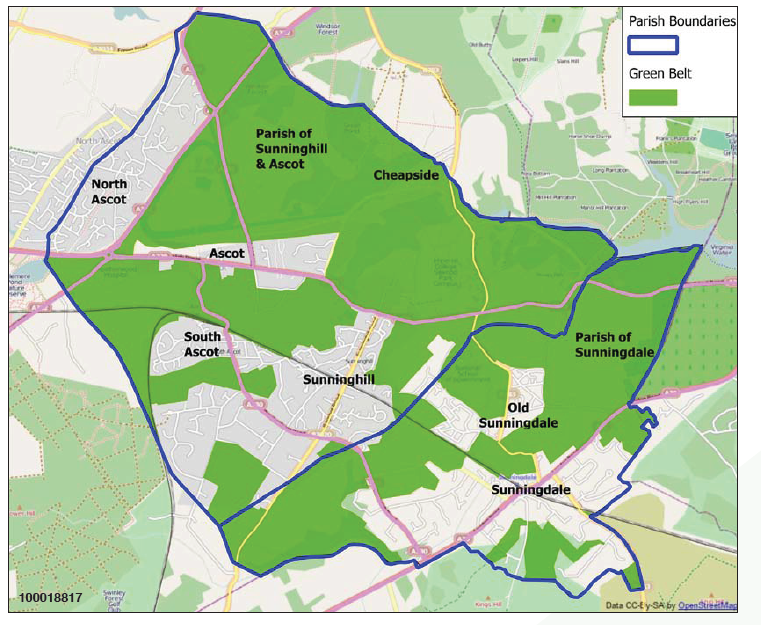
The Plan area comprises the two parishes of Sunninghill and Ascot, and of Sunningdale. It embraces the three main villages of Ascot, Sunninghill, and Sunningdale, the three smaller communities of North and South Ascot and Cheapside, and the surrounding area.
66.5% of the Neighbourhood Plan area is in the Green Belt, and virtually all of it falls within the influence zone of the Thames Basin Heaths Special Protection Area (SPA), which constrains the number of houses that can be built by requiring the provision of an appropriate equivalent Suitable Alternative Natural Greenspace (SANG).
The residential areas currently include a mix of housing, ranging from large detached houses in their own gardens to terraced housing and flats.
Economically, the area is far from self-contained and is dependent for shopping, entertainment, jobs, and local labour on the nearby towns of Windsor, Woking, Camberley, and Bracknell. While many residents commute to work outside the area, there is also local employment, which the community is keen to retain.
Although recognised as a desirable place to live, many feel the area needs significant improvement and more facilities to create vibrant, strong, and viable local community identities and secure their future.
Map 1: Our Neighbourhood Plan area
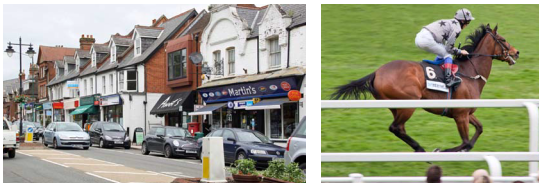
Ascot is famous for its royal racecourse, established by Queen Anne in 1711. Since then, the High Street, which effectively is the centre of Ascot, evolved into its current form:
The surrounding area, which was historically dominated by large estates, was largely broken up during the early 20th century and now consists mainly of attractive, leafy residential suburbs and villas in a woodland setting. There is little residential accommodation within walking distance of Ascot High Street. A recent report in The Sunday Times lists Ascot as one of the top 100 Best Places to Live in Britain.
Ascot Racecourse remains a major, world-renowned attraction, especially for Royal Ascot. It has close links with the local community and provides a number of community amenities such as the Durning Library and the Golf, Cricket, and Football Clubs. It is also a significant local employer.
Heatherwood Hospital is a major hospital site, dating back to 1922. In the 1990s, its services included A&E, a maternity unit, orthopaedic and children’s wards, and a range of outpatient services. The hospital is held in great regard by the local community, and there is serious concern that the last decade has seen a steady reduction in the medical services on site. For example, the A&E department was closed in the late 1990s and replaced with a Minor Injuries Unit, now itself under threat. In September 2011, the Ascot Birth Centre was temporarily closed and never re-opened. There is a strong campaign by local residents and Councillors to retain a hospital on this site for the benefit of the community.
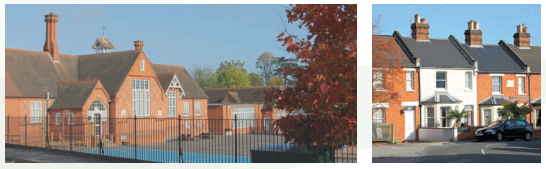
Sunninghill is a lively and characterful Victorian village, that includes residential areas. It has a High Street that offers a relatively wide range of small convenience and specialist shops, cafes/restaurants, and other services which are well supported by local residents.
St. Michael’s primary school is in the centre of the village, occupying an important landmark building. In the village are also Cordes Hall, a hall/theatre held in trust for the community, and the Novello Theatre, originally a small cinema, now used primarily by children’s dance and drama groups; both date back to Victorian times.
A small designated industrial area lies just off the High Street, adjoining the Queens Road car park. Silwood is an important employment/education site which runs along the edge of Cheapside village and there is a mixed employment site at Crossways, on the borders with Sunningdale.
The village expanded significantly during the inter-war and post-war periods with the construction of a variety of housing types.
The biggest threat to the prosperity and viability of Sunninghill arises from the inability of its Victorian streets to cope with current volumes of traffic, especially large delivery vehicles, alongside a serious shortage of parking for residents, shoppers and workers.
While Victory Field provides an excellent open recreation area for local residents, this is located at the far end of the village, on its borders with Ascot; the other end of the village lacks any public open space.
Sunningdale is an aspirational area with extensive Green Belt and leafy surroundings and with a rich variety of housing types. It has an enviable position adjacent to Windsor Great Park and Chobham Common and benefits from internationally famous golf clubs and sports facilities.
The historic old village is mainly clustered around the listed Holy Trinity Church and is predominantly residential with much of it a conservation area. There is one large landowner, St. John’s College Cambridge.
The main commercial centre is located around the junction of the A30 with the Chobham Road. It offers a variety of small shops serving local needs, together with specialist shops, coffee shops and restaurants. It is separated from a popular Waitrose supermarket which is adjacent to the station by a busy main road and level crossing and hence gets very limited benefit from its footfall.
The character of the area along the A30 itself has changed significantly in recent years by the replacement of a number of large houses in large plots by blocks of luxury flats and apartments. Local residents feel that this is impacting adversely on the character of the area and its social fabric, and there is strong resistance to this trend extending to other areas of Sunningdale.
The 5 star Coworth Park hotel and Polo centre is in the area and a state-of-the-art Care Village is being developed at Lynwood, on the border with Sunninghill. Sunningdale Park, which is in the Green Belt, is an important site providing jobs locally.
Parking is a serious problem in Sunningdale – for retailers, workers, shoppers, commuters and residents – as is traffic congestion, aggravated by the level crossing.
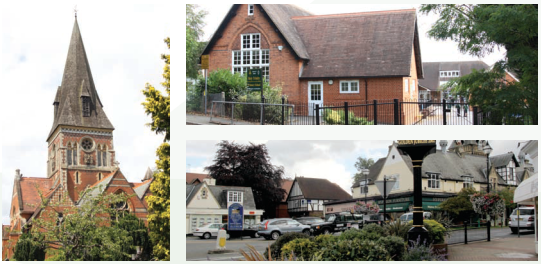
North Ascot is split into two halves with the south eastern half being in our NP area and the northern half in Bracknell Forest.
Part of the area bordering Bracknell Forest is a traditional Victorian village. In the main though, North Ascot is a pleasant neighbourhood of leafy residential suburbs with a mix of housing types.
A busy A-road separates it from Ascot, creating a physical barrier that makes pedestrian and cycle access difficult between the two.
The area has recently been the focus of developers seeking to build blocks of apartments or large detached homes to a density that in the community’s view is harming the character of the area.
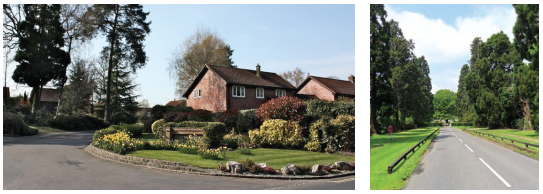
South Ascot is more diverse in character. The core is a Victorian village with terraced or semi-detached houses. In the 1950s the Bouldish Farm Estate was built, while towards the south and eastern end of the village are streets of villas in a woodland setting and leafy residential suburbs.
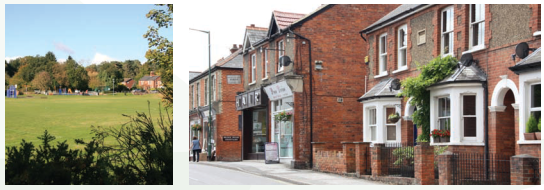
There is a village green and a large recreation area which is well used; the newly designated Allen’s Field SANG is located in South Ascot.
South Ascot has a handful of shops on a narrow, busy A-road, and also includes Ascot Business Park, adjacent to Ascot railway station, one of the important employment sites in our area.
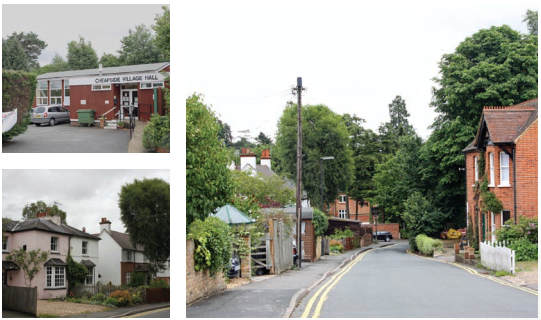
Cheapside is a small village located between Ascot Racecourse and Windsor Great Park, with its own very distinct identity. It is one of the oldest settlements in the area and the village, part of which spills over into the parish of Winkfield, lies entirely within the Green Belt.
Most plots and houses are post 1817 with some little terraces that date to around 1850. During WW2, part of the US Air Force was billeted locally at Sunninghill Park and some further development took place in the 1950s, such as the Almshouses which were built on the site of an old school.
Cheapside has a well used village hall, a thriving village school and a popular pub. It remains a mixed village community, surrounded by green spaces which set it apart from the other villages in the area.
< Previous | ^ Top | Next >