
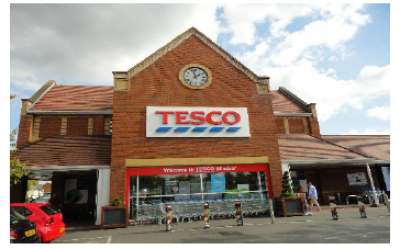
Photo 12 Tescos store Dedworth Road
9.1.1 During our community consultations we heard concerns about working and shopping issues. The loss of public houses, too many betting shops, the loss of offices and jobs, and need for provision for small business, the loss of essential shops and range of shops were all mentioned as local issues.
9.1.2 Current Borough policy47 is to concentrate larger businesses in designated employment areas as well as to continue to support individual business sites48. National Policy supports building a strong and competitive economy49 and ensuring the vitality of town centres, although it also allows unused commercial buildings to be converted into residential dwellings under Permitted Development Rights and this policy has resulted in the loss of much office space in Windsor in recent years and is outside the scope and control of an NP.
9.1.3 The major Borough designated employment sites in the WNP area are:
9.1.4 The other major commercial sites in the WNP area are LEGOLAND, Windsor Racecourse (dealt with in our PLACE policy sections 10.4 &10.5), Keeler and Tesco but there are other small businesses scattered throughout the area, including shops, workshops, a considerable number of Health and Military institutions, and many people working from home.
9.1.5 Retailing (A1 retail use class) is going through major adaptations to changing markets50 due to the internet and changing shopping patterns. This potentially can lead to the loss of retail provision in peripheral centres like the neighbourhood centres and parades in the WNP area (as well as in Windsor town centre). There is pressure to convert shops into other types of retail uses (A2/A3) such as fast food, betting shops, beauty parlours etc. These parades can now also be converted into housing as allowed under specific circumstances by Permitted Development Rights, and so they are increasingly vulnerable. This can be particularly an issue in the western suburbs of Windsor which depend upon those neighbourhood shops more due to their distance from the town centre.
9.1.6 There are no known spare sites in the WNP area where new industry or offices can go. The plan therefore has looked at where it might be possible to intensify neighbourhood shopping areas without losing the essential character of the area, and to consider issue of pubs which act as both businesses and community facilities.
OBJECTIVE 5 Grow the local economy and enhance commercial areas for the benefit of business; workers; shoppers and tourists.
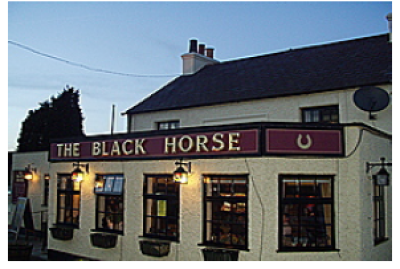
Photo 13 The Black Horse pub Dedworth Road
CONTEXT
9.2.1 Public houses51. Loss of public houses has been a strong theme in our research. Some public houses have been sold for housing despite an ongoing demand as a viable business or community facility. Particularly in areas where there are few other eating and drinking opportunities. They can be a real loss to the community and affect its sustainability.
POLICIES – Public Houses
PUB.01
The loss of pubs to non-community uses will not be supported unless it can be demonstrated, further to 12 months open and active marketing, that it would not be economically viable or feasible to retain the pub in its existing use and that there is no reasonable economically viable prospect of securing an alternative community use of the land or premises.
REASONED JUSTIFICATION
9.2.2 PUB.01. There are three issues around the loss of public houses:
9.2.3 Issue 1: Although this is covered by RBWM business policy, this has not saved some public houses which were valued by the community, so we can also seek to protect viable pub businesses in our policies. We wish to protect business uses and also community uses by asking for a viability test and ensuring that replacement uses consider community uses first.
9.2.4 Issue 2: This has now been addressed by national policy. The loss of public houses has evidently been a national concern as there has now been a change in national policy to enable these valuable facilities to be better protected. In April 2015 legislation was brought in so that future public houses which have been listed as Assets of Community Value (ACV) will no longer be demolished or allowed to change use without a planning application and a chance for the community to comment. This is a welcome change for Windsor, (but too late to save many), and any public houses which are not ACVs will still be vulnerable. In many cases there are now alternatives to pubs which can serve a similar community function, such as coffee shops.
9.2.5 Issue 3: This is covered by heritage building and character policy. Our policies under Character and Heritage (including Non-Designated Heritage Assets) should help to protect any valuable buildings which remain.
OBJECTIVE 5 Grow the local economy and enhance commercial areas for the benefit of businesses, workers, shoppers and tourists.
CONTEXT
9.3.1 The WNP area does not cover the town centre, so shopping in the WNP area is confined to Dedworth Road Local Centres, Neighbourhood Parades, and some individual local stores. These act as a focus for essential service and convenience uses, with very little “comparison” shopping. The two former garden centres on the edge of West Windsor are outside the WNP area, (within Bray NP area), one which has already closed and the site allocated in the BLP for housing (BLP site HA11).
9.3.2 Our consultations showed concern from local people about this local shopping and loss of essential services, and these are happening despite it being Local Plan policy to support local shopping parades and centres52. Concerns included; the appearance of shopping parades and the public realm around them; maintaining a good balance of independent retailers; and maintaining essential shops. Recent loss of a popular DIY store (Mahjacks) in West Windsor has concerned many as there is little alternative provision in Windsor and this affects sustainability of the town. Concerns about the number of fast food takeaways and betting shops were also expressed, and there has been some evidence of clustering of these around Dedworth Road.
9.3.3 Local parades are also now vulnerable from being changed to housing because changes of use from A1 & A2 (financial and professional services) to C3 (dwellings) is now Permitted Development. These small parades are quite vulnerable as the loss of one shop in a small parade can lead to smaller footfall and the subsequent loss of the whole parade.
9.3.4 Shop fronts can also contribute to the attractiveness of an area and act as a draw to customers. Existing RBWM shop front policies relate only to the town centre, and do not extend to neighbourhood parades where architecture tends to be undistinguished twentieth century design. External security shutters are not normally permitted in RBWM but have crept in in places.
9.3.5 People want to see independent retailers thriving in their area, and we wish to encourage planning applications from independent retailers.
9.3.6 In some circumstances, national policy allows offices and commercial premises to be changed into homes through Permitted Development Rights and the NP and Borough are unable to stop this happening53. This is creating a situation where businesses struggle to find premises in the WNP area.
9.3.7 The high level of start-ups in RBWM indicate a need for micro and small business provision yet there is little such space available unless a house is converted to business use.
9.3.8 Provision of sufficient employment space is the responsibility of the Borough, and the Employment Land Review54 and other later evidence assesses business demand for the need for such space. The evidence suggests that the need for employment space within the Borough can largely be met through intensification and redevelopment leading to more efficient use of existing sites.
9.3.9 Current Local Plan policies55 restrict development for business uses to existing centres of employment and town centres but allow small scale developments (Under 100m2) outside these areas. These small-scale sites are essential in the WNP area where there is little alternative land available for business, and the existing neighbourhood retail areas are important in this regard as there are often other small businesses clustered with them.
POLICIES - Retail And Small Business
RET 01 Local shops provide an important community function, and proposals that will support the vibrancy and vitality of Local Centres and retail parades whilst respecting local character, residential amenity and highway safety will be supported. The loss of shops and small-scale commercial units will be resisted unless it can be demonstrated, further to twelve months open and active marketing, that retention in their current use is not economically viable. Proposals for new shop fronts should have regard to guidance set out in the Windsor Design Guide shop front section (see Appendix 2 section c).
REASONED JUSTIFICATION
9.3.10 Improvements to appearance through general public realm improvements and shop front improvements along with appropriate and essential shop uses help to attract customers and encourage them to stay longer. Recent public realm improvements in West Windsor have been welcome. Some shops do not make the best use of their shopfronts and metal roller shutters have crept in, resulting in damage to the public realm and “dead” frontages. This can produce a perception that a Neighbourhood area is unsafe. Enhancements to whole parade frontages to improve appearance of whole areas would be welcomed and could be encouraged by small grants funded by CIL money.
9.3.11 The RBWM Town Centre shop front design guide (from the 1990s) does not cover the WNP area and is very old, so we have produced a WNP area Shop Front section within the Design Guide (Appendix 2 section c) with some good general principles and positive examples which are suitable for the type of suburban area local shopping parades we see in our area.
9.3.12 The objectives are; To support retail architectural features of merit, well-proportioned frontages, to use appropriate materials, to ensure accessibility, to create attractive window displays, integrate security features, signs canopies and awnings in proportion, make maximum use of the forecourt and best use of colour. For more details and examples see Appendix 2 section c.
47 (LP E1 & Emerging BLP 25 9 Economic development) 26 (defined Employment Sites) 27 (other sites and loss of employment uses) 28 (Retail Hierarchy) 30 (District and Local centres) 31 (shops and parades outside of defined centres) 33 (Visitor development (including hotels)
48 Any changes of use for these individual sites (that are outside of permitted development rights) must apply for planning permission.
49 NPPF Ch 6, NPPF Ch 7
50 RBWM Retail Review June 2015
51 In England the listing of a public house as an asset of community value will trigger a temporary removal of the national permitted development rights for the change of use or demolition of those public houses that communities have identified as providing the most community benefit. This will mean that in future where a public house is listed as an asset of community value, a planning application will be required for the change of use or demolition of a public house. This then provides an opportunity for local people to comment, and enables the local planning authority to determine the application in accordance with its local plan, any neighbourhood plan, and national policy. The local planning authority may take the listing into account as a material consideration when determining any planning application.”
52 Existing Local Plan policy52 supports the role of local shopping parades and centres and resists change of use to non-retail (Use Classes A2 or A3) unless it is required to maintain vitality where retail use can no longer be sustained. The emerging BLP policy R5 supports development proposals within Local Centre and TR7 Shops and parades outside of defined centres, allowing change of use that support community functions and also requires appropriate marketing evidence for change of use.
53 Except through an Article 4 direction.
54 RBWM Employment Land Assessment 2009 & Housing and Employment Land Availability Assessment 2017
55 Local Plan policy E1
< Previous | ^ Top | Next >