
2.1 Old Windsor pre-dates the town of ‘New’ Windsor. Evidence of activity from 4100BC through to the present day has been found. The most historically significant being a large ninth century riverside Saxon settlement (built on the site of an earlier roman settlement), with a royal palace providing a seat of government, and hunting forays into the vast Windsor forest, which continued with the early Normans up to Edward the Confessor. Domesday Book shows that in 1086 the ‘Vill’ contained accommodation for nearly 100 families, indicating a population of perhaps 500. If this seems small, it must be remembered that in the whole of England in medieval times only a score of towns had more than 200-300 houses, with 1,000 to 2,000 people. The village almost disappeared after Henry I built Windsor Castle several miles upriver.
2.2 The Parish of Old Windsor extends from the River Thames, over most of Windsor Great Park, up to Virginia Water. It includes the famous ‘Copper Horse’ statue of King George III which is Grade 1 listed, and the top half of the impressive Long Walk from Windsor Castle, ‘The Village’ a second, smaller settlement for the Crown Estate workers in the Great Park and Smiths Lawn, famous for its polo. The village of Old Windsor is set on the banks of the Thames and is also bordered by the beautiful Windsor Great Park and the meadows of Runnymede (location of the signing of the Magna Carta). The popular Thames Path National Trail runs from Runnymede, past the former ‘Bells of Ouseley’ public house (now part of the ‘Harvester’ chain) through to Old Windsor Lock and on to Albert Bridge.
2.3 The village is predominantly residential with some small retail outlets including convenience stores including a Co-op, a couple of takeaways, café, restaurant and three hairdressers/beauty parlours and various pubs. There are two brownfield sites identified for development in RBWM’s draft Local Plan. One of which has been granted planning permission for a small development. The other site is currently being used by small businesses requiring workshop type premises.
2.4 The majority of properties are in Old Windsor itself, with approximately 140 in the Great Park which is also part of the Old Windsor parish. Many residents stay in Old Windsor all of their lives and this has resulted in Old Windsor having the largest percentage of elderly residents in the borough.
2.5 Due to its close proximity to Windsor Great Park and the River Thames, 93% of the parish is green belt and 7% floodplain. A large proportion of the parish is covered by the Grade 1 Registered Historic Park and Garden of Windsor Great Park. It is also close to both the M4 and the M25 which has contributed to Straight Road being classed as one of the busiest single carriageway of its type in the borough.
2.6 Of the large estates which still exist in some form, the oldest are the Manor (near the church), Woodside (at Crimp Hill to the south-west of the village), Beaumont (at the junction of Burfield Road and Priest Hill), and Runnymede House, to the east of Priest Hill.
2.7 The modern village grew up on a curving strip of waste land known as the Moor, which stretched more or less along the present line of Burfield Road and St. Luke's Road. The last unenclosed part of the Moor became Old Windsor Green, and this dwindled to the patch of grass in front of the Fox and Castle.
2.8 In 1930 there were only about 475 houses - a figure which had risen to some 675 by 1940, 775 by 1950, 1,600 by 1960 and nearly 1,900 by 1970.
2.9 In the early years of this century, the main concentration of dwellings was in the St. Luke's Road and Albany Road area. Between the wars a number of houses were built in Straight Road, Ouseley Road, The Friary and elsewhere, with council houses in Church Road, but the principal expansion has come since World War II.
2.10 The big private enterprise Ashbrook Road and Meadow Way estates, built by Taylor Woodrow, and a number of smaller developments, together with local authority housing at Kingsbury Drive, Queens Close, St. Peters Close and St. Andrews Close, with old people's dwellings at Pollard Close, have filled in much of the open land on both sides of Straight Road. Recent developments such as Hartley Copse, Newton Court, Bears Rails and Parker Gardens have utilised much of any remaining brownfield and large garden sites.
2.11 To meet the influx of population, new schools have been built, more shops have opened and other amenities have been provided, such as the Memorial Hall, opened in 1961 and the St. Lukes Road Shopping Precinct.
2.12 Transport and travel is a major issue in Old Windsor. There is heavy reliance on cars, with the local village roads regularly being used as ‘rat runs’ due to regular congestion on the A308. This situation is exacerbated by the lack of public transport links to Datchet train station, being the nearest station serving Old Windsor. Moreover, there is no direct public transport link to the Langley campus of the Further Education (FE) college.
2.13 Community infrastructure capacity is an issue. The local GP surgery is unable to expand, and whilst it is coping at the present time, it is expected that the ageing population will continue to put pressures on this service. For example, it is considered that the practice would be unable to cope with an additional care home in its catchment area.
2.14 There are serious concerns around the ability of the sewerage treatment works on Ham Island to be able to handle current levels of waste and wastewater regardless of the additional capacity that would be required to facilitate future development in its catchment area.
2.15 The community is generally considered to be well served by retail outlets, pubs and eateries.
2.16 The Royal Borough of Windsor & Maidenhead Local Plan 2003 has a series of ‘saved polices’ that are relevant to the OWNP. These relate to the Green Belt, the environment, leisure and community facilities, housing and archaeology. They help to inform the OWNP which must be in general conformity with these policies.
2.17 In due course, the Local Plan will be replaced by the Borough Local Plan which is at Examination stage. It is expected that this will be adopted in the second half of 2018 and therefore has been a significant consideration in the preparation of the OWNP.
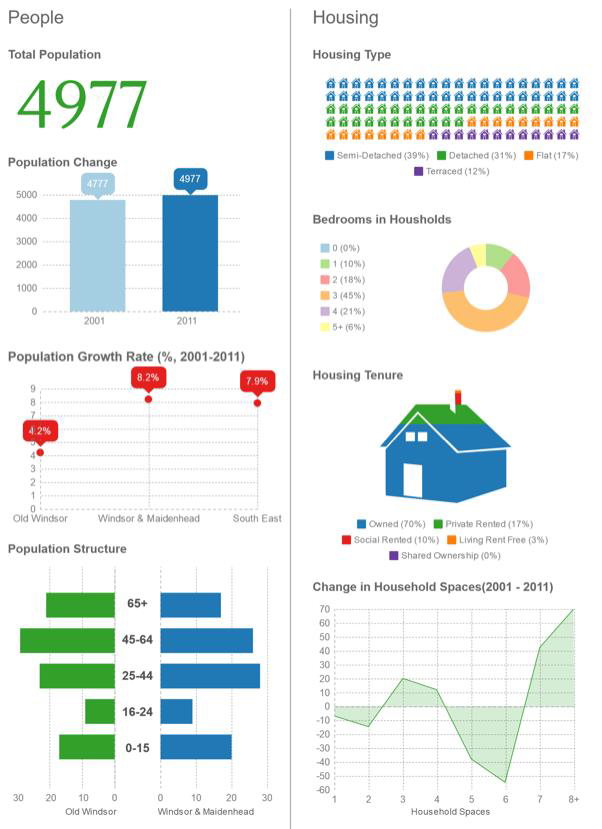

2.18 A more detailed analysis is shown in Appendix A.
< Previous | ^ Top | Next >