< Previous | Next >
Appendix 3 Shopfront design guidance
Introduction
-
This guide is intended to provide advice on the design of businesses and shop fronts within the designated Eton area.
-
In developing this guidance document the Neighbourhood Plan Steering Group has taken into account the wider social, cultural, economic and environmental benefits that the conservation of the historic environment can bring, including consulting the Windsor and Eton Society.
-
The Key Objectives in relation to business and shop front design and signage in Eton are as follows:
-
To ensure the retention and refurbishment of existing traditional shop fronts and building features including pilasters, console brackets, cornicing, stall-risers, recessed doors, and other traditional detailing using building materials as may be identified.
-
To support the transformation of shop front in traditional buildings where the original design vernacular has been destroyed or otherwise compromised and the applicant is wishing to reincorporate a traditional retail frontage into the building or modern interpretation.
-
While the guidelines are intended primarily for the traditional shops of Eton, to potentially also stimulate creative and imaginative modern shop front designs for the less traditional retail units of Eton Wick.
-
To ensure appropriate provision is made to meet the access requirements of all shopkeepers.
-
To ensure only good quality advertisements that reflect the design aspirations of the area are provided in places where they are suitable.
General Principles of shop front design
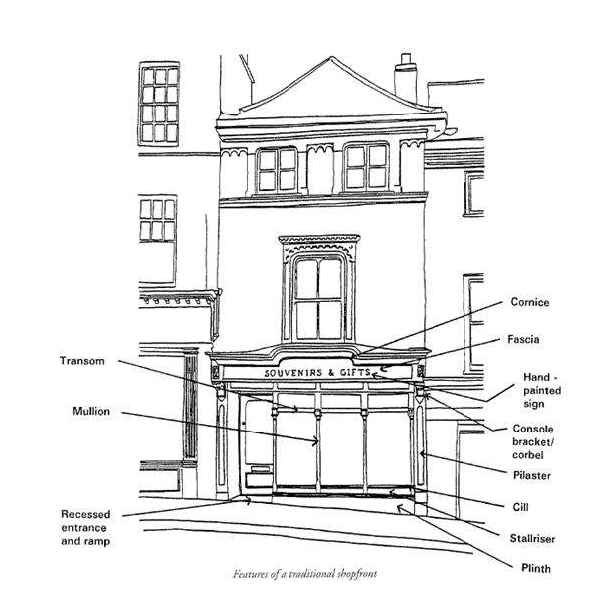
-
Traditional shop fronts are inviting and attractive in themselves; they add to the shopper’s experience and lend a town centre an air of quality and vitality.
In Eton, the traditional shopfronts make significant contributions to the overall heritage character of the High Street.
With this in mind there is support for the retention and restoration of traditional older style shop fronts.
In the Neighbourhood Plan Area, there are not a great number of traditional shop fronts so it is of heightened importance that they are preserved.
-
New shop fronts should incorporate traditional features and should avoid large areas of plate glass, aluminium and plastic including in frames and fascias.
Where the existing shop front is to be replaced, the important principle is that the new shop front should be designed within its context and as part of the whole architectural composition of the building.
The design should take account of the period and style of the building above and of buildings in the immediate vicinity.
-
If the premises is in a more modern development, such as those in Eton Wick, there is an opportunity to consider a more innovative and attractive approach to a shop front.
This may involve the use of non-traditional materials, but high quality is always important.
Shop front design in this instance should be imaginative and appropriate to the style of the building, utilising a high quality of materials.
-
The design or redesign of a shop front in the Neighbourhood Plan area should take into account the age and architectural detail of the building as a whole and special attention should be paid to:
- Ensure shop fronts sit below and separate from the sills of first floor windows.
- Shop fronts can benefit from being subdivided vertically to relate to the proportions of the windows in the building above.
- Where a shop runs through more than one building, each building should maintain its own shop front.
- Where a building contains a separate access to an upper floor, the shop front should ensure that the door to this upper floor level is separate from the retail frontage.
- When a shop forms part of a group or terrace of similarly proportioned/designed buildings, the design of the whole character of the whole terrace or group should guide the design.
- The design of the shop front should reflect and enhance the architectural style of the remainder of the building.
-
Though diversity is encouraged between different shopfronts, signage should be consistent across an individual facade.
There is some degree of flexibility in signage design, but as a general set of principles, the following branding is appropriate in the Neighbourhood Plan area:
- Ensure that the font is the same across all external signage.
- Maintain a consistent foreground and background colour.
- Ensure that the colour palette used is reflective of the colour palette present across the whole facade, including the area above the shopfront.
- Where lighting is required for the sign or mounted on the building, this should be in keeping with the design of shopfront, and not have an overbearing impact on the general streetscape.
-
Shopfronts and signage within their windows are used to effectively display products or maintain a visual link between the street and interior of the shop.
In turn, shop fronts should avoid advertising displays, such as plastic film, that fully obscures the interior of the shop from the eyes of the pedestrian.
-
In Eton Conservation Area, advertising external to retail premises (e.g. A-frames and blackboards) will be discouraged where they impede walkways or harm local character.
Examples of good shop fronts:
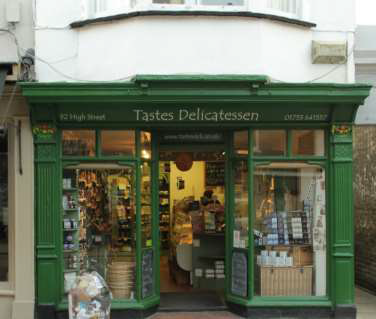
Case Study 1: Tastes Delicatessen
Incorporates traditional wooden shopfront; has active shop frontages; consistent branding; and relates to the façade above the building.
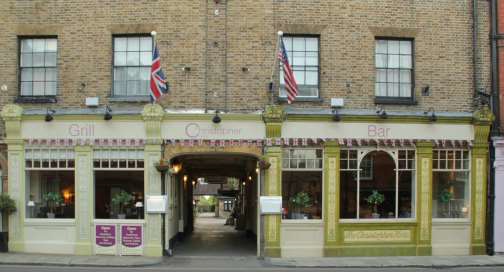
Case Study 2: The Christopher Hotel
Good use of stallriser, white mullions, sensitive canopy, considerate blend of old and new styles.
Examples of other shop fronts:
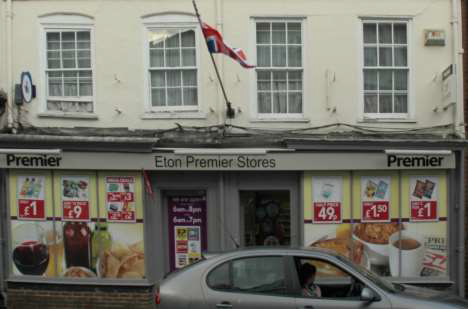
Case Study 3: Eton Premier Stores
Film advertisements obscure view into the shop. Proportions reflect building above.
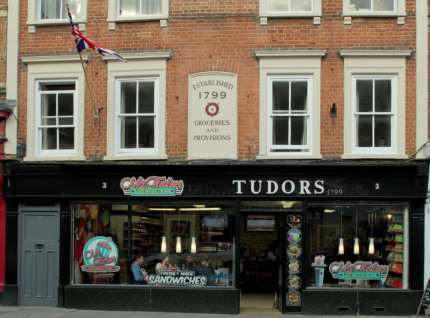
Case Study 3: Tudors
Shop front offers a strong visual link with the street. A variety of fonts is confusing.
Design Principles
-
The Neighbourhood Plan area is gifted with a great number of historic buildings and high
quality shopfronts. In Eton alone there are over 90 listed buildings and an active High Street
that runs for almost 500 metres. Shopfronts in the Neighbourhood Plan Area make a valuable
contribution to the character of the area that attracts tourists and leisure seekers creating a
sustainable stream of demand and a healthy business environment. It is therefore of
paramount importance that new development or alterations to existing shopfronts continue to
support a tradition of high quality design in a predominantly traditional style based upon the
following design principles (DP).
DP1 Quality Design
Proposals will be required to be of a high quality, contributing to an
overall improvement in terms of urban design and architecture. The
Town Centre should be able to adapt in light of any change in future
needs.
Proposals will:
- Use an appropriate choice of materials and colour
- Be visually attractive from all angles
- Enhance streets and spaces through quality design and architecture
- Provide a high quality environment for future users
- Be suitable in terms of crime prevention, community safety and security
-
Respect the environment, heritage and function of existing landmarks,
including the numerous listed buildings on Eton High Street
-
Shopfronts that discriminate against certain population groups through a lack of providing
adequate access will not be tolerated. Not only is it a statutory requirement to provide suitable
access, the Neighbourhood Plan also places great value on inclusivity and diversity across
the community. In some circumstances historic buildings may not lend themselves to
adaptation where it would harm the heritage value of the building.
DP2 Access
Proposals should, wherever feasible, ensure that they are accessible to
all by adhering to the following design concerns:
- The width of entrance must be suitable for wheelchair access
-
A gradient to or into the entrance must accommodate for elderly or
disabled visitors.
-
In the local area, the community believes that inviting shopfronts are best for promoting
business and preserving the heritage character of the area. Direct visual links between the
street and shop also support social interaction and act to ensure that the street is defensible.
Space and therefore reduce crime. There are some scenarios where confidentiality is required
and it will not be appropriate to have a fully transparent shopfronts such as in medical
premises, chemists or post offices. However, for most functions, strong visual links between
the shop interior and street are encouraged.
DP3 Active shop frontages
All shops should aim to ensure that the shop relates to the street in a
positive and welcoming way. This includes:
- Promoting visual links between the interior of the shop and the street.
-
Using the shop front to display products as opposed to being used
for advertisement or non-display storage.
-
Employing architectural features that invite the consumer into the
premises such as alcove doorways, and where feasible, displaying
products externally.
-
Choosing appropriate windows and doors is vital for maintaining the heritage feel across the
Neighbourhood Plan area – even for more modern shop designs. The windows and doors of
nearby shops will often provide a good source of inspiration for new shop fronts.
DP4 Windows and Doors
Shop window are the main advertisement for businesses. However,
they also contribute to the character of the town and are experienced
by all who live and visit the town. Windows and doors that reflect the
traditional style of existing shopfronts will commonly be most suitable
for businesses and the town. Shop fronts should:
- Divide windows vertically to create frames
- Use mostly timber
-
Create stall-riser (should be between 450 and 700 mm high and
have a windowsill)
- Recess the doorway when suitable in regards to access
-
Residential accommodation above shops is an effective way of meeting housing demand, and
is also reflective with many existing retail premises across the Neighbourhood Plan area.
Often, it may be challenging to create entrances that do not detract from the character of the
shopfront and therefore rear entrances should be sought where appropriate. Front entrances
are, however, no great detriment provided that they are carefully designed to fit in the width
context of the street and shop interior.
DP5 Living Above Shops
Residential use of space above shops is encouraged. This normally requires a separate entrance to be incorporated within the shop front. Rear access to the premises is common in Eton High Street and is appropriate in this area.
Where entrances are at the front of the shop, it should be ensured that they do not aesthetically detract from the shop window; are consistent with neighbouring shop fronts, and reflect the rhythm and symmetry of the building above the shop front.
To maximise the shop window area, narrow frontages may benefit from the shop and residential entrances being incorporated together as a double entry point in a single recess within the shop front.
-
The range of colouring on the shopfronts of Eton High Street is broad, and this variety has
many positive effects on the local character. Though there is no specific requirement for
shopfront colours, they should not be so bold or exuberant that they stand out to an excessive
degree, so muted colours are preferred. A common theme in the Neighbourhood Plan area is
the use of colours, or similar tones, to those used by the Royal Family. New shop fronts may
wish to use this source of colour as inspiration - see Appendix 4, Colour Palette.
DP6 Palette of Colours
The recommended palette is a muted range of colours, most have a proportion of black in the colour make up. The brighter colours are only intended to be used sparingly in small areas as highlights. Pure Black and White are not included as these can ordinarily be too harsh if used in large areas.
Corporate colour schemes on fascias can be acceptable provided they are not overly vivid and out of character with the softer palette of surrounding shops. It may be more appropriate for corporate firms to provide subtle highlights of their associated colours against a softer base colour. In this way, corporate shopfronts can blend in with the local character whilst shoppers can easily identify their preferred shopping experience.
-
As much of the Neighbourhood Plan area is within a Conservation Area, advertising must
respond to the heritage character of the area and avoid being excessively eye-catching.
Advertisements should adhere to the same guidelines as colour selection, and relate closely
to surrounding shopfronts.
DP7 Advertisements
Design advertisements to enhance business by careful selection of size and careful consideration of colours to match the shop front and complement the building. Select font and sizes to ensure clear display of information. Use external lighting to highlight business and identify shop’s entrance.
< Previous | ^ Top | Next >
