< Previous | Next >
Appendix 1 Eton Design Guidance
Summary
Eton features a great variety of historical buildings including timber framed Tudor buildings, English perpendicular gothic stone civic buildings, Georgian and Victorian brick buildings, and more. New development will always have a challenging task to provide a design that is both respectful of the existing heritage buildings, yet similarly, is not a low value imitation. It is the intention of this design guide to serve as both an illustrative reference that details what factors contribute to Eton’s overall character and cultural success. Furthermore, this design guide also provides advice on the design flexibility a new build might have on a certain street - that is to say, how much scope there is to deviate from the existing architectural order.
This design guide is not intended to serve as an immutable set of criteria to which new development must adhere. For example, it is possible that new development on a low tier street (see hierarchy of streets figure overleaf) will have to adhere to a strict architectural code as it has significant impact on a listed building. It is, however, intended that the principles set out in this document will help developers and architects produce design proposals that are sympathetic to their surroundings and in turn, are met with acceptance by the local community.
The Design Guide uses the form of the Eton Conservation Area Appraisal by separating Eton into four distinct Character Areas: the College area, the High Street Area, the residential areas, and the river frontage. The Eton Conservation Area Appraisal should be referenced in parallel to this document for further details on specific Character Areas.
Hierarchy of Streets
Eton features a large number of heritage buildings on the older streets of the town. In order to conserve the historic integrity of the streets, the Neighbourhood Plan offers a hierarchy of streets that give an indication for the flexibility of design that a development may have on a particular street. The street hierarchy map is intended to serve primarily as an aide for façade design, including the form of the façade, front-facing materials, window detailing, roof and eaves design, and other details.
The map on the left (overleaf) demonstrates the location of existing listed buildings in Eton. The map on the right gives general guidelines detailing the degree of conformity and sensitivity that development should abide by, based on the heritage evidence basis.
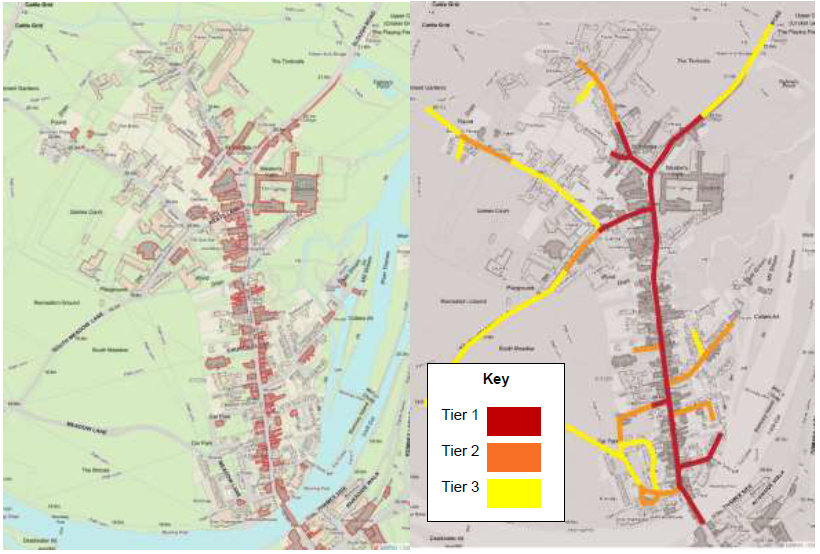
Developments on a Tier 1 street should conform to a design style that is sympathetic to the local character of existing heritage buildings. Buildings that do not comply with the policy and guidance contained in this plan will not be supported.
Developments on a Tier 2 street will be within close proximity to multiple listed buildings, and those of significant interest and therefore should offer a design that is sympathetic to existing heritage assets, reflecting their form, massing, materials and storey heights.
Developments on a Tier 3 street are offered the highest degree of design flexibility. They can incorporate more innovative design features into new development provided that does not compromise the character and context of the surrounding buildings.
1 The College area to the north of Barnespool Bridge
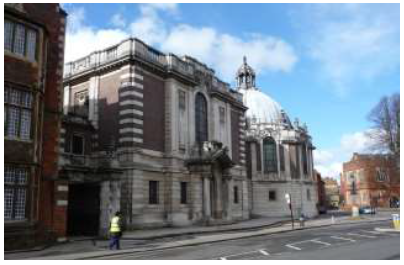
- New development should be of a larger scale and set back from the street or sit at the back of pavement.
- Buildings to be predominantly no more than 3-4 storeys.
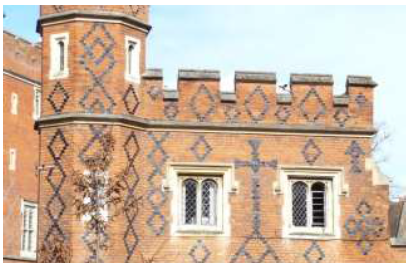
- Buildings should predominantly be in red clay brick or Yellow London stocks and, where appropriate, stone dressings and details. The buildings should be distinctive and in keeping with their immediate environment.
- Integrated courtyards can be used to break up larger forms and create semi-private green spaces.
- There is an existing network of small alleys between the buildings. New development may extend this network of alleys provided they offer safety and security.
- Windows should match existing styles such as timber vertical sliding sashes, iron casements in stone reveals and leaded lights, metal windows with timber subframes or timber casements.
- External works should aspire to include stone paving features and existing stone features, such as Denner Hill stone.
- Existing buildings have a rich diversity of detailing regarding chimneys, dormers, gables and parapets. New development may wish to include interesting ornamentation to strengthen the character of the area.
2 The High Street area
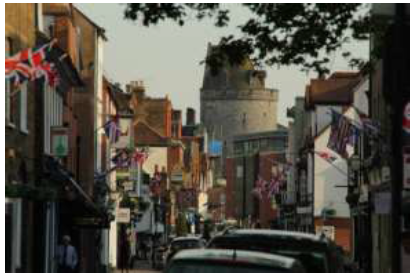
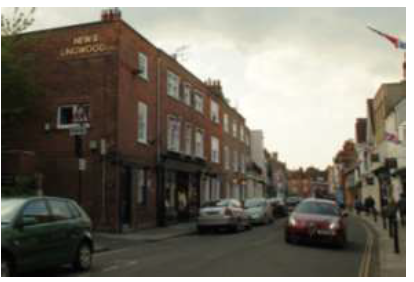
- New developments should largely be long and narrow, and built up to the street.
- New development should be maximum 3-4 storeys high and should respect neighbours’ right to light.
- Buildings should be predominantly red brick or yellow-brown brick. There is also potential for timber framed buildings in a medieval style in this area (perhaps utilising modern methods of construction) and stucco buildings (ideally lime render).
- Facades should normally be constructed from materials that reflect the characteristics of the immediate area.
- Roof materials will normally be natural slate or clay.
- New buildings should provide a rear garden where viable.
- Windows should be high quality e.g. timber vertical sliding sashes, casements, French casements and iron.
- Facades should include a shopfront where the development is situated in a High Street retail location, where this is the case currently and typically for new developments. Shopfronts should generally be constructed from timber, and conform to the Eton and Eton Wick Shopfront Design Guidance document.
- Window and other High Street facing characteristics should align with the lines and architecture of the surrounding buildings.
- Yorkstone pavements on Eton High Street should be retained.
3 The residential areas to the east and west of the High street
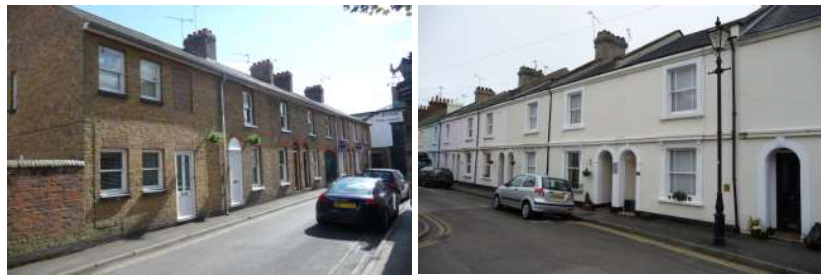
- New development should predominantly be residential and built in terraces or low-rise blocks.
- Buildings should be 2-3 storeys high, depending on the surrounding buildings.
- Buildings should be predominantly red brick or yellow/brown brick. In areas where rendering finishes exist (e.g. Tangier Lane), this is supported. Consistency with the local area is essential. There is also potential for stucco buildings (ideally lime render).
- Windows should match existing styles such as timber vertical sliding sashes, timber casements, or modern equivalents.
- New residential development should aim to provide private or shared garden spaces.
4 The River frontage
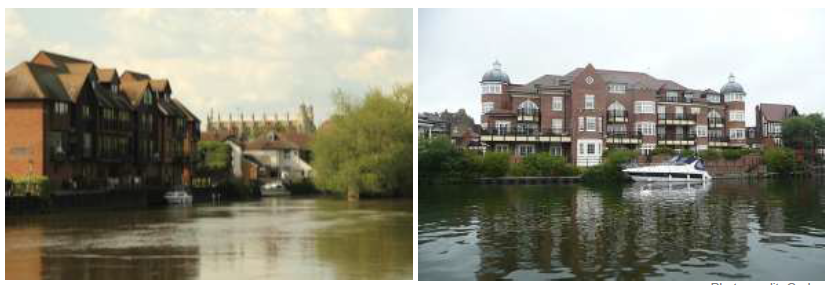
- New development should face the river, with the main facade making an active contribution to the riverside vista.
- Buildings to be predominantly 2 or 3 storeys high (with 4 storeys permitted where appropriate).
- Buildings should predominantly be red brick or yellow London stocks.
- Roofs should be mostly gabled in slate or clay (hips permitted where appropriate).
- Windows overlooking the river may be large, and offer the possibility for creating a strong design feature that contributes to the identity of the riverside.
- Terraces and balconies overlooking the river can be a positive design feature.
- Access to the riverside should be provided where possible.
< Previous | ^ Top | Next >
